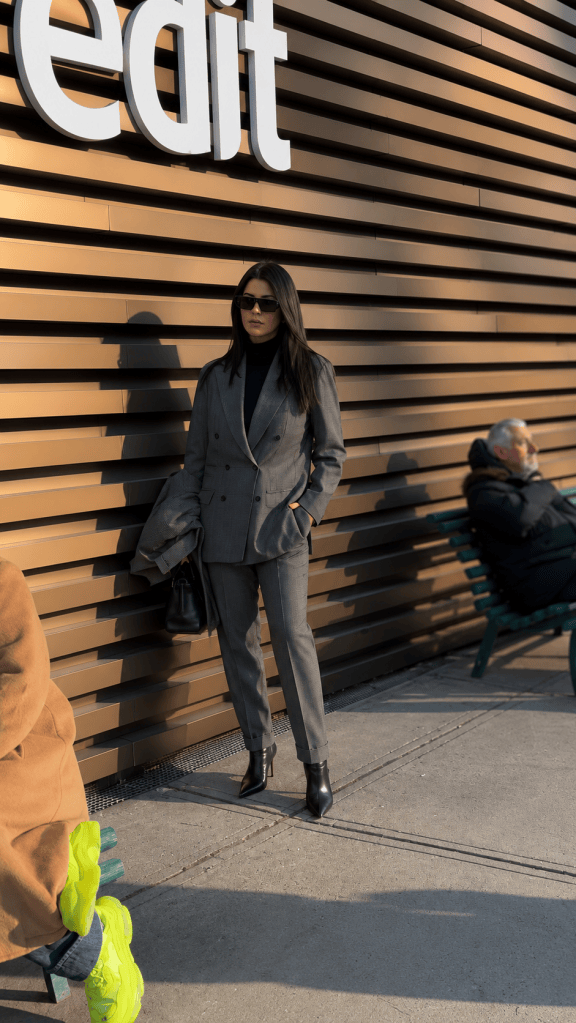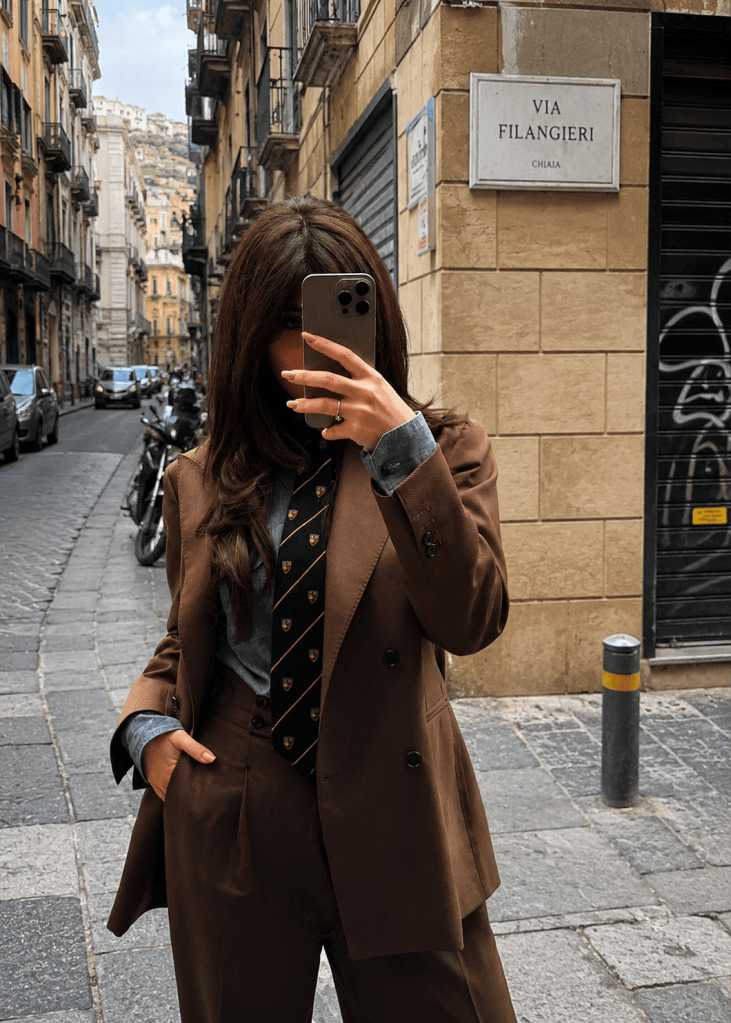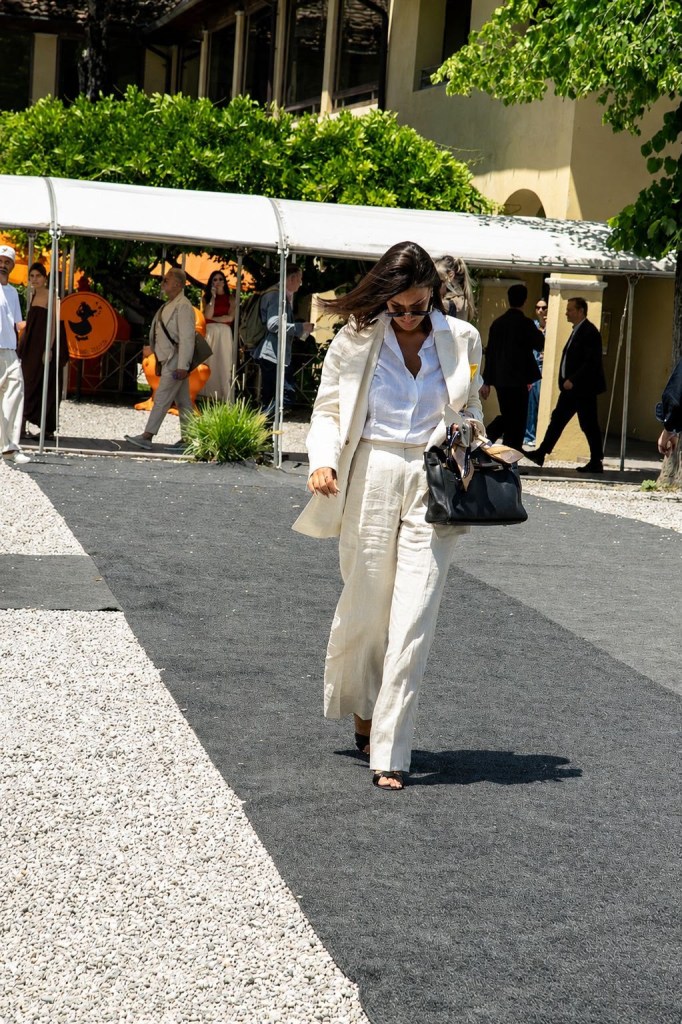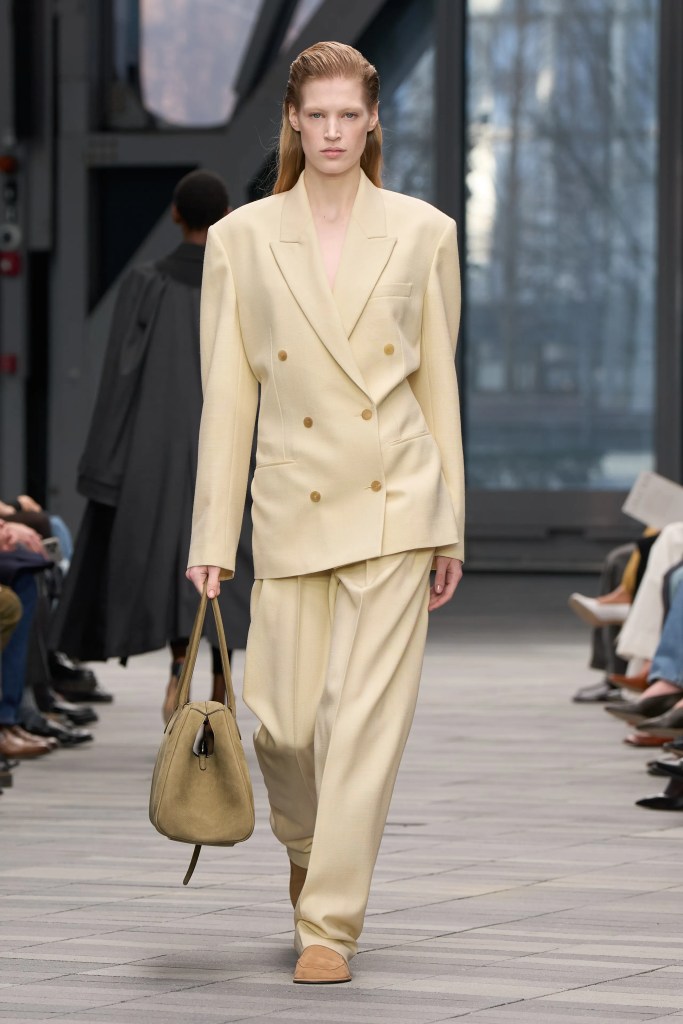
DOUBLE-BREASTED BLAZERS, TIES AND PLEATED PANTS: BORROWING FROM THE MEN

Strong shoulders, wide-leg pants and a well-worn tie: for fall and winter 2026–2027, menswear-inspired tailoring offers plenty of room to make a look your own.

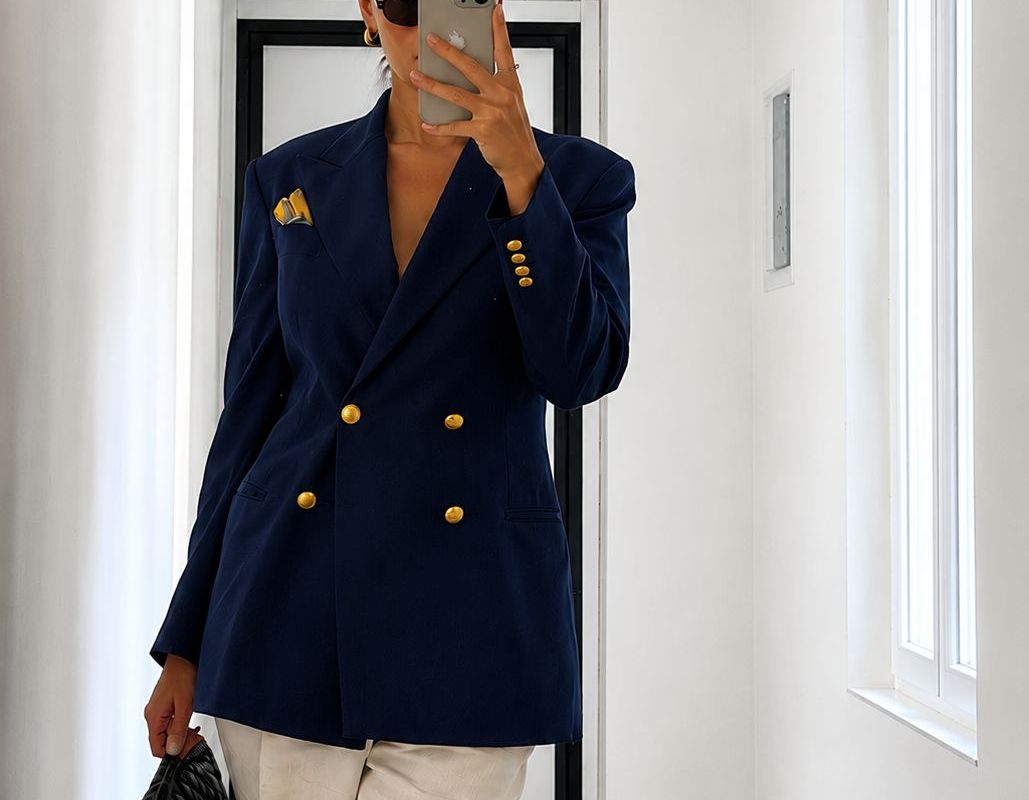
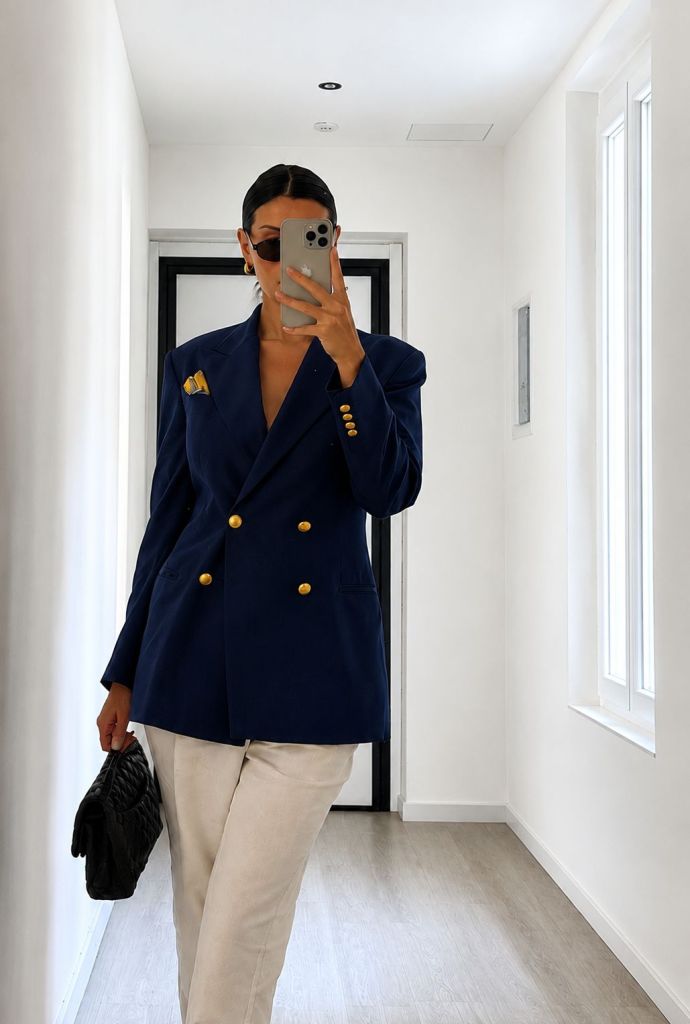
My dad, who wears a jacket four sizes bigger than mine, smiles whenever he sees me in one of his old double-breasted blazers. Sometimes I wear it with an argyle vest. The jacket is oversized, the sleeves are a little long, but that’s exactly what I love about it. It gives me an unexpected look that feels pretty sexy, too.

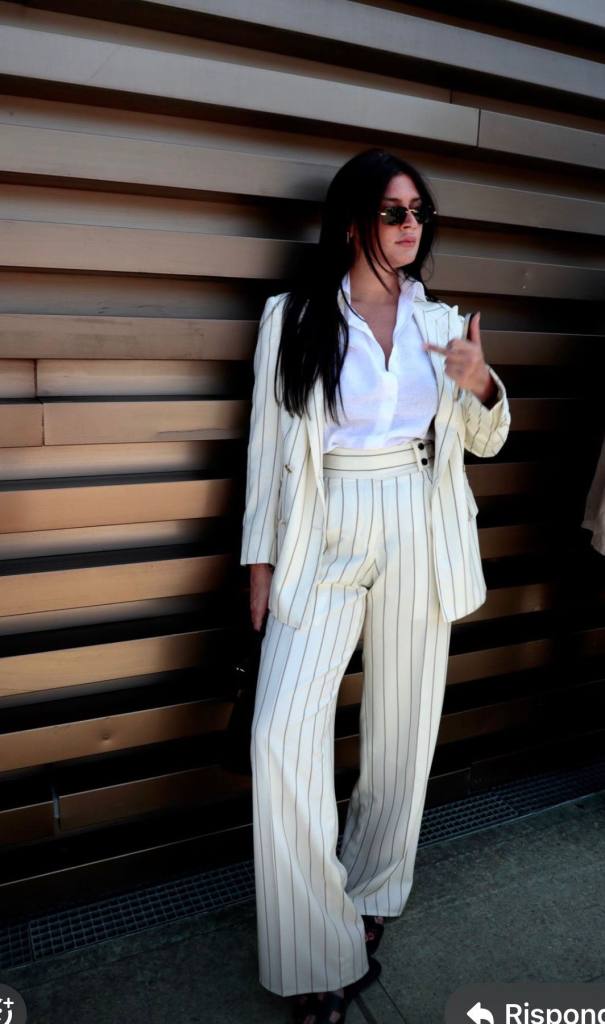
I’ve always had a soft spot for clothes that look as though they came from a man’s closet. A roomy blazer, a white shirt, a pair of pants that falls loosely over the leg: on a woman, they take on a different character. They make me feel dressed up without looking as if I’ve spent too much time thinking about it.

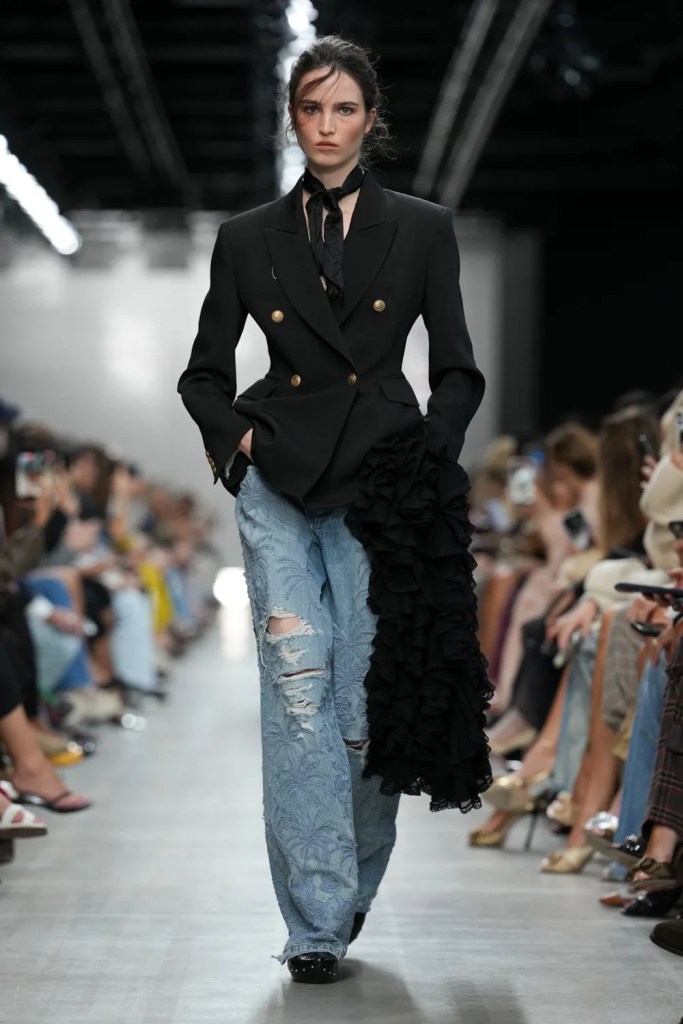
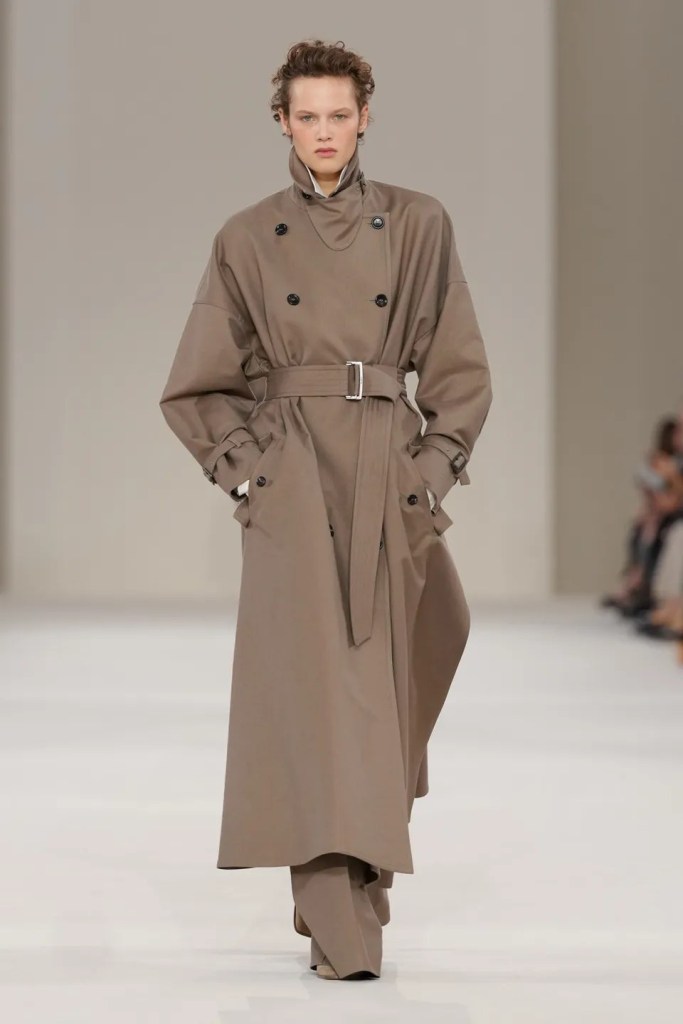
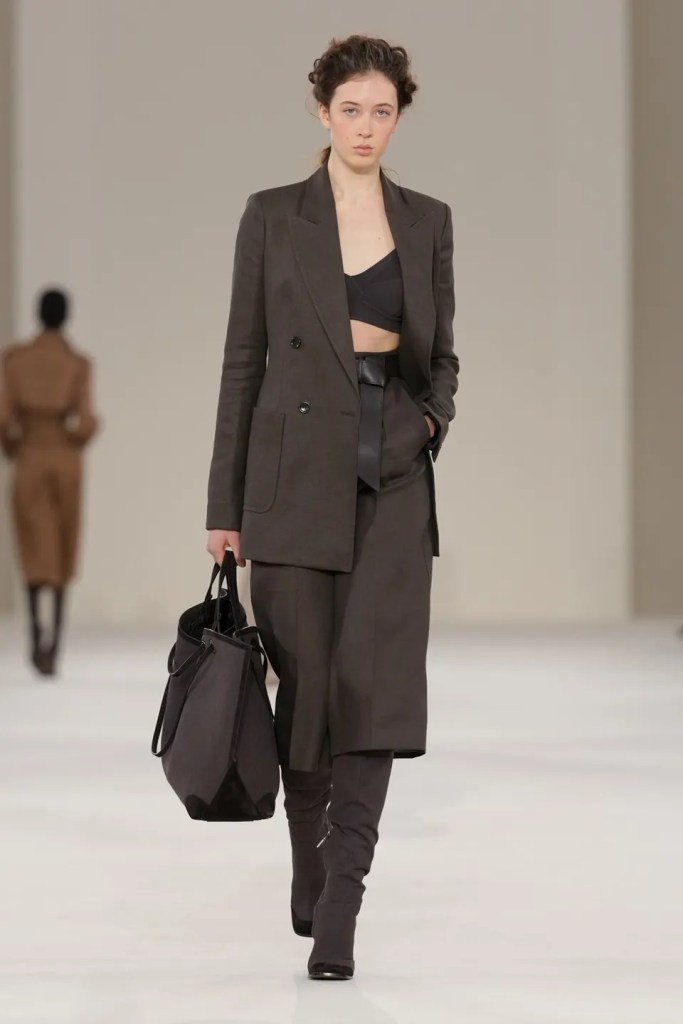
Women have been wearing these pieces for decades, of course. But in the fall and winter 2026–2027 collections, I’m drawn to the generous proportions and the ease of the tailoring. Calvin Klein and Max Mara, for example, showed suits with double-breasted jackets and relaxed pants. I also love the idea of wearing the jacket on its own, with jeans and a fine-knit top. It’s the kind of outfit I can wear all day and take into the evening, maybe with a change of shoes.

My dream, though, is to have a suit made for me in Naples. To me, Neapolitan tailoring represents the highest level of the craft. I’m fascinated by the lightness of the jackets, the way the shoulders are shaped and how a garment can have structure without feeling stiff. I hope to visit my friends in Italy soon and see that tradition up close, perhaps at Tito Allegretto, while also exploring the women’s designs by Giulia Allegretto.

Pleated pants are another favorite. Wide through the leg, with a well-defined waist and folds at the front, they have an ease I find beautiful. The fabric makes a difference: a soft wool moves with you and gives the leg a lovely drape. I’d wear them in gray with a slightly unbuttoned shirt and loafers, or with a fitted top and a low heel when I want to feel a little more feminine.

And the tie? I have to admit, I enjoy it. Slim or wide, maybe borrowed from my dad, it can completely change the feel of a shirt. I’d wear it with the knot a little loose under a sharply cut jacket, without worrying too much about keeping everything perfectly in place. It draws the eye, and there’s something wonderful about making it your own.

You don’t have to wear all these pieces at once. A blazer, a well-cut pair of pants or a vest slipped over a shirt can give a different mood to clothes you already have. As for me, I’ll keep looking through my dad’s closet. By now, when he goes looking for his double-breasted blazer, he knows exactly where to find it.


Discover more of Sara’s World

Sara Dal Monte

Sara Dal Monte
Digital Journalist | Photographer | Art Director
Los Angeles • Sure-Com America
Instagram
X
Facebook
Facebook 2
Facebook Page

HOLLYWOOD AND FASHION: WHY ACTRESSES ARE THE NEW FACES OF LUXURY

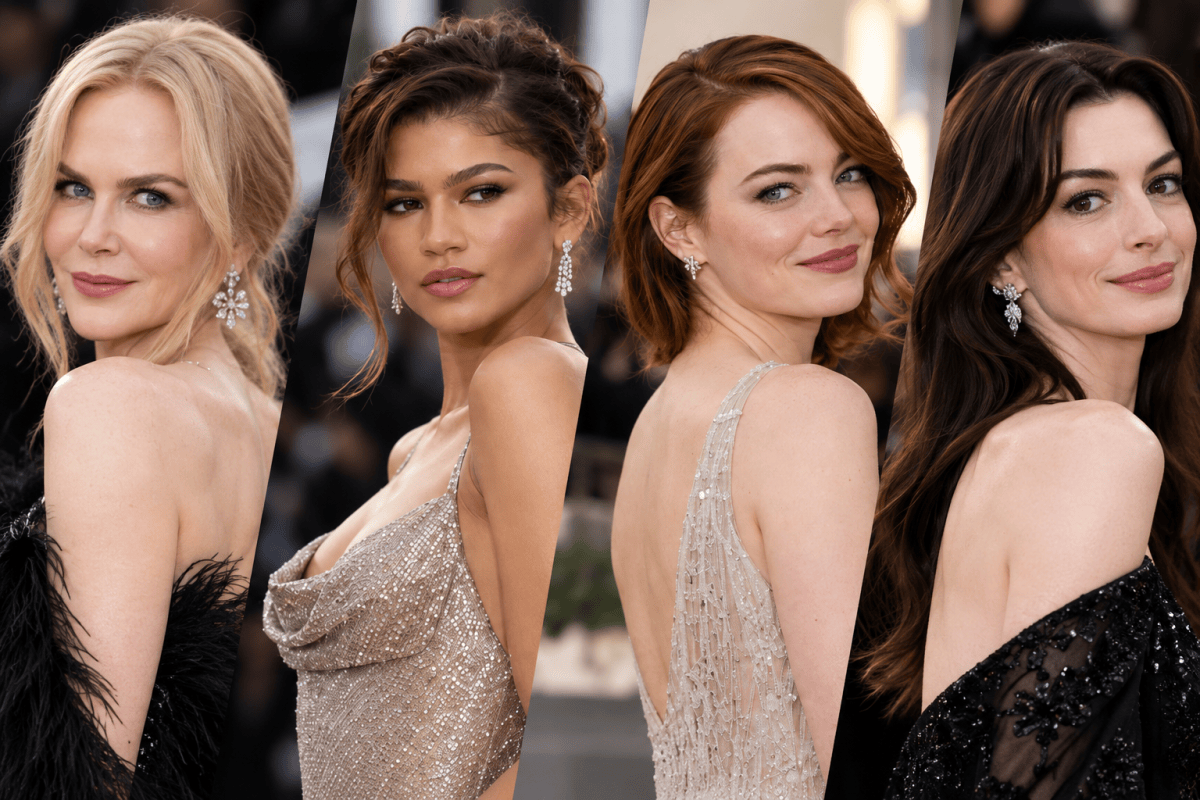
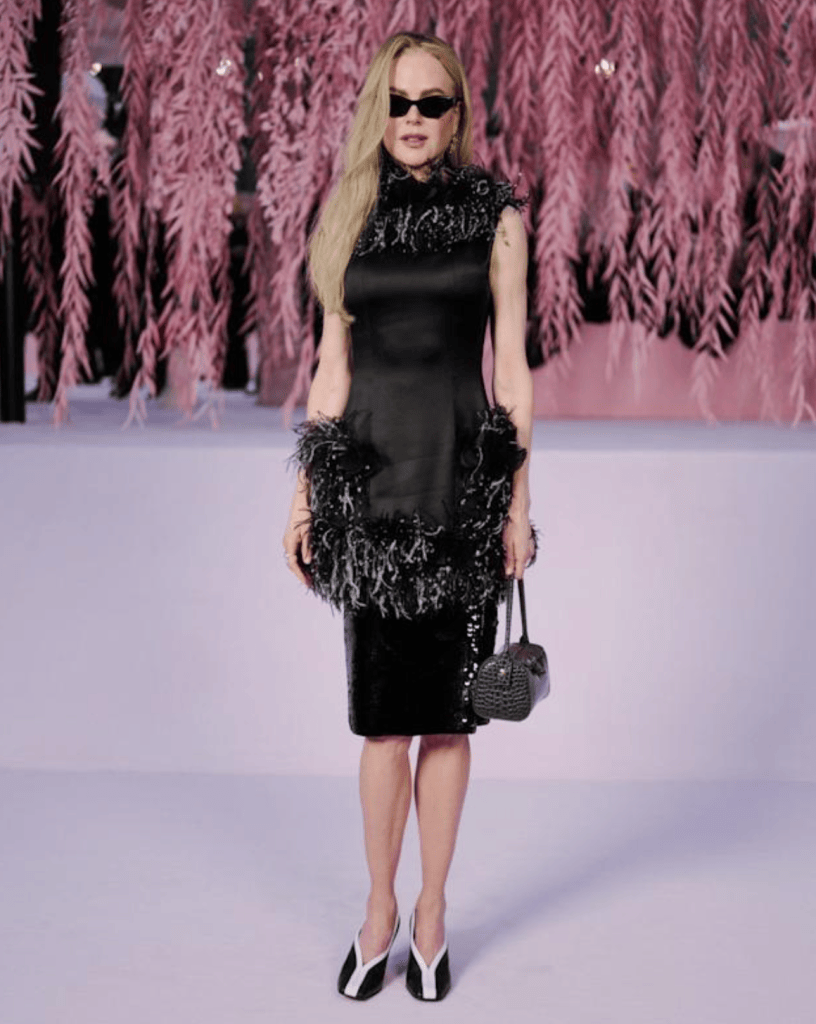
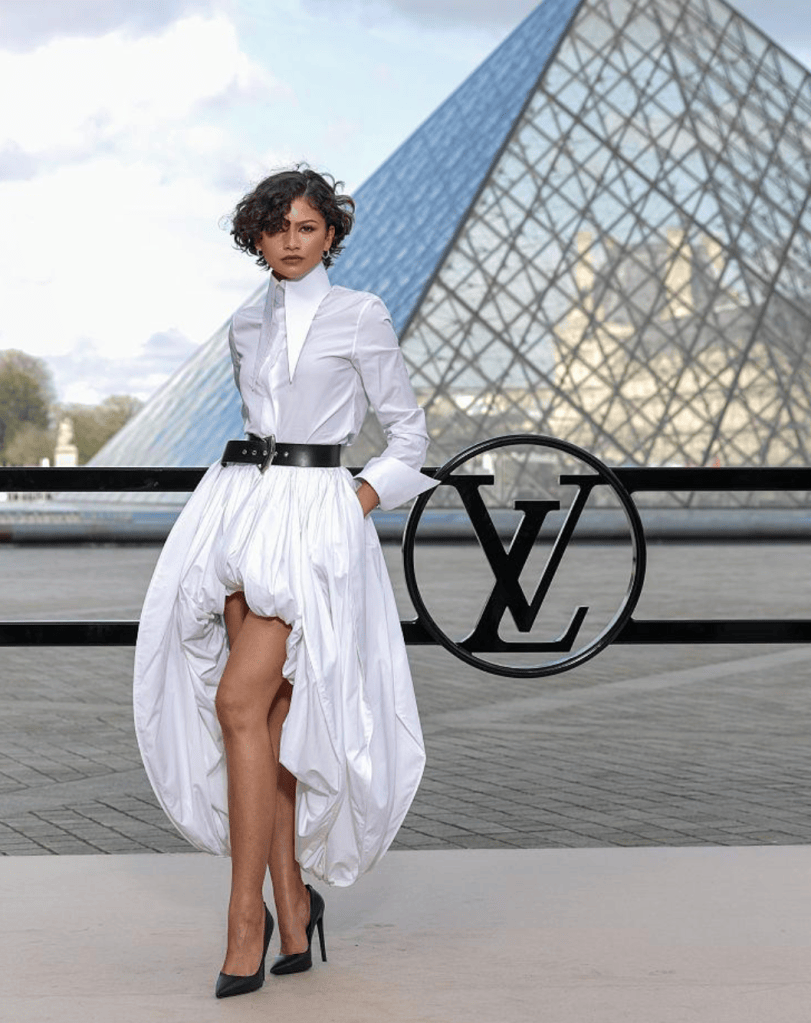
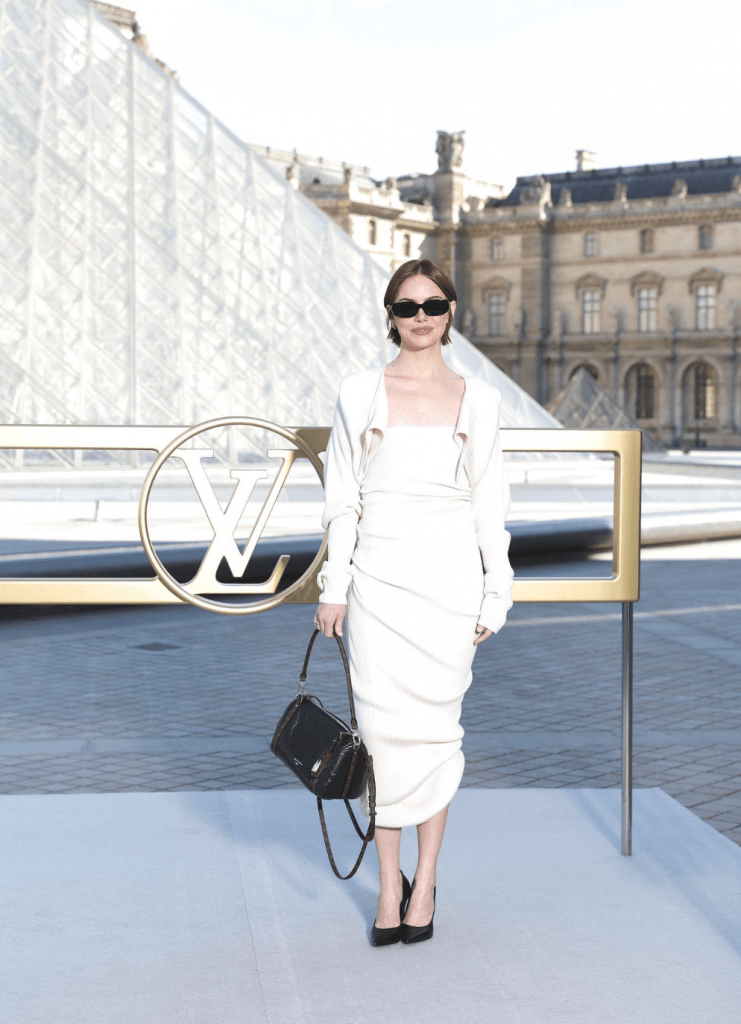
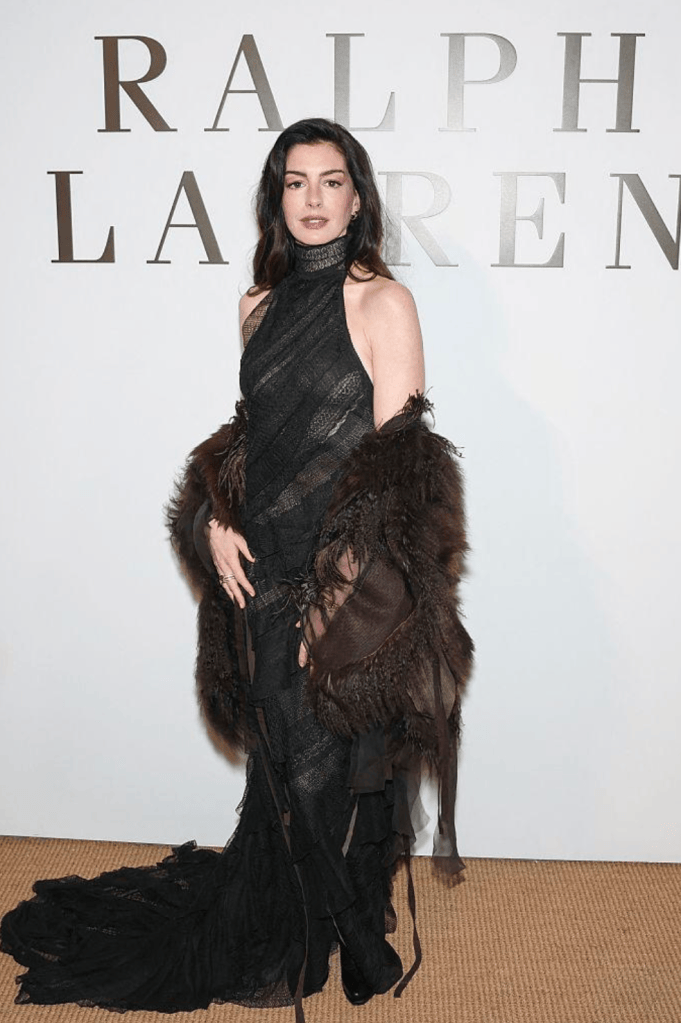
Something caught my attention while looking through the photos from the latest fashion shows in Paris. I recognized Nicole Kidman, Zendaya and Emma Stone immediately, but I had to look twice to remember which collections they were attending. It made me smile, because I follow fashion closely, and yet the celebrities had caught my attention before the clothes.

Here in Los Angeles, we’re used to seeing movie stars associated with major fashion houses. What feels different now is the sheer number of them. They’re sitting front row in Paris, Milan, London and New York, appearing in campaigns and attending events that sometimes seem designed around their presence.

A few years ago, everyone wanted influencers. A large Instagram following could open almost any door in fashion. They’re still part of the picture, but I feel the excitement around them has faded a little. Movie stars have something different to offer. Nicole Kidman has a career that spans decades, Emma Stone has earned enormous respect for her performances, and Zendaya has developed a fashion identity that people genuinely enjoy following.

I can see why designers want them at their shows. What I find more interesting is why the luxury houses seem to need this kind of attention so much.

I’ve loved fashion for years, and I still enjoy walking into a beautiful boutique to see the clothes up close. But lately, some prices have genuinely surprised me. I can appreciate the cut of a jacket, the fabric and the work involved in making it, while still wondering whether I would ever pay that much for it. And I suspect quite a few women feel the same way.

Luxury brands know their customers are thinking more carefully about purchases. When an actress wears one of their designs, the conversation moves away from the price and toward the person wearing it. Suddenly we’re talking about Zendaya’s appearance or Nicole Kidman’s style. The clothes become part of a much bigger story.

There’s nothing wrong with that. Fashion and cinema have shared a close relationship for generations, and some of my favorite red carpet moments have come from it. I just hope we don’t reach a point where the guest list matters more than the collection.

I would rather remember a beautiful dress because of its design than because someone famous happened to wear it.

Looking at all those front-row photographs from Los Angeles, I keep coming back to one thought. We know what Hollywood gets from fashion. I’m beginning to think fashion might be getting even more from Hollywood.


THE BLAZY EFFECT: USED CHANEL BAGS NOW SELL FOR MORE THAN NEW ONES

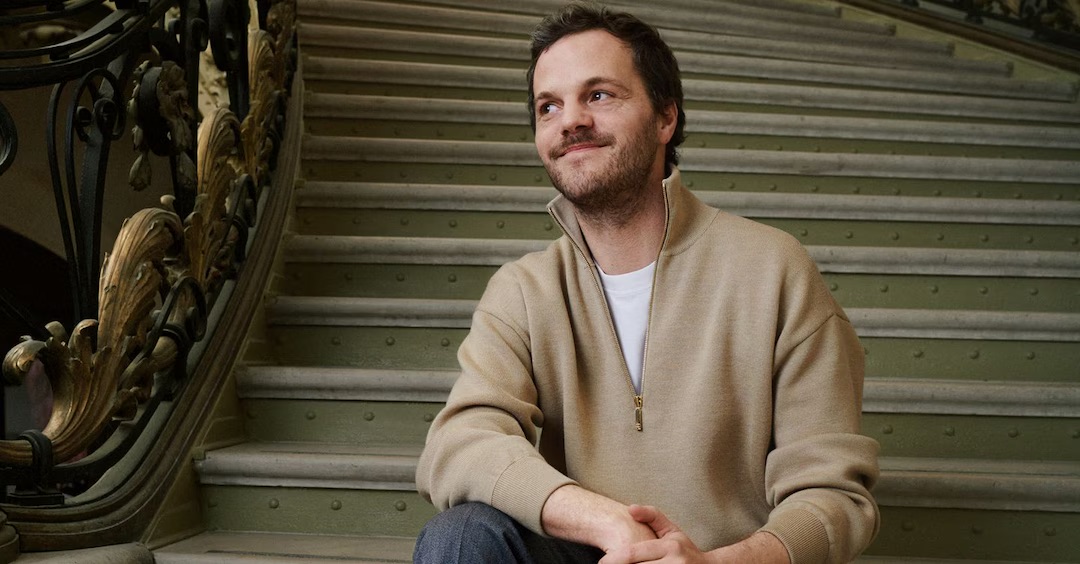
Matthieu Blazy seated on a staircase

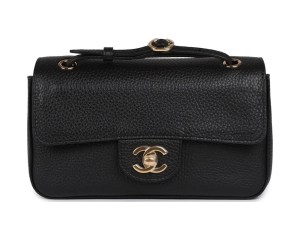
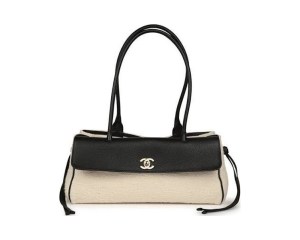
Seen from Los Angeles, where nobody blinks at a resale tag, the numbers are hard to ignore. They are already calling it the Blazy effect. According to Fashionphile, a few bags designed by Matthieu Blazy for Chanel, the Souplissimo, the Archetype Tote and the Urban Essentiel, are reselling 13 to 15 percent above retail. These models only reached stores this year.

Think about what that means. When someone pays more for a used bag than for a new one, the boutique didn’t have it, or the buyer refused to wait. The desire is real, and no ad campaign bought it. Resale is the most honest thermometer fashion has.

Blazy renewed Chanel without asking it to become something else, and the results agree: up 16 percent in the first half of the year, according to Bloomberg.

Here is my take from the West Coast. The risk now is making too many. A bag becomes a legend because you can’t simply have it, and Chanel knows that better than anyone. In their place, I would keep the waiting lists for a while longer. Meanwhile, I’ll keep watching who carries what on Rodeo Drive, and what lands on the resale rack six months from now.

FROM PARIS FRONT ROW TO THE RED CARPET: WHAT SPRING-SUMMER 2027 TELLS US ABOUT HOLLYWOOD

From Los Angeles, I watch the European shows with one constant question: what will we actually see on the red carpet? The Spring-Summer 2027 collections, from Milan to Paris, answer with a more relaxed femininity: light fabrics, new proportions, a sensuality that stops shouting.

On October 5, at the Grand Palais, Nicole Kidman lent her voice to the Chanel show, reading passages from Virginia Woolf’s Orlando, while Matthieu Blazy presented the collection in front of Dua Lipa and Pedro Pascal. The next day, at the Louvre, Louis Vuitton gathered Zendaya, Emma Stone and Catherine Deneuve. Zendaya wore jeans and the white lace jacket she had already chosen for the Paris premiere of The Odyssey: proof that fashion and cinema keep watching, and borrowing from, each other.

The Return of the Skirt

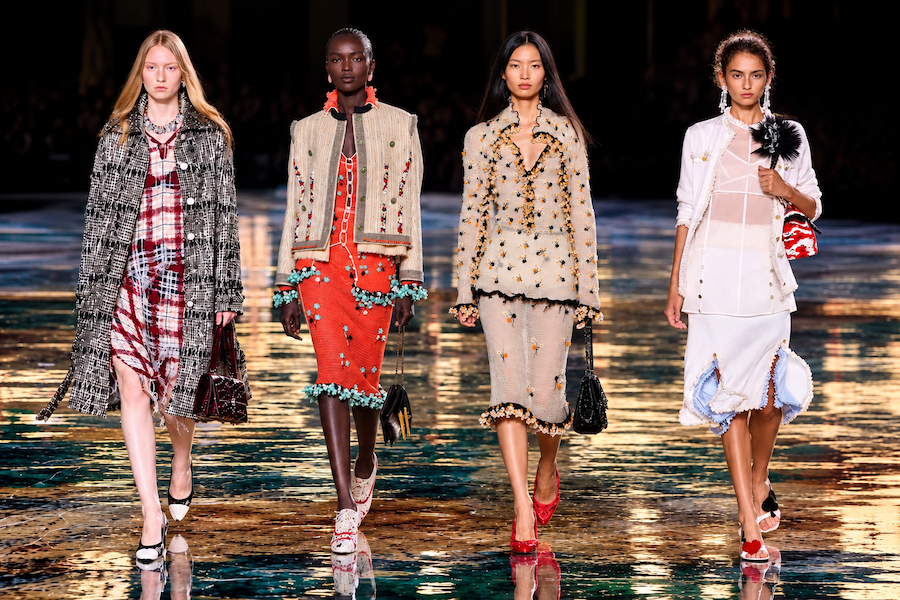
At Prada the skirt is back in the spotlight: long, short, pleated or sheer. Miu Miu, Dior and Chanel followed, and Olivia Colman walked for Miu Miu in a black leather suit. I love a statement skirt with a man’s shirt or a tailored jacket. On red carpets, where long gowns end up looking alike, it would be a breath of fresh air.

Lightness and Sensuality

At Dior, Jonathan Anderson works with chiffon, organza and tulle in soft pink and pale blue; Blazy makes Chanel’s tweed softer and stretchier. These are clothes that follow the body without confining it, and after hours in front of photographers, you feel the difference.

Sheer fabrics stay, but the measure changes. Haider Ackermann, at Tom Ford, plays with proportion; Prada and Zimmermann use slits and light fabrics to suggest the body in motion. After so many seasons of naked dresses, I prefer a sensuality built on cut and materials, not on inches of bare skin.

The Great Houses Change Face

Blazy at Chanel, Anderson at Dior, Ackermann at Tom Ford: three different sensibilities taking on historic houses. Anthony Vaccarello, at Saint Laurent, relaunched the house’s tradition with huge golden chandeliers at the Trocadéro, carrying the gold onto the clothes as well. How much will all this weigh on the actresses’ choices? Kidman and Zendaya, from different generations, show that you can experiment and still stay recognizable.

From Paris to Hollywood

In the coming months we will see what really makes it to the red carpets of Los Angeles. I hope for more tailored skirts, fluid fabrics and less provocative sheers. A dress is beautiful on the runway, but it becomes style only when it meets the personality of the woman wearing it. That is what I look for, in Paris as in Hollywood.

ZIMMERMANN AT PARIS FASHION WEEK: FASHION RETURNS TO SEDUCE

Zimmermann SS27 Paris Fashion Week

2 MIN READ

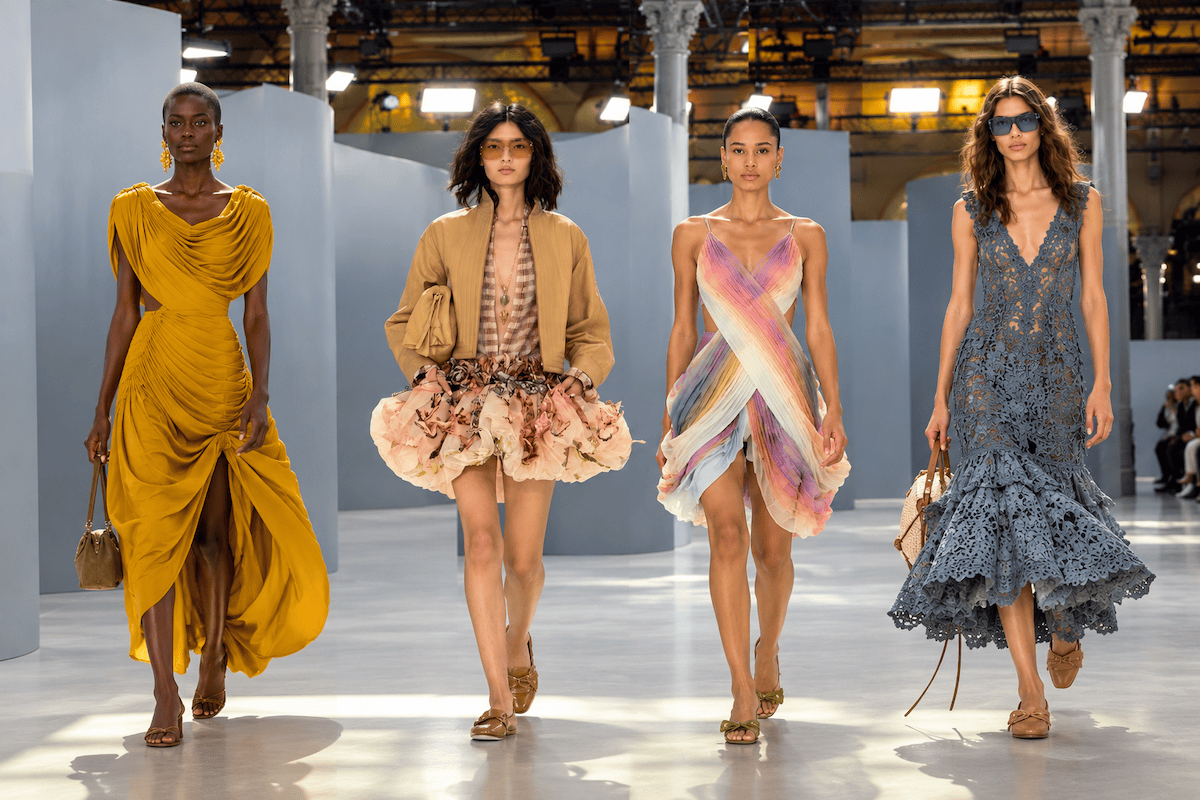
At Paris Fashion Week there are those who chase provocation, those who run after the archive, those who build collections that need long explanations to find a reason. Then Zimmermann arrives and puts back at the center something much simpler and, perhaps precisely for that reason, harder today: the desire to wear a dress.

Nicky Zimmermann brings Spring/Summer 2027 to Paris and builds a rich, sensual, romantic collection, but above all a recognizable one. She does not renounce the DNA of the maison to chase contemporaneity: she makes it evolve. Chiffon, lace, transparencies, draping, prints and floral work remain in her vocabulary, but gain volume, movement and a new three-dimensionality. Vogue Germany spoke of “romantic maximalism”. The definition works, but it tells only part of the project.

Because here maximalism does not become noise. Every element seems to find its place. The long chiffon dresses crossed by pink, lilac, orange and yellow look like watercolors in motion; the saffron-colored dress builds the body through an almost sculptural succession of drapes; the gray lace becomes material, drawing and transparency; a floral miniskirt, instead, explodes into a three-dimensional construction, paired with a short camel jacket. Very different looks, yet immediately belonging to the same story.

And this is perhaps the most interesting result of the collection: Zimmermann manages to be recognizable without repeating herself. She does not use the archive as a refuge and does not force the brand’s language to prove she is new. She works on the product. On proportions, on material, on color and above all on movement. The dresses change as the models walk: they open, swell, reveal the body and immediately afterwards wrap it. The runway thus gives back something that static photography often loses, the physical relationship between dress and woman.

Sensuality too deserves attention. It is not aggressive, nor built simply on the amount of skin shown. It comes from openings, from transparencies, from fabrics that slide over the body, from lightness. Even when the volume increases, the figure does not disappear. It is a declared femininity, with no need to justify itself or turn into a conceptual exercise.

Nicky Zimmermann seems to remember an elementary rule that fashion, every now and then, forgets: a dress can have research, construction and identity and still be beautiful to look at. There is no contradiction between design and seduction. On the contrary, when the work succeeds, one feeds the other.

In a season in which we have seen many brands question their own identity, Zimmermann instead appears surprisingly sure of hers. She knows who she is, she knows the woman she speaks to and above all she knows the product. She has no need to destroy her own codes to show she is moving forward.

Perhaps this is precisely the strength of Spring/Summer 2027: it does not ask the viewer to understand the collection before desiring it. Emotion comes first. Then, looking more closely, one discovers all the work behind it.

And when that happens, fashion goes back to doing its job magnificently.

GALLERY

click on the images to enlarge


Discover more of Sara’s World

Sara Dal Monte

Sara Dal Monte
Digital Journalist | Photographer | Art Director
Los Angeles • Sure-Com America
Instagram
X
Facebook
Facebook 2
Facebook Page

CHANEL SS27, MODELS AND DECONSTRUCTED TWEED: THE NEW MOVES FORWARD

2 MIN READ

Tweed is perhaps the most recognizable element of Chanel, but also the one that, after decades of jackets, suits, buttons and constructions that have become iconic, risks looking the most overused. The quality remains, the craftsmanship too, but for a maison like Chanel today it is a matter of turning the page, at least in part, or rather of interpreting that heritage in a more contemporary key.

Matthieu Blazy seems to have taken this road starting precisely from tweed. Deconstructing it means working on one of the maison’s most established symbols: gradually abandoning the rigidity of the famous fitted suits, opening up the weaves, fraying the surfaces, lightening the fits. It is already a sign of change: altering the shape without erasing the Chanel matrix. It is not yet a turning point, but certainly the beginning of a new direction.

The shapes and fabrics are the ones we know, apart from a few variations, and Chanel is still Chanel at first glance. But in several passages something changes. The tweed is opened, frayed, lightened, almost undone; it loses some of the composure of the more classic constructions and gains movement. The proportions change, the fit changes, and above all the way the garment rests on the body changes.

A coat keeps the material, buttons and recognizability of the maison, but the surface becomes irregular, the threads remain visible, the construction looks less rigid. Underneath, dresses and weaves seem in turn opened up, worn, deliberately imperfect. The result is less composed and decidedly younger.

The choice of models also contributes to changing the perception. Those same materials, worn on very young girls and with a freer fit, lose the weight of a certain traditional idea of Chanel. Not because it is erased: it remains perfectly legible. It is the way of wearing it that changes.

Naturally, not the whole collection proceeds with the same intensity. There are looks very close to forms that have long belonged to the maison and others in which the intervention is more evident. And it is precisely in the latter that the most interesting direction can be glimpsed: not replacing what Chanel has been, but working on material, proportions and construction to bring it into the present.

Blazy seems to have understood that with a maison like Chanel the new does not necessarily have to arrive through a grand gesture. It can also come from a loose thread, a less compact weave, a silhouette that loses rigidity and tightness.

GALLERY

click on the images to enlarge


Discover more of Sara’s World

Sara Dal Monte

Sara Dal Monte
Digital Journalist | Photographer | Art Director
Los Angeles • Sure-Com America
Instagram
X
Facebook
Facebook 2
Facebook Page

TOM FORD SS27 AT PFW: THE STRENGTH OF ITS LANGUAGE

2 MIN READ

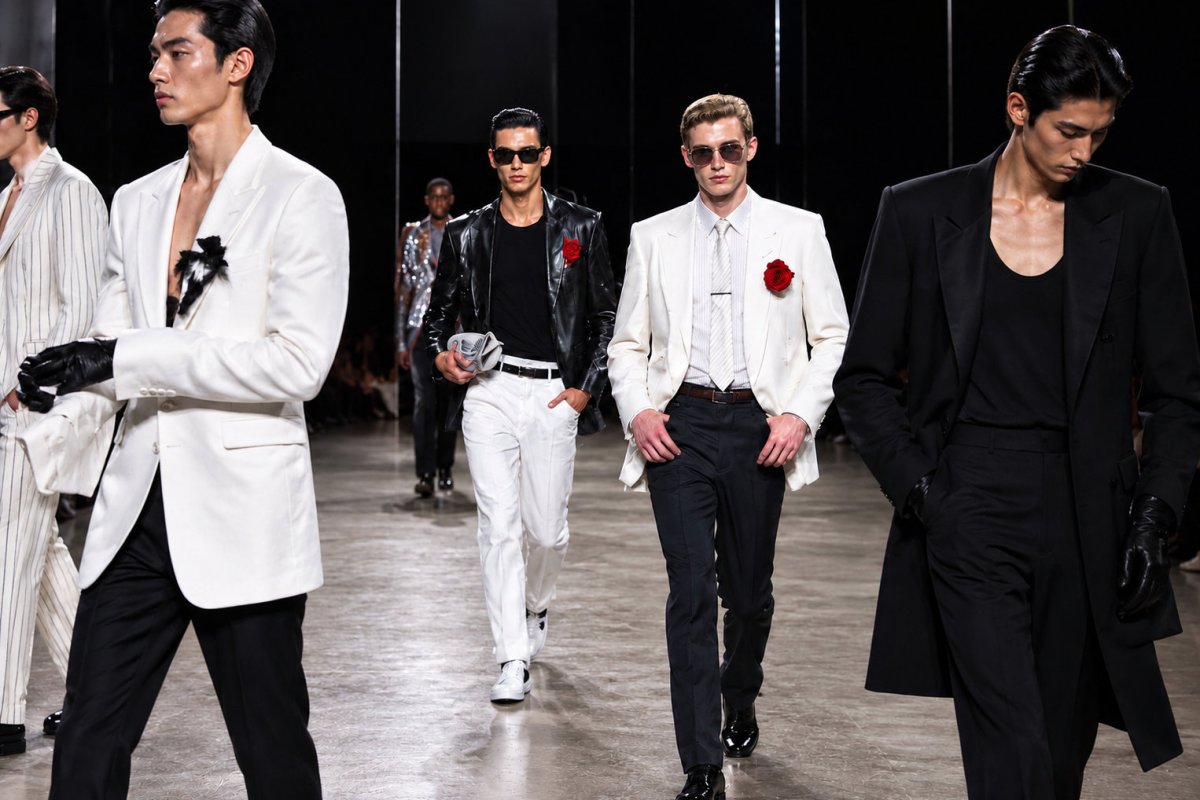
Tom Ford’s Spring Summer 2027 starts from one precise point: recognizability. Haider Ackermann does not try to erase the language of the House, nor to use it as a mere quotation. He takes it, moves through it and carries it into his own sensibility, keeping that tension between elegance and sensuality that has always belonged to Tom Ford.

The collection works above all on line. The body returns to the center, for both men and women, but without gratuitous exaggeration. Jackets are sharp, trousers fall clean, shirts open up and grow lighter, to the point of almost becoming shirt-jackets. On the women’s side come micro-shorts, bodysuits, tops reduced to the essentials and sheer fabrics, without turning provocation into the collection’s only argument.

It is a controlled sensuality, built through proportions.

Black dominates, accompanied by white and red, often used as an accent: a flower, a detail capable of interrupting the rigor of the composition. Then come military green, denim, patent leather and pinstripe. Different materials and registers coexist without compromising the overall coherence.

Menswear too keeps that almost cinematic confidence that belongs to the Tom Ford imagery. White and black suits, leather, dark sunglasses, shirts worn open, tailored trousers alternating with more relaxed constructions. This is not a man stiffened by tailoring, but a man who wears it with ease.

And then there is the woman. Strong, self-aware, extremely feminine even when she borrows elements traditionally belonging to the male wardrobe. The contrast is what makes it interesting: the more the figure takes on masculine codes, the more her femininity seems amplified. In some passages the imagery of Helmut Newton vaguely comes to mind, with those confident, sophisticated and sensual women even inside a rigorous suit.

Ackermann succeeds above all in one difficult thing: making his own hand felt without forcing Tom Ford to become something else.

In a moment of fashion in which many creative directors seem to seek change through rupture, here almost the opposite happens. Change comes from working inside an already strong language, intervening on proportions, materials and attitude without erasing its recognizability.

And this is probably the most evident result of the show: men and women can change shapes, materials and proportions, yet they continue to belong to the same universe.

GALLERY

click on the images to enlarge


Discover more of Sara’s World

Sara Dal Monte

Sara Dal Monte
Digital Journalist | Photographer | Art Director
Los Angeles • Sure-Com America
Instagram
X
Facebook
Facebook 2
Facebook Page

DIOR, JOIE DE VIVRE, LIGHTNESS AND FEMININITY AT PARIS FASHION WEEK SS27

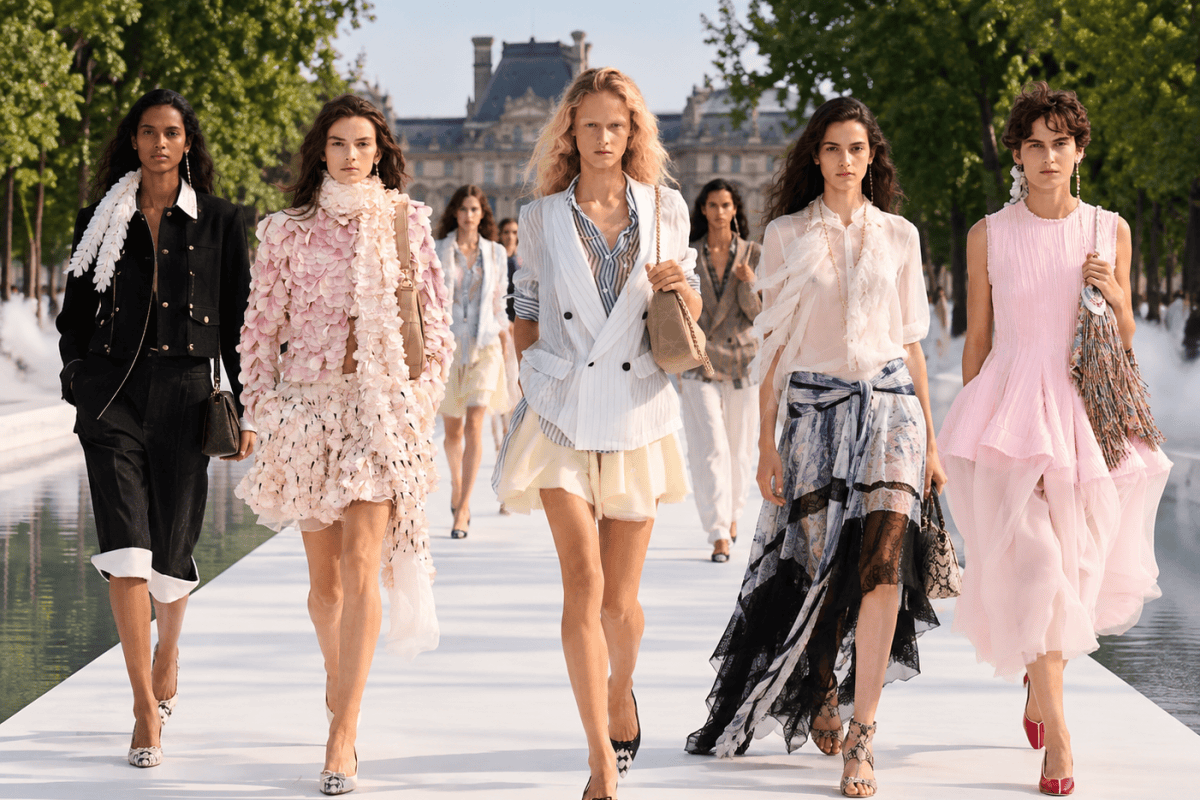
Paris, September 29, 2026. In the Jardin des Tuileries, on a runway suspended over the water and veiled by a light mist, Jonathan Anderson presents Dior’s Spring Summer 2027. Trees, water and natural light accompany a collection that seems to want to free both the body and the clothes from any unnecessary weight.

Fashion becomes airy, imaginative, full of movement. Chiffon, organza, tulle, lace and sheer fabrics meet petals and appliqués that seem to move with every step. Powder pink, pale blue, white and soft yellow sit alongside stripes, Prince of Wales check and sudden metallic flashes. Skirts gain volume without becoming stiff, while menswear-inspired blazers and shirts enter the wardrobe without taking anything away from the femininity of the figure.

And this is perhaps what I like most about Jonathan Anderson‘s work. His woman feels no need to hide behind severe constructions or to masculinize herself in order to assert her presence. She is feminine, light, romantic when she wants to be, but never fragile. The clothes follow the body, accompany it, sometimes reveal it; the layering looks spontaneous, but behind that ease lies precise work on proportions, materials and volumes.

There is a lot of joie de vivre in this collection. You find it in the color, in the movement of a skirt, in a sheer panel, in a shirt left loose under a jacket, in the almost irregular lightness of the appliqués. Dior’s historic codes are also treated with greater freedom: not a copy of the past, but a different way of carrying some of its signs into the present.

Jonathan Anderson thus continues his dialogue with one of the most important legacies in French fashion, without letting himself be imprisoned by it. And this Spring Summer 2027 conveys above all one feeling: the pleasure of dressing, of being a woman and of showing it naturally.


GALLERY

click on the images to enlarge


Discover more of Sara’s World

Sara Dal Monte

Sara Dal Monte
Digital Journalist | Photographer | Art Director
Los Angeles • Sure-Com America
Instagram
X
Facebook
Facebook 2
Facebook Page

AFTER MILAN, PARIS TAKES THE STAGE

Milan has just switched off the lights and Paris is already under way. The Fashion Week dedicated to Spring/Summer 2027 began on September 28 and runs until October 6, with 68 shows and 33 presentations. Nine days in which practically all the big names of French and international fashion will take the stage.

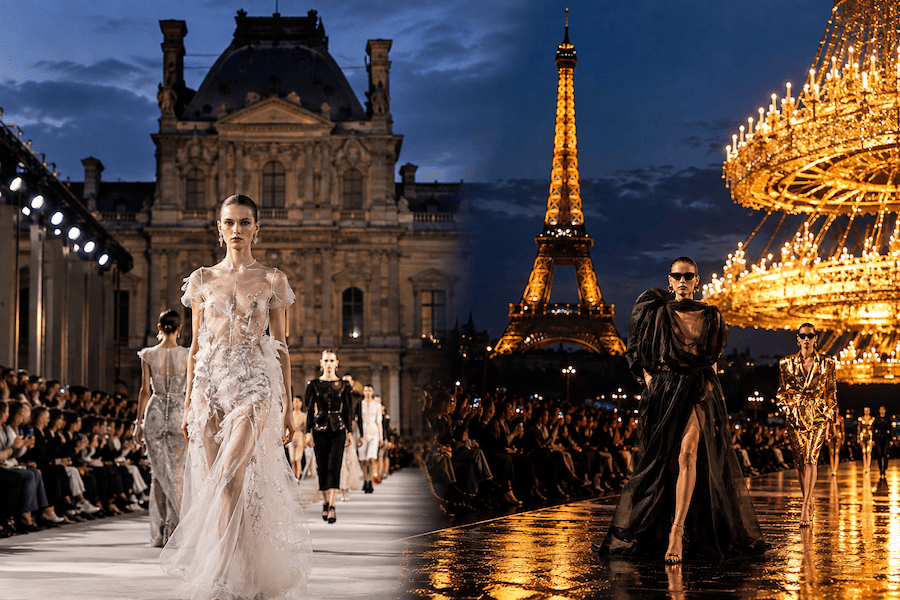
The first day was given over mainly to the new generations; then on September 29 came Dior, Maison Margiela and Saint Laurent, and the tone changed immediately. Dior brought to the Tuileries Jonathan Anderson’s second Spring/Summer, still grappling with an enormous heritage to reinterpret through his own language. In the evening, Anthony Vaccarello turned the Trocadéro into a great golden stage, with the Eiffel Tower in the background, also celebrating his ten years at the helm of Saint Laurent. Two completely different ways of engaging with the history of a Maison.

Paris, after all, has always played a different game. Milan remains closely tied to product, craftsmanship, Made in Italy and brand recognition; here fashion more readily becomes performance, reaching for art, history and sets capable of turning a show into an event. That does not necessarily mean doing better. It means having another way of telling fashion, and that is also why moving from one city to the other continues to make sense.

And we are only at the beginning. The calendar has yet to bring out Balmain, Dries Van Noten, Tom Ford, Schiaparelli, Balenciaga, Loewe, Givenchy, Celine, Hermès, Valentino, Chanel and Louis Vuitton. Big names, and inevitably high expectations.

Now we will see the collections. Because Paris knows how to build a spectacle like few other cities, but once the lights are off and the sets are taken down, what really interests me is understanding what remains of the clothes.


Discover more of Sara’s World

Sara Dal Monte

Sara Dal Monte
Digital Journalist | Photographer | Art Director
Los Angeles • Sure-Com America
Instagram
X
Facebook
Facebook 2
Facebook Page

SAINT LAURENT DRESSES PARIS IN GOLD

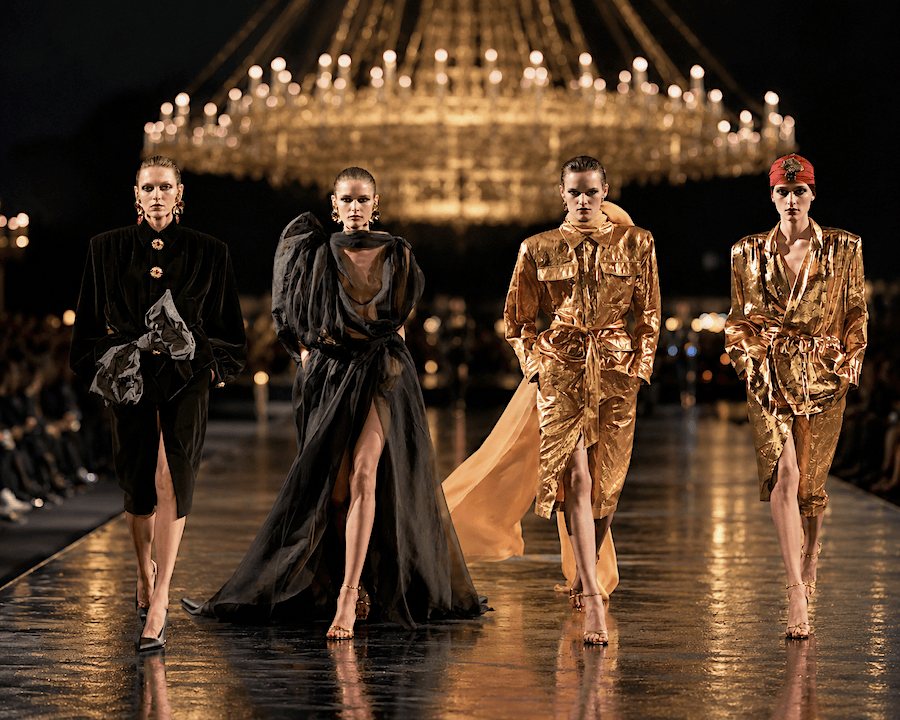
Paris, September 29, 2026. At the Fontaines du Trocadéro, with the Eiffel Tower in the background, Anthony Vaccarello celebrates his ten years at the helm of Saint Laurent, turning one of the most iconic places in the French capital into a monumental open-air set. Great golden chandeliers suspended above the runway, lights and reflections on the mirrored floor turn the Trocadéro into an expanse of gold.

A spectacular set, but not an end in itself. The great chandeliers recall the Salon Impérial of the Hôtel Inter-Continental, where Yves Saint Laurent began presenting his collections in 1976. Fifty years later, Vaccarello reclaims that memory and takes it outdoors, under the Paris sky, in dialogue with the Eiffel Tower. Gold moves from the set to the clothes: saharienne jackets and clean-lined suits, precious embroidery, sheer fabrics and a few touches of color. Then comes black, more rigorous in velvet and more sensual in the great drapes. After the glow comes the night, yet Saint Laurent remains perfectly recognizable.

And this is exactly what I keep appreciating about Vaccarello. In years when too many creative directors seem to feel the need to overturn a Maison in order to leave their mark, he has done something more difficult: being recognizable without erasing Saint Laurent. He has worked on an enormous legacy without becoming its prisoner and without tearing it down to prove he is new. The result is fashion that preserves seduction and rigor, yet clearly bears his signature.

For days there have been rumors about his possible departure from the Maison. At the moment there is no official confirmation. Let’s hope it isn’t true. At the end of the show, Vaccarello symbolically handed the keys of Saint Laurent to his son, a gesture that inevitably stays with you on an evening so charged with meaning.

Vaccarello has given a great deal to Saint Laurent and is one of the creative directors I continue to appreciate the most. This show proves it once again: respect for history, the ability to reinterpret it and, above all, a personal vision that has no need to erase what came before.


GALLERY

click on the images to enlarge


Discover more of Sara’s World

Sara Dal Monte

Sara Dal Monte
Digital Journalist | Photographer | Art Director
Los Angeles • Sure-Com America
Instagram
X
Facebook
Facebook 2
Facebook Page

MILAN FASHION WEEK, THE RUNWAYS GO DARK. WHAT REALLY REMAINS?

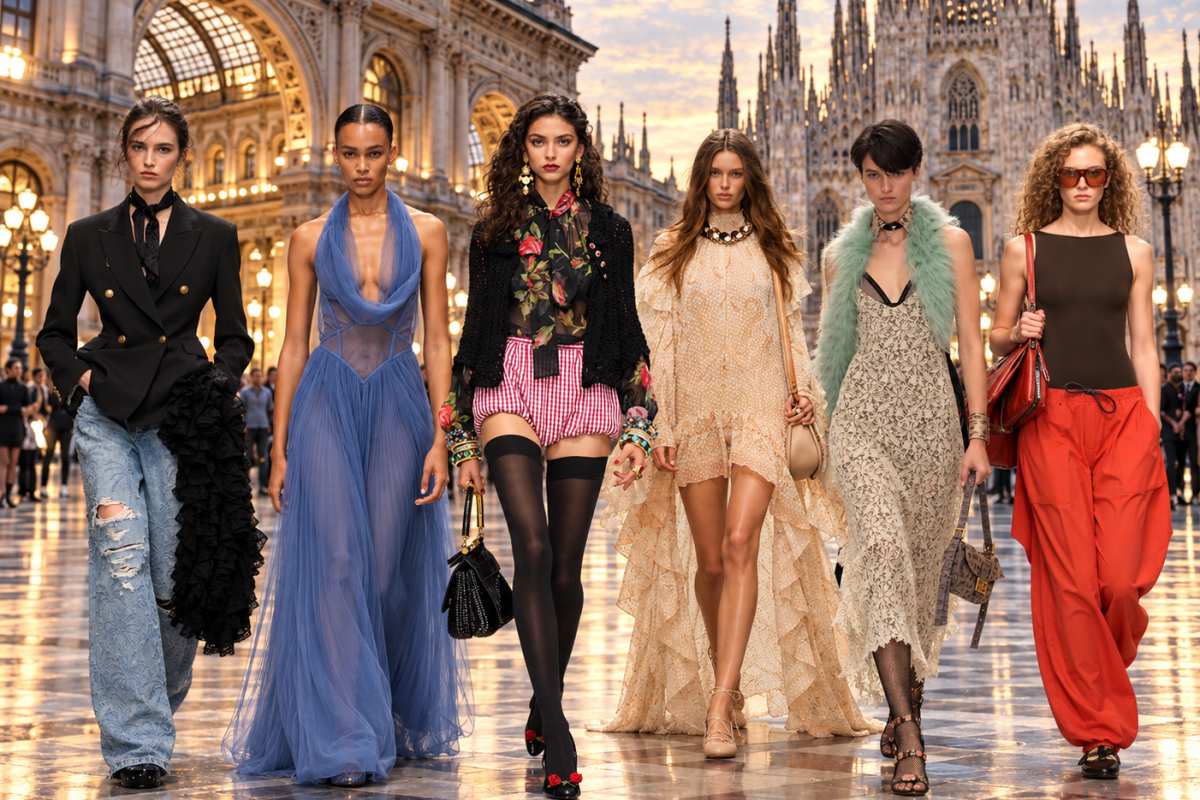
Today, September 28, Milan Fashion Week Spring/Summer 2027 officially comes to a close. The major shows are over, and the final day leaves room above all for digital. After seven days and 203 appointments — 61 shows, 88 presentations and 54 events — the question is no longer just what we saw on the runway, but what remains in Milan once the lights go out.

A first figure concerns the city’s power of attraction. Confcommercio Milano estimated almost 141,000 visitors, with a 22% rise in foreign visitors, and an economic impact of €219.5 million: €100.8 million in shopping, €85.4 million in hospitality and dining, and €32.9 million in transport. Significant numbers, even if 8% lower than in September 2025, showing how Fashion Week involves hotels, restaurants, shops, transport and services, well beyond the perimeter of the fashion houses.

Within this week, Vogue World: Milan was one of the moments of greatest international exposure. The Galleria Vittorio Emanuele II brought together fashion, entertainment, craftsmanship, technology, major maisons and international figures, turning the center of Milan into a global stage for one evening. An event of this scale strengthens the appeal of Fashion Week and the activity surrounding hospitality, dining, transport and shopping. But Vogue World also left something very concrete behind: the fundraising reached $3 million, about €2.65 million, earmarked for the renovation and expansion of the Quarto Oggiaro Library.

Then there are the contacts, the business relationships, the buyers, the international press, millions of images shared around the world and the orders that will continue to be finalized in the showrooms. As we already noted when discussing the positive sentiment expressed by buyers, approval is a first signal. The next step will be to understand how much of it will translate into purchases, and therefore into production.

And this is exactly where institutions should open a reflection. Not only celebrating attendance and visibility, but gathering and analyzing the results: hotel occupancy, dining, shopping, orders, buyers’ countries of origin and the impact on the supply chain. Understanding what worked and where to intervene can turn a week of enormous international exposure into an even more effective tool to support the sector.

Because behind the major fashion houses there is a supply chain made of weaving mills, garment makers, leather goods makers, shoe factories, workshops, artisans, pattern makers, logistics and thousands of small and medium-sized enterprises. This is where Made in Italy generates skills, employment and exports. Fashion Week can become even more of an opportunity to bring international buyers closer to production districts, to support the internationalization of SMEs, training and innovation, and to strengthen the link between runway, market and manufacturing.

Milan has shown once again that it can attract the world. The challenge now is to understand how to turn this attention into value that is ever more widely shared across the city and the entire Italian supply chain.

The runways go dark, but this is exactly when the most interesting work begins: measuring what this week has produced and turning it into growth. Because a Fashion Week is not measured only when it turns the lights on, but also by what it leaves behind when they go out.


Discover more of Sara’s World

Sara Dal Monte

Sara Dal Monte
Digital Journalist | Photographer | Art Director
Los Angeles • Sure-Com America
Instagram
X
Facebook
Facebook 2
Facebook Page

MILAN FASHION WEEK, BUYERS APPROVE. NOW ALL EYES TURN TO ORDERS

Milan Fashion Week Spring/Summer 2027 closes with a positive sentiment. Buyers speak of more concrete, recognizable, product-focused collections, while attendance was particularly high. Carla Cereda of Biffi highlights how consistent the proposals were with their respective maisons; Luigi D’Aniello describes a Milan full of energy and people, so much so that it reminded him of Design Week. Signals confirming that attention around Milanese fashion remains strong.

What emerges above all from the statements gathered by the trade press is a return to the reality of the store. Beppe Nugnes puts the garment and the client at the center: creativity and emotion must generate desire once the product reaches the boutique. Michele Franzese looks at the same point from another angle: the image attracts, but it is fabric, fit, workmanship and value for money that convince the customer.

Among the most appreciated collections, Prada stands out. Daniela Kraler sees the skirt as one of the strongest messages of the season; Federico Giglio credits Miuccia Prada and Raf Simons with consistency and new ideas on product, while Nugnes underlines their ability to make a familiar garment desirable again. D’Aniello considers it the most successful proposal in terms of concept, character and direction.

Praise also for Bottega Veneta, where a more concrete element appears: Cereda states that she intends to buy a lot from the maison, while Nugnes highlights the balance between craftsmanship, texture and lightness. It is not yet data on orders, but here appreciation is already accompanied by a commercial intention.

On Gucci, buyers express favorable opinions. Giglio sees a vision that Demna is progressively defining, Nugnes names Gucci as his favorite show, and Cereda includes it among the proposals that struck her most. These are their assessments and should be recorded as such. I have already expressed my own position on the maison’s new course: exaggerated proportions, extreme oversize, layering and reinterpretations of elements that already belong to Gucci’s history. My question therefore remains the same: beyond exasperation and reinterpretation, where is the new?

Fendi by Maria Grazia Chiuri convinces with its nod to the Seventies, its femininity and its balance between image, craftsmanship and product. Armani is appreciated for elegance and consistency, while Moschino and Max Mara win praise for their ability to reaffirm their presence. Among emerging designers, Franzese points to Francesco Murano and Marco Rambaldi, while reminding us that for a retailer creativity and quality must go hand in hand with production capacity, reliability and on-time delivery.

The picture coming out of Milan is therefore positive: audiences, attention, engaged buyers and greater concreteness. But it is precisely from these assessments that the question the market cares about arises: will this appreciation also translate into growth in orders compared with previous seasons?

Because appreciating and buying are not the same thing. In the first case, you recognize a collection’s potential; in the second, you commit budgets, choose quantities and take on commercial risk. At the moment we do not yet have an overall picture of Spring/Summer 2027 orders, especially international ones, while sales campaigns continue in the showrooms.

Fashion is creativity, image and communication, but it remains an industry. Buyers approve of Milan. Now all eyes turn to orders, to understand how much of this consensus will translate into market.


Discover more of Sara’s World

Sara Dal Monte

Sara Dal Monte
Digital Journalist | Photographer | Art Director
Los Angeles • Sure-Com America
Instagram
X
Facebook
Facebook 2
Facebook Page

DOLCE&GABBANA SS27, WHEN MADE IN ITALY BECOMES STORYTELLING

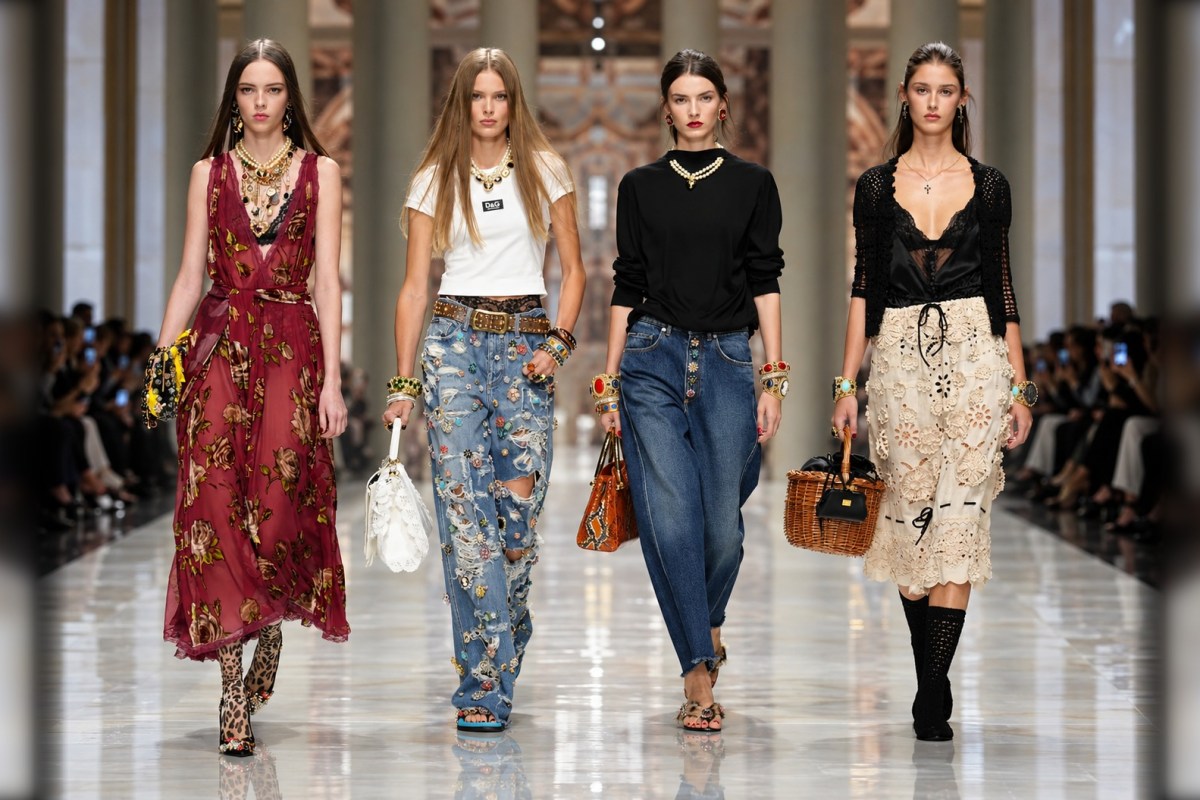
In a Milan Fashion Week marked by changes of creative direction, repositionings and new grammars, Dolce&Gabbana keeps doing something more difficult: remaining recognizable without standing still. The Spring/Summer 2027 collection starts again from a precise aesthetic heritage made of lace, lingerie, black and white, animal prints, statement jewelry, embellished denim, sheer fabrics, embroidery and tailoring. Codes that have long belonged to the work of Domenico Dolce and Stefano Gabbana, but that are constantly reworked, without chasing the new at all costs and without losing that stylistic signature which, over forty years, has become instantly recognizable.

SS27 works a great deal on contrasts. Denim is ripped, embroidered and studded with appliqués until it becomes almost couture; white lace meets black lingerie; gingham, seemingly innocent, is pushed toward an openly declared sensuality; jewels, crosses, stones, embroidery and precious workmanship transform the surfaces and take them far from any apparent simplicity. There is no minimalism, and there could not be. Dolce&Gabbana works through accumulation, contrast and decoration, but behind this richness the construction remains precise: the dress, the jacket, the corset, the embroidery, the jewel and the bag all belong to the same story.

And this is where fashion becomes something bigger. I believe few brands have told the world about Italy with the same force as Dolce&Gabbana. Domenico Dolce and Stefano Gabbana have traveled across the country, bringing collections, Alta Moda and presentations to the cities and places that best represent our beauty. Sicily remains one of the cardinal points of their imagination, but their Italian story is much broader. Inside Dolce&Gabbana there is food, there are markets, flowers, homes, architecture, territories, design, popular religious devotion and craftsmanship. There are lace and embroidery, tailoring and jewelry, handwork and that Italian ability to turn a craft into aesthetic culture.

The images that accompanied this collection before the show also went exactly in that direction: flowers, tomatoes, lace, photographs, jewels, historic interiors. Not simple decorative references, but fragments of an Italy transformed into image, fashion and communication. And this is where the title finds its meaning: for Dolce&Gabbana, Made in Italy is not just a place of origin, nor merely a certification of quality. It becomes storytelling. The storytelling of territories, crafts, traditions, beauty, manufacturing skill and culture.

At a time when many brands seem busy constantly redefining themselves, Dolce&Gabbana instead continues to know exactly where it comes from. This does not mean repeating the past. It means possessing enough creative material to transform it without denying it. For years Domenico Dolce and Stefano Gabbana have been building a narrative of Made in Italy capable of uniting tradition, craft and spectacle. And perhaps this is one of the most important achievements of their work: having made fashion a tool through which to tell the story of Italy.

That is why I continue to consider them among the greatest ambassadors of Italian beauty in the world.

Chapeau to Domenico Dolce and Stefano Gabbana.


GALLERY


Discover more of Sara’s World

Sara Dal Monte

Sara Dal Monte
Digital Journalist | Photographer | Art Director
Los Angeles • Sure-Com America
Instagram
X
Facebook
Facebook 2
Facebook Page

ERMANNO SCERVINO SS27, FEMININITY RETURNS TO CENTER STAGE

Ermanno Scervino brings to Milan Fashion Week a collection that puts back at the center something only seemingly simple: a garment should enhance the person wearing it, not replace her. This is the starting point of the Spring/Summer 2027 collection presented this morning at 10:30 at Piazza Lina Bo Bardi 1, a show built on femininity, on material and on a tailoring that feels no need to deform the body to prove it is contemporary.

Scervino works on the contrast between structure and lightness with a naturalness that holds the whole collection together. Blazers mark the waist, trousers widen, leather jackets and trench coats provide structure, while lingerie, bustiers, slip dresses, lace and sheer fabrics lighten the design and constantly bring attention back to the body. They are not separate worlds, but two registers that coexist and strengthen each other. Lingerie leaves the private sphere and becomes dress, top, construction; lace is no longer mere ornament but real material, capable of defining a silhouette as much as a well-cut jacket.

Even when the collection reveals a lot of the body, there is never a sense of shouted sensuality. The shorts are short, the bustiers evident, the transparencies declared, but everything stays within a precise control of proportions. Sensuality is not pursued through excess, but through the way the fabric falls, tightens, lets the body be glimpsed, follows movement. This is where Scervino’s work becomes most interesting, because the garment does not take over the woman: it accompanies her and heightens her presence.

Material plays a central role, but it is not exhibited as a technical exercise. Lace, embroidery, crochet, leather, denim, satin and precious workmanship enter the garments without turning the runway into a display of skill. Everything remains at the service of the silhouette. The palette too, from whites and ivories to shades of honey, tan, chocolate, black and powder pink, maintains a visual continuity that makes the collection legible and coherent. Light blues and palm-tree prints introduce a more summery note, but without slipping into the easy resort image.

The point, however, lies elsewhere. A great garment should never ask the person to disappear in order to be noticed. It should do the opposite: increase her presence, give her strength, correct, accompany, enhance. In this show Scervino does so very often, and he does it without needing to build unreal characters. The models remain women, the body remains legible, and femininity is not treated as something to be corrected or demolished.

And this is perhaps the most interesting part of the collection. In a season in which so much fashion keeps seeking the new through exasperation, Scervino chooses to work on beauty without making it banal. He does not give up research, but puts it at the service of the garment and the person. Fashion can be rupture, provocation, experimentation, but it can still have another function too: making a woman feel better in what she wears.


GALLERY


Discover more of Sara’s World

Sara Dal Monte

Sara Dal Monte
Digital Journalist | Photographer | Art Director
Los Angeles • Sure-Com America
Instagram
X
Facebook
Facebook 2
Facebook Page

GUCCI SS27: WHEN EXASPERATION BECOMES LANGUAGE

I swear I watched this show several times, because I wanted to understand where Demna wanted to take Gucci. In the end I found a key, and it is very clear: exasperation. Everything is pushed to the limit – proportions, volumes, the body, the very way an image is built. Knitwear becomes enormous and is worn by very thin boys; jackets either widen until they deform the figure or become tight, dry, almost constricting. In menswear especially, the body seems constantly corrected, shifted, diminished, as if the silhouette had to lose its balance in order to gain an identity.

And this is exactly where my problem with this collection begins. Because to exasperate means to bring something to a maximum level of tension, and after tension there necessarily comes a breaking point. Here, instead, I have the feeling that this tension has become the very language of the house, a grammar made of excess, deformation, citation, provocation, archive and constant contrasts, without it ever becoming fully clear what the point of arrival is.

Gucci comes from a different culture. It comes from precision, from construction, from an almost obsessive attention to detail, from leather, from accessories, from the ability to make a jacket, a bag or a shoe desirable without necessarily turning them into a statement. Demna takes this heritage and forces it, stretches it, shifts it, brings it into his own world. His signature is visible, very much so. But precisely because it is so visible, the question becomes inevitable: how much of Gucci remains, and how much are we simply watching Demna applied to Gucci?

In menswear the doubt is even stronger. I see a very young male figure, built almost on a single type of physique and attitude. Targeting that audience is fine – it would be absurd to deny it – but Gucci does not sell only to twenty-year-olds. It also sells to men of forty, fifty, sixty, to a client who may want to be contemporary without turning into a character. And here I struggle to understand where that man has gone.

Then comes the “family”: the boy, the girlfriend, the mother, the aunt, the older lady. I fully understand the desire to tell the story of a transversal brand, capable of crossing generations, but I keep asking myself what the story really is. Because if the common thread is simply taking different eras, different codes, archive pieces, Nineties sensuality, Seventies elements, Eighties volumes and putting them back together by deforming them, then we are not looking at a new vision: we are looking at a continuous reworking of what we have already seen.

I remain puzzled by the womenswear too. Sensuality is part of Gucci’s history and no one questions it, but there is sexy and sexy. There is a sensuality built on proportion, on cut, on a body that is suggested, and there is another that constantly needs to show itself. Here the second path is often chosen. It is a precise choice, but it does not always become elegance, at least not for me.

And so I return to the question I have been asking myself for some time: what are they trying to do with Gucci? Because this is not a small independent label that can afford to turn every collection into an act of protest or a conceptual exercise. This is Gucci. It is a global brand, with a history, a market, clients, investors and an evident problem of desirability to rebuild.

Destroying everything to see what happens next can also be a creative strategy. In fashion it has happened many times, and sometimes it has worked. But destruction alone is not a project. At some point you also have to build something the public wants to desire, wear, buy and recognize as new.


GALLERY


Discover more of Sara’s World

Sara Dal Monte

Sara Dal Monte
Digital Journalist | Photographer | Art Director
Los Angeles • Sure-Com America
Instagram
X
Facebook
Facebook 2
Facebook Page

TOD’S, THE CODE LIES IN THE DETAILS

This morning Tod’s opened the day at Milan Fashion Week with Matteo Tamburini’s Spring Summer 2027 collection and, looking at it, the first thing that came to mind was very simple: some brands need to be read, others are understood by the way they are made. Tod’s belongs to the second category. Not because it necessarily has to show a logo or an element recognizable from a distance, but because over time it has built a precise way of working on materials, accessories and proportions. I personally chose these looks because they are the ones I liked most and because, together, they tell this identity well without needing too many explanations.

Tamburini continues to work on a wardrobe that appears simple but is in fact highly controlled. There are wide trousers, Bermuda shorts, trench coats, leather skirts, knitwear, clean dresses and relaxed volumes, yet nothing seems left to chance. That is exactly where Tod’s makes the difference: in the finishes, the bags, the buckles, the shoes, the leathers, in the way an accessory enters the look without seeming added afterwards. I really like this balance, because it avoids that feeling of a collection built to astonish at all costs and instead lets the quality of the project emerge.

Tod’s comes from leather goods and footwear, and that culture is still felt very strongly. The bags have presence but do not weigh down the look, the shoes always seem conceived together with the outfit rather than as an afterthought, and belts and buckles become part of the overall construction. It is a care that shows even when the look becomes softer or more everyday. In fact, perhaps that is where it shows even better, because when you remove the spectacle, the real work remains: the shape, the material, the way a pair of trousers falls, the edge of a jacket, the relationship between a shirt and a bag.

This is what interests me about Tod’s today. Not shouted luxury, but precision. Not effect, but the continuity of a language. Tamburini does not seem to want to turn the brand into something it is not; he is doing subtler work, trying to bring Tod’s craft heritage into a lighter, contemporary and easy-to-wear wardrobe. And in my view the collection works precisely when it manages to do this: keeping the brand’s character recognizable without stiffening it into formulas already seen.

Looking at these looks, the feeling is that Tod’s still has an important advantage: it has a vocabulary of its own. It does not need to explain it from scratch every time. It is enough to observe a bag, a shoe, a buckle, a leather treatment or the cut of a garment to understand that behind it there is a precise product culture. And perhaps this is what I liked most about this morning’s show: the feeling that every detail is there because it serves a purpose, not to fill the stage.


GALLERY


Discover more of Sara’s World

Sara Dal Monte

Sara Dal Monte
Digital Journalist | Photographer | Art Director
Los Angeles • Sure-Com America
Instagram
X
Facebook
Facebook 2
Facebook Page

CAVALLI, THE PLEASURE OF BEING CAVALLI AGAIN

I really liked yesterday’s show, and not only for the clothes. I was glad to find again an atmosphere that belongs deeply to the history of Cavalli: the lights, the set, the very way the show was built around the woman. It brought back the Cavalli I had seen in person many years ago, when Roberto was still there, inside his world and inside the vision he had built and made instantly recognizable.

But today the driving force behind this new image is Fausto Puglisi, and it is right to say so clearly. He is the one who chose to bring Cavalli back to its own archive, to its strongest codes, to the sensuality and visual power that built the identity of the maison. It is a retrospective operation, certainly, but when it is done well it does not become nostalgia: it becomes language.

And it is above all here that I found something that had gradually faded in fashion over recent years: femininity. Puglisi does not try to diminish women, he does not make them awkward, and he does not seem afraid of their beauty. On the contrary, he makes them beautiful, sensual, aware of their own charm. A woman who wears a dress because she enjoys feeling feminine and attractive, and who is not at all uncomfortable being looked at. In fact, she likes being looked at, because she knows she feels good in what she is wearing.

The photographs accompanying this article also come from this reading. They are shots caught in movement, not posed images and not the classic front-facing runway pass. I chose the moments when the subject is unaware of the camera: an expression, a posture, a gesture, the natural movement of the body as the dress follows it. That is often where you understand a garment best, in the way it falls, opens, follows a leg, a shoulder, a twist. They are authentic, unprepared details, and in this collection they show clearly how much Puglisi worked on the dress to enhance the woman’s body, instead of hiding or distorting it.

And then there are the prints. Here Puglisi did, in my opinion, one of the smartest things: he went looking for Cavalli within its own history. Roberto Cavalli, even before becoming the designer known all over the world, was born as an experimenter and a master printer. At Osmannoro, that research had become technique, production, knowledge, craft. Colors, fabrics, leather, processes built up over time. And this is exactly where history cannot be cut off. Because Cavalli is this too.

Losing facilities and skills of that kind means losing not just a production, but a part of the know-how that made Made in Italy great. Textile printing, tailoring, shoemaking, leather, denim: crafts that require time, schooling, and the passing of knowledge from one generation to the next. And which all too often we risk scattering, just as others come to Italy to learn them.

That is why I like what Puglisi is doing. He is not simply recovering an archive. He is recovering the craft, the culture and the origin from which Cavalli was born. He is trying to understand Roberto Cavalli before reinterpreting Cavalli.

Prints, animalier, color, transparencies, denim, fringes, embroidery, dresses that follow the body: Puglisi has put these elements back together without fear of excess. And that is probably exactly what worked yesterday.

Fausto Puglisi looked back, yes. But not out of nostalgia. He looked back to find Cavalli again.


GALLERY


Discover more of Sara’s World

Sara Dal Monte

Sara Dal Monte
Digital Journalist | Photographer | Art Director
Los Angeles • Sure-Com America
Instagram
X
Facebook
Facebook 2
Facebook Page

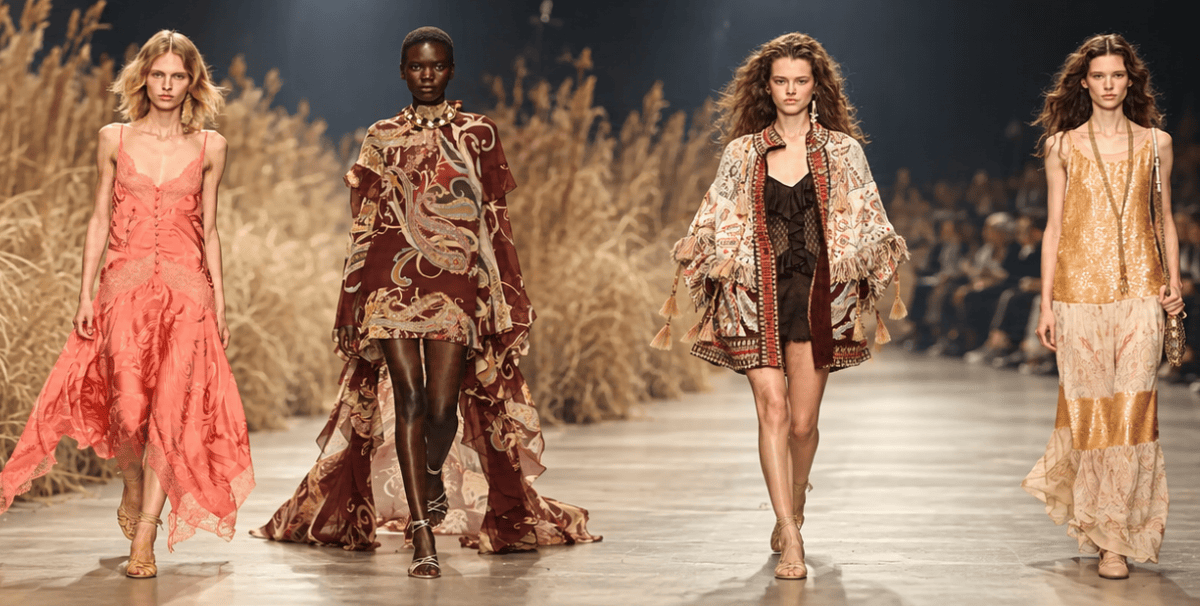
ETRO, A RUNWAY OF LIGHT, PAISLEY AND LIGHTNESS

Etro brings to the runway a collection that seems to be crossed by light and movement. There is no rigidity, no forced construction.

Instead, there is a fluid, soft, almost natural narrative that starts from powdery, very pale tones, moves through copper, coral and wine red, and returns once again to a light, sensual femininity that never shouts.

Among the most successful looks are very pale mini dresses with light trains and impalpable volumes, sheer fabrics that barely touch the body, materials that move like veils, and paisley prints lightened and almost dissolved into the fabric.

Then come dresses in rust-colored sheer lace, printed coral slips, paisley tunics in shades of burgundy, precious knitwear, embroidery and fringes: craftsmanship that keeps alive the decorative language that always remains central at Etro.

The more textured, bohemian passages are also very beautiful: embroidered cardigans, fringed surfaces, luminous sequined dresses, slender elongated silhouettes, all the way to the more revealing looks, almost like a tribal evening wear, where beads, netting and accessories become an integral part of the construction.

Everything flows within an idea of free, nomadic, instinctive elegance, yet held together by a precise signature.

What is interesting is that Etro does not chase effect. Instead, it works on atmosphere, on pace, on the way the clothes sit on the body and move through space.

And that is exactly where the collection finds its best moment.


GALLERY


Discover more of Sara’s World

Sara Dal Monte

Sara Dal Monte
Digital Journalist | Photographer | Art Director
Los Angeles • Sure-Com America
Instagram
X
Facebook
Facebook 2
Facebook Page

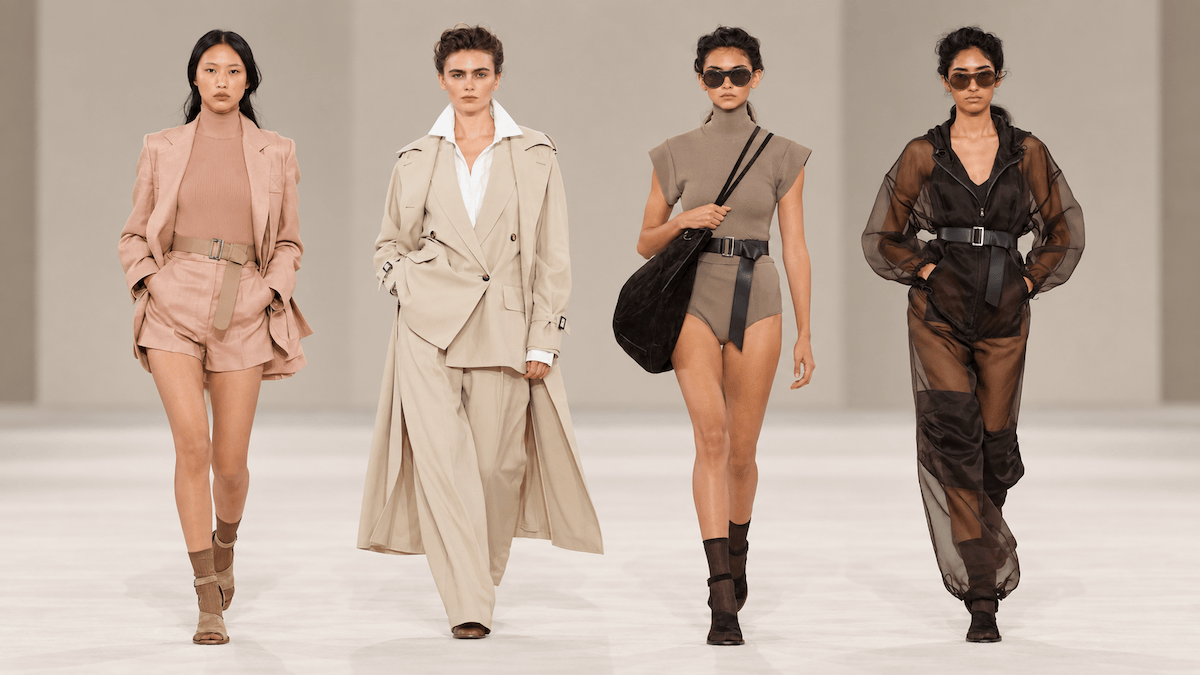
MAX MARA, “FAR HORIZON”: SPRING SUMMER 2027

This morning at 9:30, Max Mara presented its Spring Summer 2027 collection in Milan, titled “Far Horizon”. A collection that does not try to rewrite the language of the brand, but to shift its point of view. The work starts once again from what Max Mara knows well and does best: construction, proportions, tailoring, control of form and fit. Here, however, the language becomes lighter, volumes open up and structure enters a more summery dimension without losing precision.

Ian Griffiths, creative director of the house, keeps working on a very strong stylistic signature without turning it into a constant quotation of the archive. It is an important step, especially in a season when many brands are changing direction, creative directors and references. Max Mara does not start from scratch: it works on its own structure and carries it forward.

The collection comes alive through the garments: long trench coats, blazers, wide high-waisted trousers, tailored shorts, white shirts, slip dresses, tops and vests build a very precise wardrobe. The belt returns often and becomes part of the construction: it cinches the waist, breaks up the volumes and defines the proportions. The palette moves between camel, tobacco, sand, taupe, beige, brown, black, white and powder pink, with sharper contrasts entrusted mainly to dark belts, tall boots and essential accessories.

The relationship between structure and lightness is particularly interesting. Tailored fabrics and more compact surfaces are paired with light, sheer, almost weightless materials. Some trench coats keep every element of the classic garment but are emptied of their weight; elsewhere, glossy surfaces, fine knits and more technical constructions appear. Even when the body is revealed through shorts, bodysuits, deep necklines or more fitted dresses, the construction remains controlled.

The looks work very well because they do not feel like runway exercises. These are clothes designed to be worn, with precise proportions and a fit that remains one of the house’s great strengths. “Far Horizon” thus works as a synthesis of the whole: the horizon shifts as you move, but it never disappears. Max Mara does the same: it changes its point of view, lightens, opens up, alters proportions, yet stays within a very clear line.

Spring Summer 2027 thus confirms a precise strategy: moving forward without losing its own measure.


GALLERY


Discover more of Sara’s World

Sara Dal Monte

Sara Dal Monte
Digital Journalist | Photographer | Art Director
Los Angeles • Sure-Com America
Instagram
X
Facebook
Facebook 2
Facebook Page

GENNY, SPRING SUMMER 2027 BETWEEN FLOWERS, SHEER FABRICS AND NEW PROPORTIONS

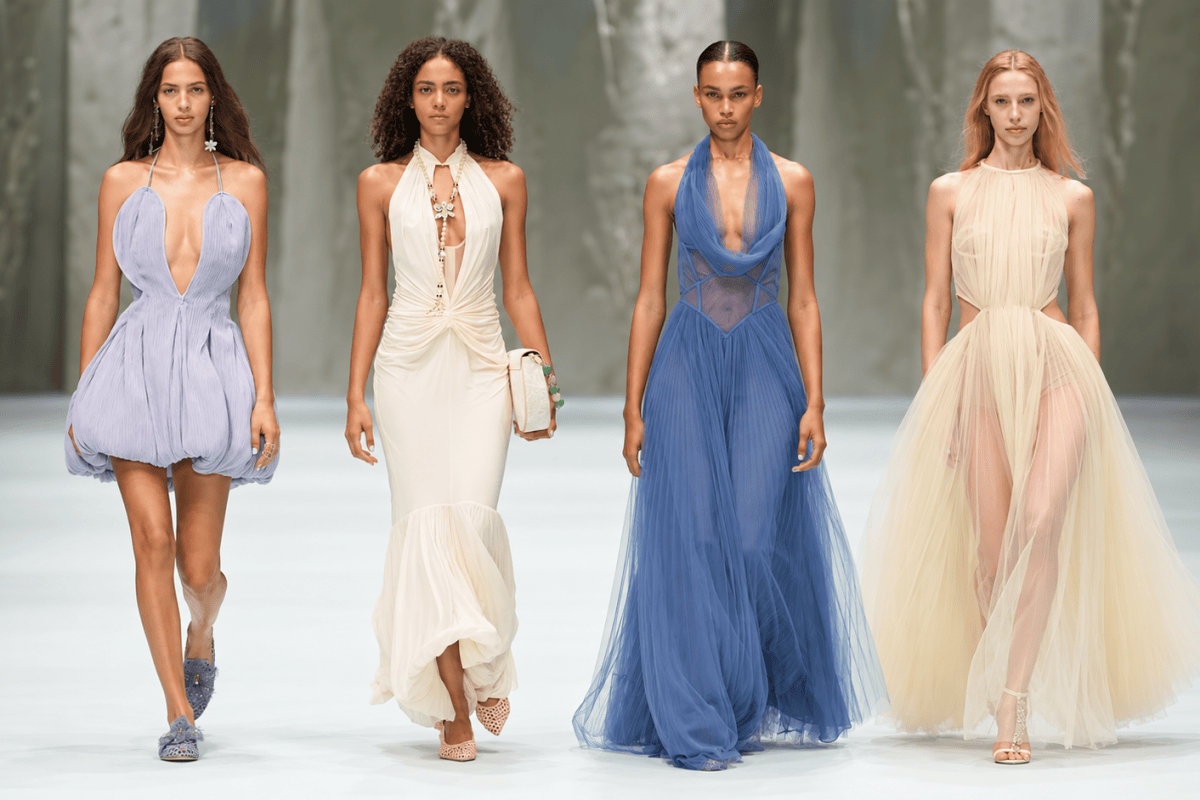
This morning at 10:30, Genny presented its Spring Summer 2027 collection in Milan under the creative direction of Sara Cavazza Facchini. A collection of 43 looks built on femininity, lightness and decoration, with a very evident work on volumes, sheer fabrics, embroidery and movement.

It is almost a garden that has stepped into the wardrobe. Flowers – printed, embroidered and appliquéd – run across dresses, trousers and denim; they appear on hems, on surfaces and as three-dimensional elements, together with lace, fringes, weaves and light fabrics. The palette moves from white and ivory to pink, lilac, light blue, yellow, olive green and brighter tones, while the silhouettes alternate balloon minidresses, long draped gowns, fluid trousers, light suits and deep necklines.

Cavazza Facchini works a great deal on the contrast between construction and softness. Some garments have almost sculptural shapes, others follow the body with greater fluidity; denim is treated as a decorative surface, while sheer fabrics and layering make even the most complex looks feel lighter.

Looking at the whole, a precise choice also emerges: this does not seem to be a collection designed mainly for everyday office life. Its center of gravity is closer to a resort and eventwear wardrobe – occasions, travel, evenings, ceremonies and moments when a dress needs to have presence. Sheer fabrics, necklines, embroidery, lace and important volumes all point in this direction, and it is hard to think it is accidental: it looks rather like a very conscious stylistic choice.

Genny thus builds a declared femininity, romantic but not fragile, decorative but not heavy. A collection designed to be seen, remembered and above all worn in those moments when the dress has to become part of the scene.


GALLERY


Discover more of Sara’s World

Sara Dal Monte

Sara Dal Monte
Digital Journalist | Photographer | Art Director
Los Angeles • Sure-Com America
Instagram
X
Facebook
Facebook 2
Facebook Page