MILAN FASHION WEEK, THE RUNWAYS GO DARK. WHAT REALLY REMAINS?

Today, September 28, Milan Fashion Week Spring/Summer 2027 officially comes to a close. The major shows are over, and the final day leaves room above all for digital. After seven days and 203 appointments — 61 shows, 88 presentations and 54 events — the question is no longer just what we saw on the runway, but what remains in Milan once the lights go out.

A first figure concerns the city’s power of attraction. Confcommercio Milano estimated almost 141,000 visitors, with a 22% rise in foreign visitors, and an economic impact of €219.5 million: €100.8 million in shopping, €85.4 million in hospitality and dining, and €32.9 million in transport. Significant numbers, even if 8% lower than in September 2025, showing how Fashion Week involves hotels, restaurants, shops, transport and services, well beyond the perimeter of the fashion houses.

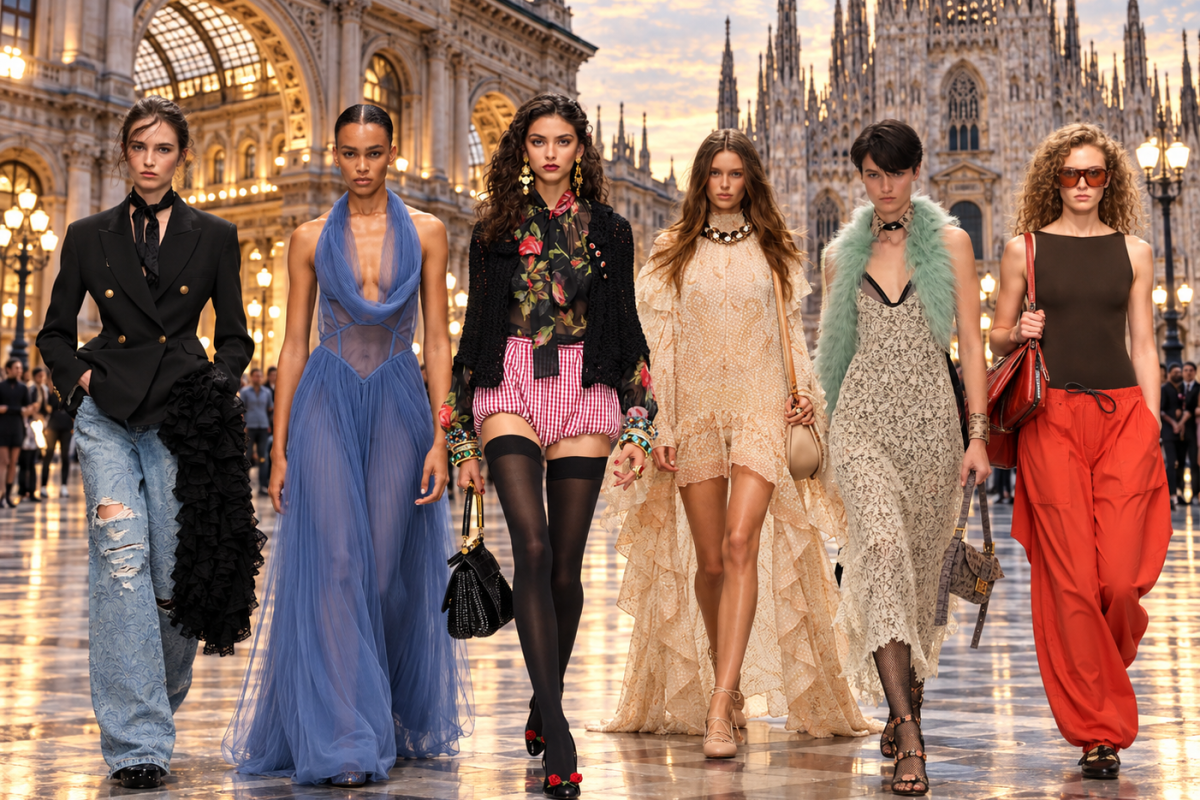
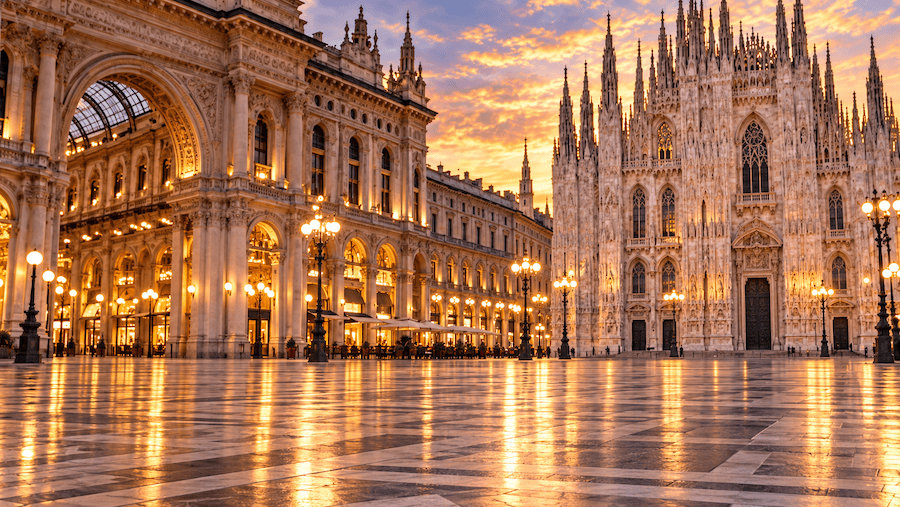
Within this week, Vogue World: Milan was one of the moments of greatest international exposure. The Galleria Vittorio Emanuele II brought together fashion, entertainment, craftsmanship, technology, major maisons and international figures, turning the center of Milan into a global stage for one evening. An event of this scale strengthens the appeal of Fashion Week and the activity surrounding hospitality, dining, transport and shopping. But Vogue World also left something very concrete behind: the fundraising reached $3 million, about €2.65 million, earmarked for the renovation and expansion of the Quarto Oggiaro Library.

Then there are the contacts, the business relationships, the buyers, the international press, millions of images shared around the world and the orders that will continue to be finalized in the showrooms. As we already noted when discussing the positive sentiment expressed by buyers, approval is a first signal. The next step will be to understand how much of it will translate into purchases, and therefore into production.

And this is exactly where institutions should open a reflection. Not only celebrating attendance and visibility, but gathering and analyzing the results: hotel occupancy, dining, shopping, orders, buyers’ countries of origin and the impact on the supply chain. Understanding what worked and where to intervene can turn a week of enormous international exposure into an even more effective tool to support the sector.

Because behind the major fashion houses there is a supply chain made of weaving mills, garment makers, leather goods makers, shoe factories, workshops, artisans, pattern makers, logistics and thousands of small and medium-sized enterprises. This is where Made in Italy generates skills, employment and exports. Fashion Week can become even more of an opportunity to bring international buyers closer to production districts, to support the internationalization of SMEs, training and innovation, and to strengthen the link between runway, market and manufacturing.

Milan has shown once again that it can attract the world. The challenge now is to understand how to turn this attention into value that is ever more widely shared across the city and the entire Italian supply chain.

The runways go dark, but this is exactly when the most interesting work begins: measuring what this week has produced and turning it into growth. Because a Fashion Week is not measured only when it turns the lights on, but also by what it leaves behind when they go out.


Discover more of Sara’s World

Sara Dal Monte

Sara Dal Monte
Digital Journalist | Photographer | Art Director
Los Angeles • Sure-Com America
Instagram
X
Facebook
Facebook 2
Facebook Page

MILAN FASHION WEEK, BUYERS APPROVE. NOW ALL EYES TURN TO ORDERS

Milan Fashion Week Spring/Summer 2027 closes with a positive sentiment. Buyers speak of more concrete, recognizable, product-focused collections, while attendance was particularly high. Carla Cereda of Biffi highlights how consistent the proposals were with their respective maisons; Luigi D’Aniello describes a Milan full of energy and people, so much so that it reminded him of Design Week. Signals confirming that attention around Milanese fashion remains strong.

What emerges above all from the statements gathered by the trade press is a return to the reality of the store. Beppe Nugnes puts the garment and the client at the center: creativity and emotion must generate desire once the product reaches the boutique. Michele Franzese looks at the same point from another angle: the image attracts, but it is fabric, fit, workmanship and value for money that convince the customer.

Among the most appreciated collections, Prada stands out. Daniela Kraler sees the skirt as one of the strongest messages of the season; Federico Giglio credits Miuccia Prada and Raf Simons with consistency and new ideas on product, while Nugnes underlines their ability to make a familiar garment desirable again. D’Aniello considers it the most successful proposal in terms of concept, character and direction.

Praise also for Bottega Veneta, where a more concrete element appears: Cereda states that she intends to buy a lot from the maison, while Nugnes highlights the balance between craftsmanship, texture and lightness. It is not yet data on orders, but here appreciation is already accompanied by a commercial intention.

On Gucci, buyers express favorable opinions. Giglio sees a vision that Demna is progressively defining, Nugnes names Gucci as his favorite show, and Cereda includes it among the proposals that struck her most. These are their assessments and should be recorded as such. I have already expressed my own position on the maison’s new course: exaggerated proportions, extreme oversize, layering and reinterpretations of elements that already belong to Gucci’s history. My question therefore remains the same: beyond exasperation and reinterpretation, where is the new?

Fendi by Maria Grazia Chiuri convinces with its nod to the Seventies, its femininity and its balance between image, craftsmanship and product. Armani is appreciated for elegance and consistency, while Moschino and Max Mara win praise for their ability to reaffirm their presence. Among emerging designers, Franzese points to Francesco Murano and Marco Rambaldi, while reminding us that for a retailer creativity and quality must go hand in hand with production capacity, reliability and on-time delivery.

The picture coming out of Milan is therefore positive: audiences, attention, engaged buyers and greater concreteness. But it is precisely from these assessments that the question the market cares about arises: will this appreciation also translate into growth in orders compared with previous seasons?

Because appreciating and buying are not the same thing. In the first case, you recognize a collection’s potential; in the second, you commit budgets, choose quantities and take on commercial risk. At the moment we do not yet have an overall picture of Spring/Summer 2027 orders, especially international ones, while sales campaigns continue in the showrooms.

Fashion is creativity, image and communication, but it remains an industry. Buyers approve of Milan. Now all eyes turn to orders, to understand how much of this consensus will translate into market.


Discover more of Sara’s World

Sara Dal Monte

Sara Dal Monte
Digital Journalist | Photographer | Art Director
Los Angeles • Sure-Com America
Instagram
X
Facebook
Facebook 2
Facebook Page