MILAN FASHION WEEK, THE RUNWAYS GO DARK. WHAT REALLY REMAINS?

Today, September 28, Milan Fashion Week Spring/Summer 2027 officially comes to a close. The major shows are over, and the final day leaves room above all for digital. After seven days and 203 appointments — 61 shows, 88 presentations and 54 events — the question is no longer just what we saw on the runway, but what remains in Milan once the lights go out.

A first figure concerns the city’s power of attraction. Confcommercio Milano estimated almost 141,000 visitors, with a 22% rise in foreign visitors, and an economic impact of €219.5 million: €100.8 million in shopping, €85.4 million in hospitality and dining, and €32.9 million in transport. Significant numbers, even if 8% lower than in September 2025, showing how Fashion Week involves hotels, restaurants, shops, transport and services, well beyond the perimeter of the fashion houses.

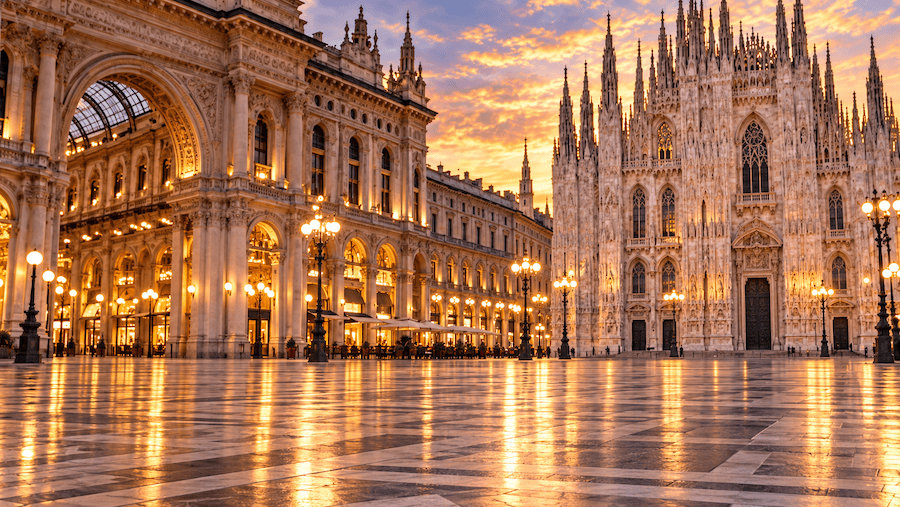
Within this week, Vogue World: Milan was one of the moments of greatest international exposure. The Galleria Vittorio Emanuele II brought together fashion, entertainment, craftsmanship, technology, major maisons and international figures, turning the center of Milan into a global stage for one evening. An event of this scale strengthens the appeal of Fashion Week and the activity surrounding hospitality, dining, transport and shopping. But Vogue World also left something very concrete behind: the fundraising reached $3 million, about €2.65 million, earmarked for the renovation and expansion of the Quarto Oggiaro Library.

Then there are the contacts, the business relationships, the buyers, the international press, millions of images shared around the world and the orders that will continue to be finalized in the showrooms. As we already noted when discussing the positive sentiment expressed by buyers, approval is a first signal. The next step will be to understand how much of it will translate into purchases, and therefore into production.

And this is exactly where institutions should open a reflection. Not only celebrating attendance and visibility, but gathering and analyzing the results: hotel occupancy, dining, shopping, orders, buyers’ countries of origin and the impact on the supply chain. Understanding what worked and where to intervene can turn a week of enormous international exposure into an even more effective tool to support the sector.

Because behind the major fashion houses there is a supply chain made of weaving mills, garment makers, leather goods makers, shoe factories, workshops, artisans, pattern makers, logistics and thousands of small and medium-sized enterprises. This is where Made in Italy generates skills, employment and exports. Fashion Week can become even more of an opportunity to bring international buyers closer to production districts, to support the internationalization of SMEs, training and innovation, and to strengthen the link between runway, market and manufacturing.

Milan has shown once again that it can attract the world. The challenge now is to understand how to turn this attention into value that is ever more widely shared across the city and the entire Italian supply chain.

The runways go dark, but this is exactly when the most interesting work begins: measuring what this week has produced and turning it into growth. Because a Fashion Week is not measured only when it turns the lights on, but also by what it leaves behind when they go out.


Discover more of Sara’s World

Sara Dal Monte

Sara Dal Monte
Digital Journalist | Photographer | Art Director
Los Angeles • Sure-Com America
Instagram
X
Facebook
Facebook 2
Facebook Page

DOLCE&GABBANA SS27, WHEN MADE IN ITALY BECOMES STORYTELLING

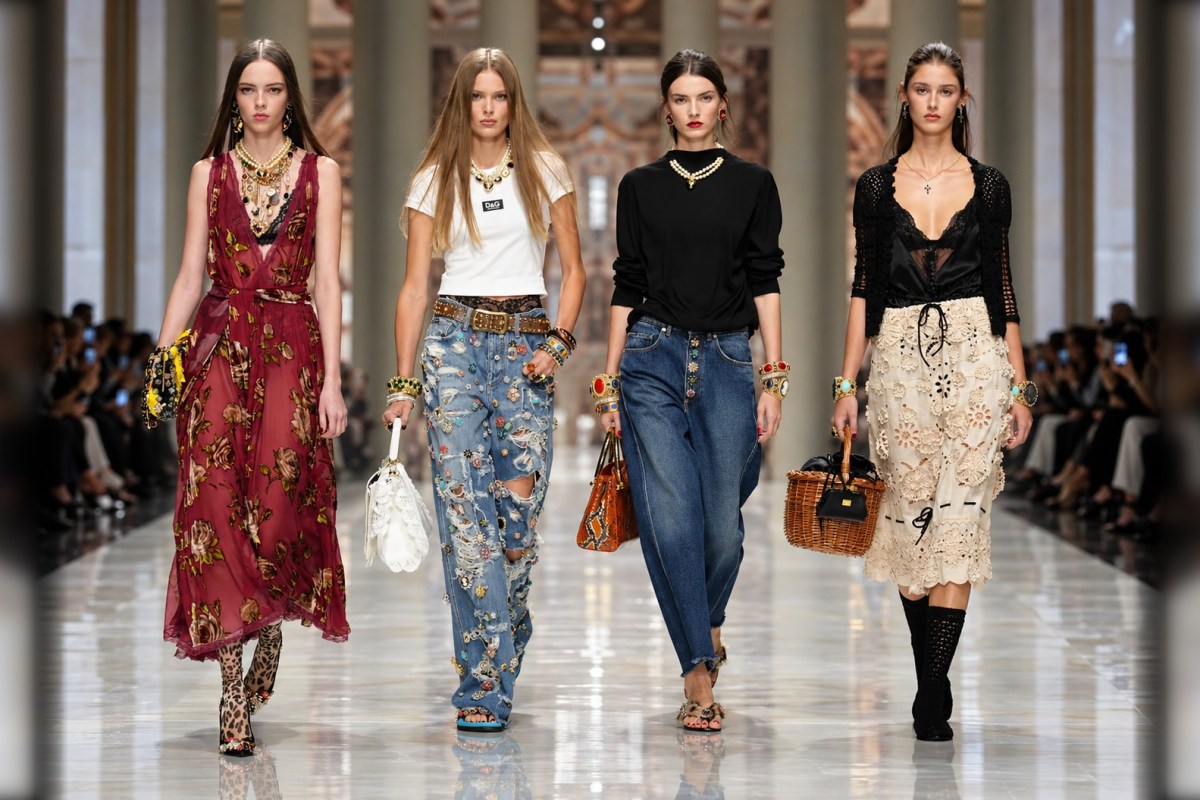
In a Milan Fashion Week marked by changes of creative direction, repositionings and new grammars, Dolce&Gabbana keeps doing something more difficult: remaining recognizable without standing still. The Spring/Summer 2027 collection starts again from a precise aesthetic heritage made of lace, lingerie, black and white, animal prints, statement jewelry, embellished denim, sheer fabrics, embroidery and tailoring. Codes that have long belonged to the work of Domenico Dolce and Stefano Gabbana, but that are constantly reworked, without chasing the new at all costs and without losing that stylistic signature which, over forty years, has become instantly recognizable.

SS27 works a great deal on contrasts. Denim is ripped, embroidered and studded with appliqués until it becomes almost couture; white lace meets black lingerie; gingham, seemingly innocent, is pushed toward an openly declared sensuality; jewels, crosses, stones, embroidery and precious workmanship transform the surfaces and take them far from any apparent simplicity. There is no minimalism, and there could not be. Dolce&Gabbana works through accumulation, contrast and decoration, but behind this richness the construction remains precise: the dress, the jacket, the corset, the embroidery, the jewel and the bag all belong to the same story.

And this is where fashion becomes something bigger. I believe few brands have told the world about Italy with the same force as Dolce&Gabbana. Domenico Dolce and Stefano Gabbana have traveled across the country, bringing collections, Alta Moda and presentations to the cities and places that best represent our beauty. Sicily remains one of the cardinal points of their imagination, but their Italian story is much broader. Inside Dolce&Gabbana there is food, there are markets, flowers, homes, architecture, territories, design, popular religious devotion and craftsmanship. There are lace and embroidery, tailoring and jewelry, handwork and that Italian ability to turn a craft into aesthetic culture.

The images that accompanied this collection before the show also went exactly in that direction: flowers, tomatoes, lace, photographs, jewels, historic interiors. Not simple decorative references, but fragments of an Italy transformed into image, fashion and communication. And this is where the title finds its meaning: for Dolce&Gabbana, Made in Italy is not just a place of origin, nor merely a certification of quality. It becomes storytelling. The storytelling of territories, crafts, traditions, beauty, manufacturing skill and culture.

At a time when many brands seem busy constantly redefining themselves, Dolce&Gabbana instead continues to know exactly where it comes from. This does not mean repeating the past. It means possessing enough creative material to transform it without denying it. For years Domenico Dolce and Stefano Gabbana have been building a narrative of Made in Italy capable of uniting tradition, craft and spectacle. And perhaps this is one of the most important achievements of their work: having made fashion a tool through which to tell the story of Italy.

That is why I continue to consider them among the greatest ambassadors of Italian beauty in the world.

Chapeau to Domenico Dolce and Stefano Gabbana.


GALLERY


Discover more of Sara’s World

Sara Dal Monte

Sara Dal Monte
Digital Journalist | Photographer | Art Director
Los Angeles • Sure-Com America
Instagram
X
Facebook
Facebook 2
Facebook Page

ERMANNO SCERVINO SS27, FEMININITY RETURNS TO CENTER STAGE

Ermanno Scervino brings to Milan Fashion Week a collection that puts back at the center something only seemingly simple: a garment should enhance the person wearing it, not replace her. This is the starting point of the Spring/Summer 2027 collection presented this morning at 10:30 at Piazza Lina Bo Bardi 1, a show built on femininity, on material and on a tailoring that feels no need to deform the body to prove it is contemporary.

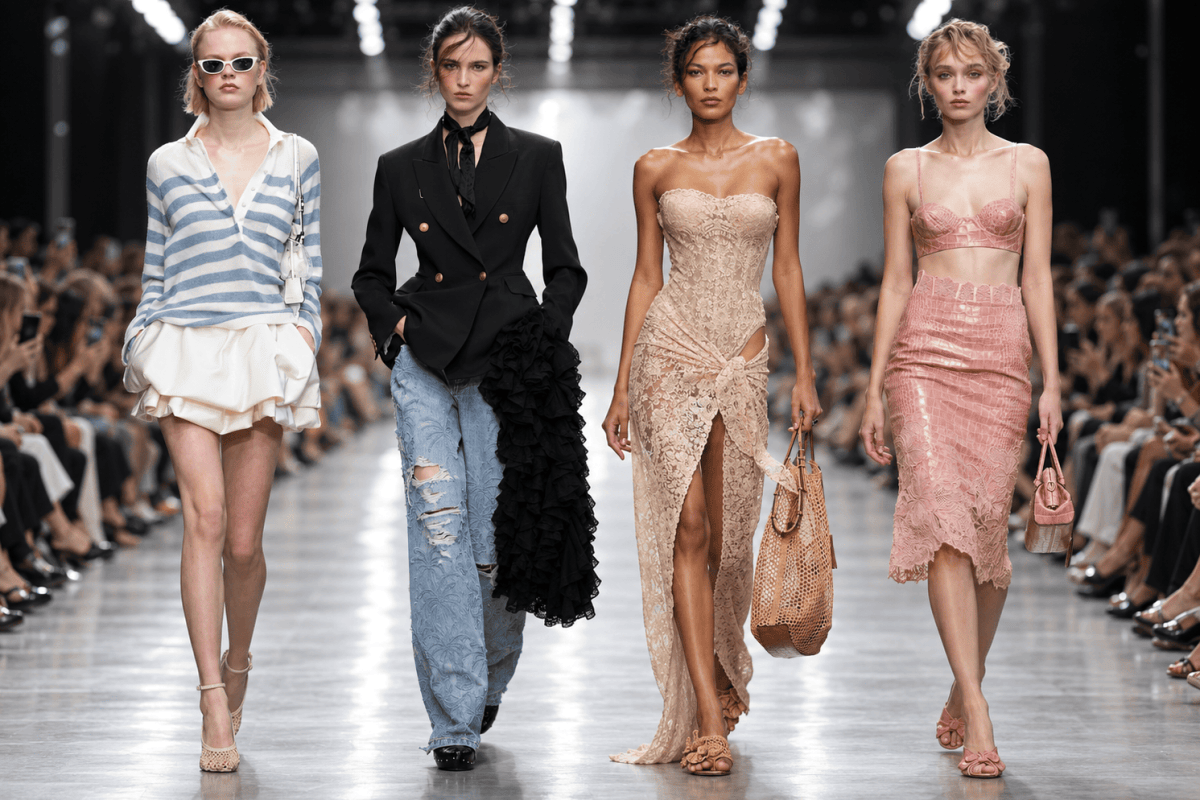
Scervino works on the contrast between structure and lightness with a naturalness that holds the whole collection together. Blazers mark the waist, trousers widen, leather jackets and trench coats provide structure, while lingerie, bustiers, slip dresses, lace and sheer fabrics lighten the design and constantly bring attention back to the body. They are not separate worlds, but two registers that coexist and strengthen each other. Lingerie leaves the private sphere and becomes dress, top, construction; lace is no longer mere ornament but real material, capable of defining a silhouette as much as a well-cut jacket.

Even when the collection reveals a lot of the body, there is never a sense of shouted sensuality. The shorts are short, the bustiers evident, the transparencies declared, but everything stays within a precise control of proportions. Sensuality is not pursued through excess, but through the way the fabric falls, tightens, lets the body be glimpsed, follows movement. This is where Scervino’s work becomes most interesting, because the garment does not take over the woman: it accompanies her and heightens her presence.

Material plays a central role, but it is not exhibited as a technical exercise. Lace, embroidery, crochet, leather, denim, satin and precious workmanship enter the garments without turning the runway into a display of skill. Everything remains at the service of the silhouette. The palette too, from whites and ivories to shades of honey, tan, chocolate, black and powder pink, maintains a visual continuity that makes the collection legible and coherent. Light blues and palm-tree prints introduce a more summery note, but without slipping into the easy resort image.

The point, however, lies elsewhere. A great garment should never ask the person to disappear in order to be noticed. It should do the opposite: increase her presence, give her strength, correct, accompany, enhance. In this show Scervino does so very often, and he does it without needing to build unreal characters. The models remain women, the body remains legible, and femininity is not treated as something to be corrected or demolished.

And this is perhaps the most interesting part of the collection. In a season in which so much fashion keeps seeking the new through exasperation, Scervino chooses to work on beauty without making it banal. He does not give up research, but puts it at the service of the garment and the person. Fashion can be rupture, provocation, experimentation, but it can still have another function too: making a woman feel better in what she wears.


GALLERY


Discover more of Sara’s World

Sara Dal Monte

Sara Dal Monte
Digital Journalist | Photographer | Art Director
Los Angeles • Sure-Com America
Instagram
X
Facebook
Facebook 2
Facebook Page

TOD’S, THE CODE LIES IN THE DETAILS

This morning Tod’s opened the day at Milan Fashion Week with Matteo Tamburini’s Spring Summer 2027 collection and, looking at it, the first thing that came to mind was very simple: some brands need to be read, others are understood by the way they are made. Tod’s belongs to the second category. Not because it necessarily has to show a logo or an element recognizable from a distance, but because over time it has built a precise way of working on materials, accessories and proportions. I personally chose these looks because they are the ones I liked most and because, together, they tell this identity well without needing too many explanations.

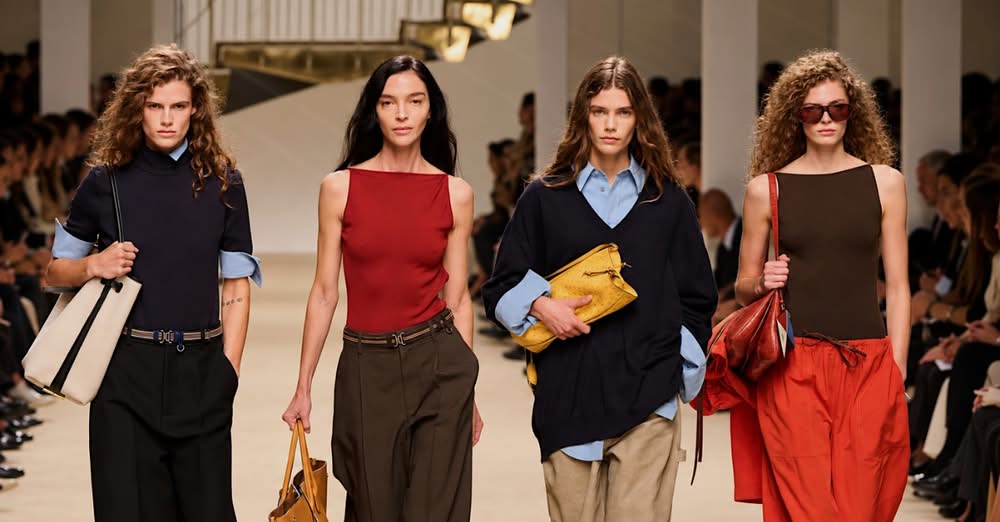
Tamburini continues to work on a wardrobe that appears simple but is in fact highly controlled. There are wide trousers, Bermuda shorts, trench coats, leather skirts, knitwear, clean dresses and relaxed volumes, yet nothing seems left to chance. That is exactly where Tod’s makes the difference: in the finishes, the bags, the buckles, the shoes, the leathers, in the way an accessory enters the look without seeming added afterwards. I really like this balance, because it avoids that feeling of a collection built to astonish at all costs and instead lets the quality of the project emerge.

Tod’s comes from leather goods and footwear, and that culture is still felt very strongly. The bags have presence but do not weigh down the look, the shoes always seem conceived together with the outfit rather than as an afterthought, and belts and buckles become part of the overall construction. It is a care that shows even when the look becomes softer or more everyday. In fact, perhaps that is where it shows even better, because when you remove the spectacle, the real work remains: the shape, the material, the way a pair of trousers falls, the edge of a jacket, the relationship between a shirt and a bag.

This is what interests me about Tod’s today. Not shouted luxury, but precision. Not effect, but the continuity of a language. Tamburini does not seem to want to turn the brand into something it is not; he is doing subtler work, trying to bring Tod’s craft heritage into a lighter, contemporary and easy-to-wear wardrobe. And in my view the collection works precisely when it manages to do this: keeping the brand’s character recognizable without stiffening it into formulas already seen.

Looking at these looks, the feeling is that Tod’s still has an important advantage: it has a vocabulary of its own. It does not need to explain it from scratch every time. It is enough to observe a bag, a shoe, a buckle, a leather treatment or the cut of a garment to understand that behind it there is a precise product culture. And perhaps this is what I liked most about this morning’s show: the feeling that every detail is there because it serves a purpose, not to fill the stage.


GALLERY


Discover more of Sara’s World

Sara Dal Monte

Sara Dal Monte
Digital Journalist | Photographer | Art Director
Los Angeles • Sure-Com America
Instagram
X
Facebook
Facebook 2
Facebook Page

CAVALLI, THE PLEASURE OF BEING CAVALLI AGAIN

I really liked yesterday’s show, and not only for the clothes. I was glad to find again an atmosphere that belongs deeply to the history of Cavalli: the lights, the set, the very way the show was built around the woman. It brought back the Cavalli I had seen in person many years ago, when Roberto was still there, inside his world and inside the vision he had built and made instantly recognizable.

But today the driving force behind this new image is Fausto Puglisi, and it is right to say so clearly. He is the one who chose to bring Cavalli back to its own archive, to its strongest codes, to the sensuality and visual power that built the identity of the maison. It is a retrospective operation, certainly, but when it is done well it does not become nostalgia: it becomes language.

And it is above all here that I found something that had gradually faded in fashion over recent years: femininity. Puglisi does not try to diminish women, he does not make them awkward, and he does not seem afraid of their beauty. On the contrary, he makes them beautiful, sensual, aware of their own charm. A woman who wears a dress because she enjoys feeling feminine and attractive, and who is not at all uncomfortable being looked at. In fact, she likes being looked at, because she knows she feels good in what she is wearing.

The photographs accompanying this article also come from this reading. They are shots caught in movement, not posed images and not the classic front-facing runway pass. I chose the moments when the subject is unaware of the camera: an expression, a posture, a gesture, the natural movement of the body as the dress follows it. That is often where you understand a garment best, in the way it falls, opens, follows a leg, a shoulder, a twist. They are authentic, unprepared details, and in this collection they show clearly how much Puglisi worked on the dress to enhance the woman’s body, instead of hiding or distorting it.

And then there are the prints. Here Puglisi did, in my opinion, one of the smartest things: he went looking for Cavalli within its own history. Roberto Cavalli, even before becoming the designer known all over the world, was born as an experimenter and a master printer. At Osmannoro, that research had become technique, production, knowledge, craft. Colors, fabrics, leather, processes built up over time. And this is exactly where history cannot be cut off. Because Cavalli is this too.

Losing facilities and skills of that kind means losing not just a production, but a part of the know-how that made Made in Italy great. Textile printing, tailoring, shoemaking, leather, denim: crafts that require time, schooling, and the passing of knowledge from one generation to the next. And which all too often we risk scattering, just as others come to Italy to learn them.

That is why I like what Puglisi is doing. He is not simply recovering an archive. He is recovering the craft, the culture and the origin from which Cavalli was born. He is trying to understand Roberto Cavalli before reinterpreting Cavalli.

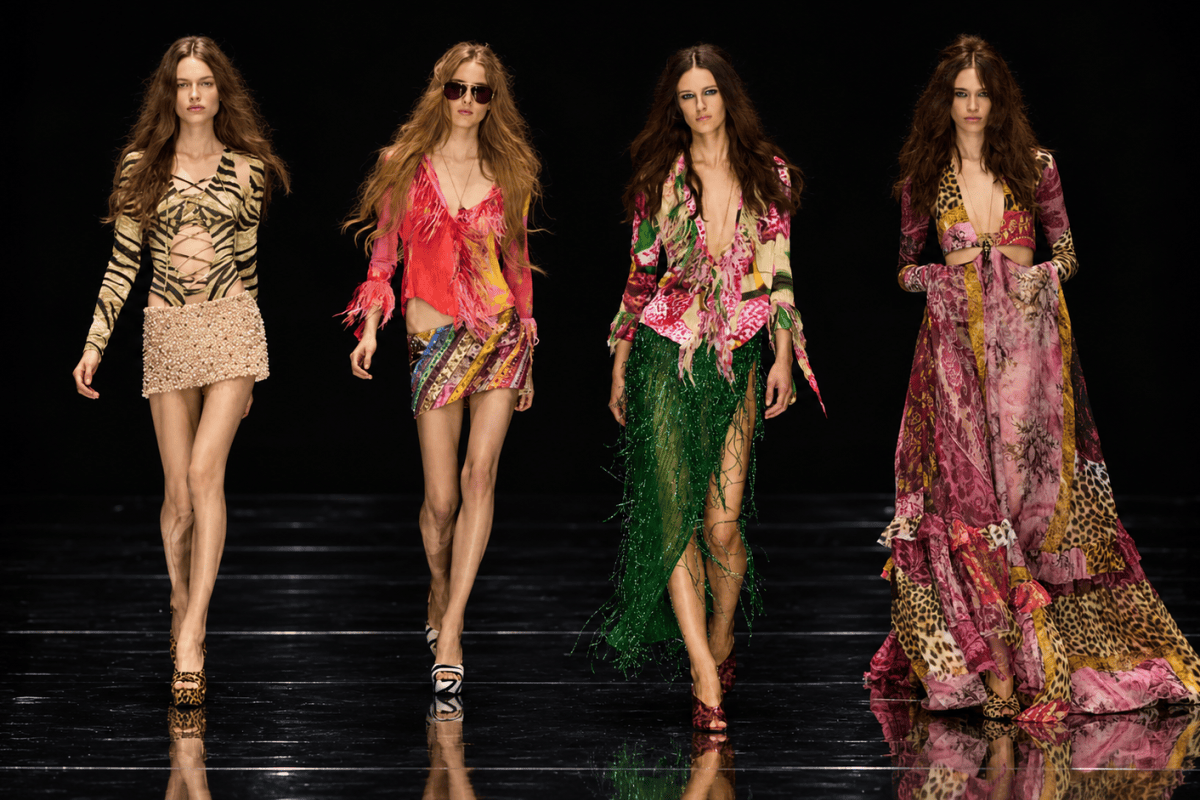
Prints, animalier, color, transparencies, denim, fringes, embroidery, dresses that follow the body: Puglisi has put these elements back together without fear of excess. And that is probably exactly what worked yesterday.

Fausto Puglisi looked back, yes. But not out of nostalgia. He looked back to find Cavalli again.


GALLERY


Discover more of Sara’s World

Sara Dal Monte

Sara Dal Monte
Digital Journalist | Photographer | Art Director
Los Angeles • Sure-Com America
Instagram
X
Facebook
Facebook 2
Facebook Page

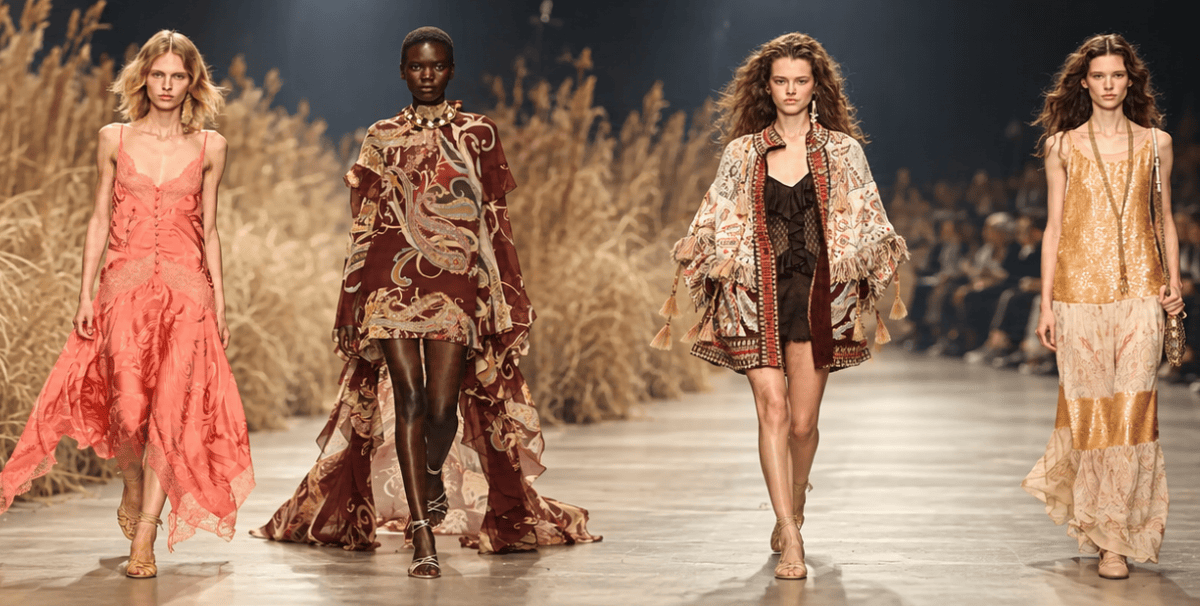
ETRO, A RUNWAY OF LIGHT, PAISLEY AND LIGHTNESS

Etro brings to the runway a collection that seems to be crossed by light and movement. There is no rigidity, no forced construction.

Instead, there is a fluid, soft, almost natural narrative that starts from powdery, very pale tones, moves through copper, coral and wine red, and returns once again to a light, sensual femininity that never shouts.

Among the most successful looks are very pale mini dresses with light trains and impalpable volumes, sheer fabrics that barely touch the body, materials that move like veils, and paisley prints lightened and almost dissolved into the fabric.

Then come dresses in rust-colored sheer lace, printed coral slips, paisley tunics in shades of burgundy, precious knitwear, embroidery and fringes: craftsmanship that keeps alive the decorative language that always remains central at Etro.

The more textured, bohemian passages are also very beautiful: embroidered cardigans, fringed surfaces, luminous sequined dresses, slender elongated silhouettes, all the way to the more revealing looks, almost like a tribal evening wear, where beads, netting and accessories become an integral part of the construction.

Everything flows within an idea of free, nomadic, instinctive elegance, yet held together by a precise signature.

What is interesting is that Etro does not chase effect. Instead, it works on atmosphere, on pace, on the way the clothes sit on the body and move through space.

And that is exactly where the collection finds its best moment.


GALLERY


Discover more of Sara’s World

Sara Dal Monte

Sara Dal Monte
Digital Journalist | Photographer | Art Director
Los Angeles • Sure-Com America
Instagram
X
Facebook
Facebook 2
Facebook Page

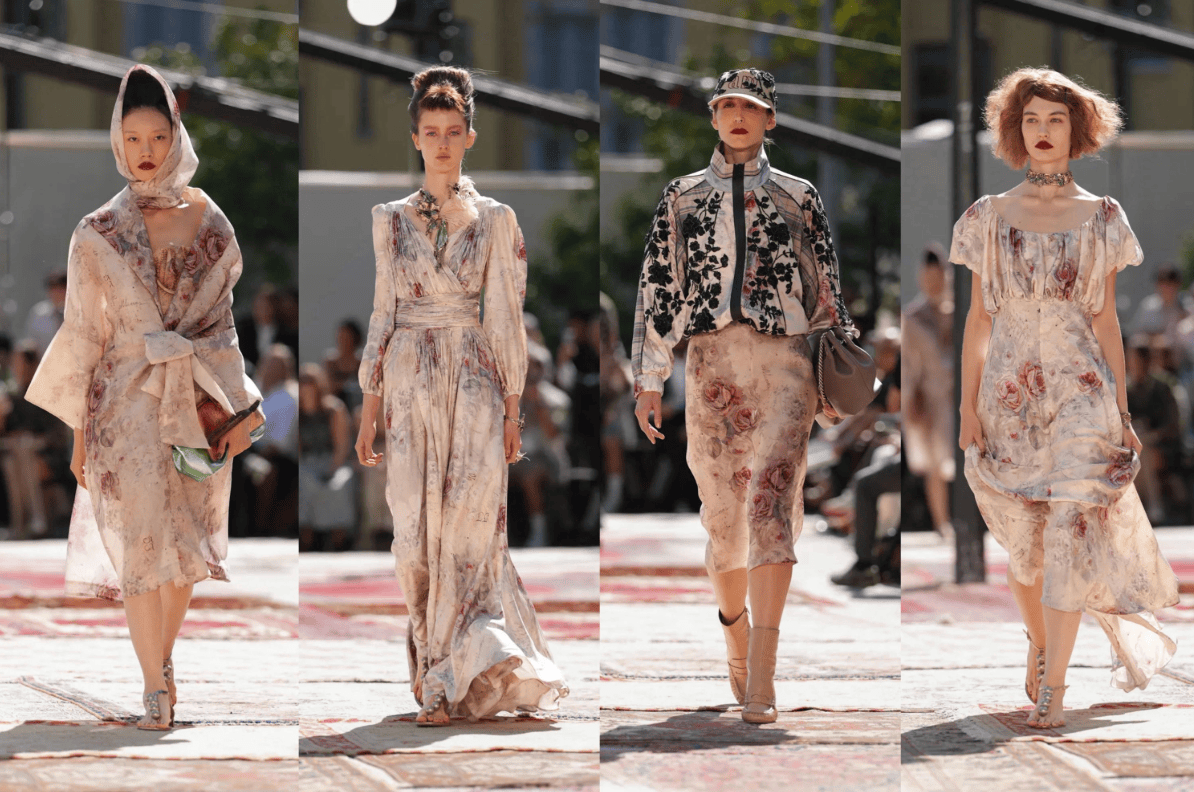
ANTONIO MARRAS, A HANDCRAFTED COLLECTION MADE OF MEMORY

Once again, Antonio Marras does not simply stage a collection. He builds a world and then lets the clothes move through it. For Spring Summer 2027, the Giardino Vincenzo Muccioli in Milan becomes almost a piece of Sardinia transported into the city: a long table, the remains of a celebration, flowers, fruit, characters, memories. The title is Nozze di un Mezzogiorno di Mezz’Estate (A Midsummer Noon’s Wedding), but the wedding is above all a pretext to tell what remains when the party is over and life begins again.

The clothes seem to come from exactly there, from the day after. They are not perfect, and they don’t want to be. They have something lived-in about them, as if they had absorbed an entire night, the scent of myrtle, the sea salt, a wine stain, a crease left in the fabric. Marras works on memory once again, but without turning it into nostalgia: he takes lace, chiffon, organza, brocade, jacquard, embroidery, patches and layering, and brings them into a fashion that feels very much of the present, where the handcrafted gesture still carries real weight.

It is a full, layered collection, at times almost disorderly, and that is precisely what makes it recognizable. Stripes meet flowers, camouflage lives alongside more delicate materials, denim sits next to silk, while the colors move from honey to sand, from powder pink to military green and all the way to black. Nothing seems truly isolated: every element relates to the one beside it, just as it happens in families, at celebrations, in the stories Marras keeps telling season after season.

There is one aspect I consider central to his work: Marras has never been afraid of imperfection. On the contrary, that is often where he finds the most interesting part of beauty. An edge, a layer, a surface that is not completely clean, an embroidery that seems to carry a story with it. Once again, his language speaks through what others might try to correct. With him, the flaw is not erased: it becomes character.

The collaboration with Giovanni Raspini reinforces this idea even further. Fifty-three pieces of jewelry created for the show enter the looks as almost ritual objects, in burnished bronze, stones, mother-of-pearl and references to Sardinian culture. Not simple accessories, but presences within the story, small talismans that complete the feeling of something handed down, gathered and preserved over time.

Perhaps this is precisely Antonio Marras’s strength: while so much of fashion is constantly searching for a new image to show, he keeps searching for stories to tell. And the clothes, even before they are looked at, seem to have already lived something.


GALLERY


Discover more of Sara’s World

Sara Dal Monte

Sara Dal Monte
Digital Journalist | Photographer | Art Director
Los Angeles • Sure-Com America
Instagram
X
Facebook
Facebook 2
Facebook Page

VOGUE WORLD MILAN: THE FUTURE IS “MADE BY HAND”

Vogue World travels from one fashion capital to another. After New York, London, Paris and Los Angeles, it has arrived in Milan, in the Galleria Vittorio Emanuele II. I have already written about the faces and encounters of the evening. Today I want to pause on the words chosen for this edition: Where The Future Is Made By The Hand. The future is made by hand.

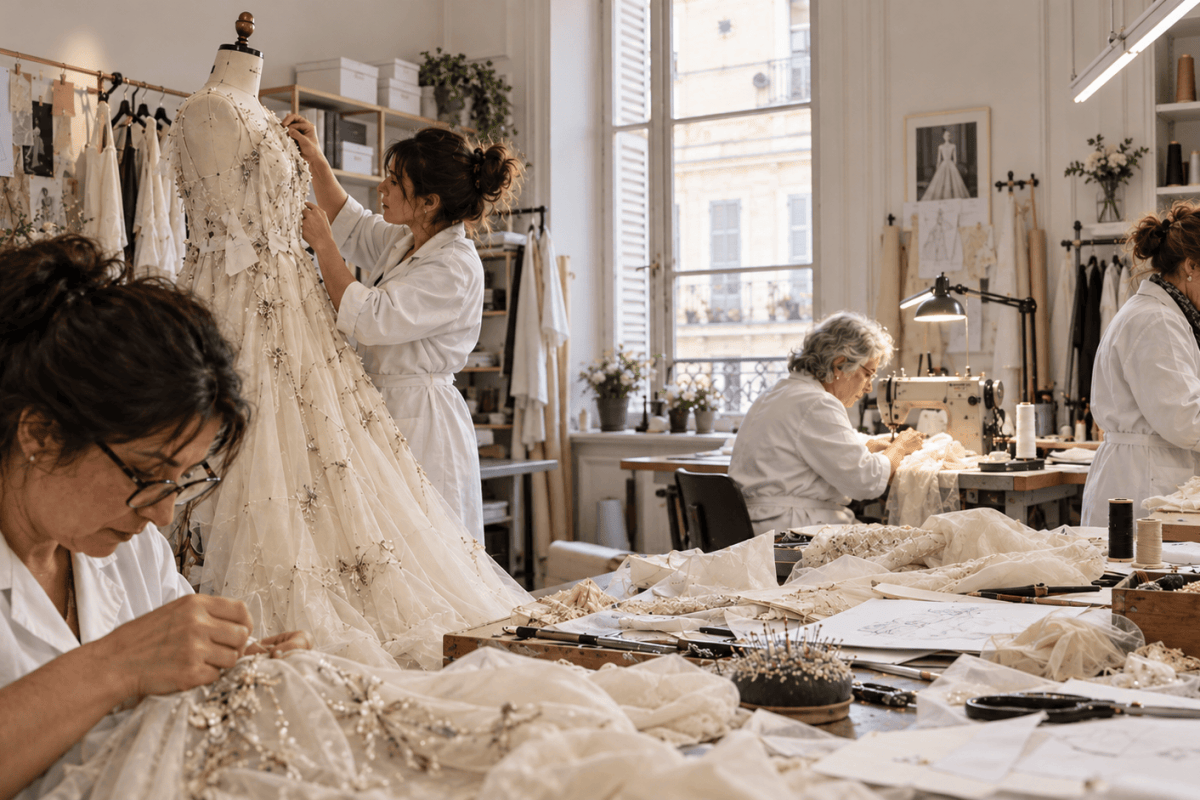
To me it seems a simple and precise sentence. Because a garment begins with an idea, but it takes shape when someone chooses a fabric, draws a pattern, cuts, sews, fits, corrects. Sometimes unpicks the seams and starts again. The fashion we see on the runway is also born in those moments, far from the lights of the catwalk.

And it does not end in the workshop. Around a garment work seamstresses and tailors, pattern makers, embroiderers, textile companies and manufacturers. There are the designers who give it direction, the press that tells its story, the agents, the showrooms and the stores that bring it to the public. It is a network I also know through my work with B.E. Management. At the end of this journey there is a person who chooses to buy a garment: they often do not see all the hands that made it possible, but they are buying their work too.

For Italy, this supply chain has a value that goes beyond the beauty of the product. It keeps skills, businesses and industrial districts alive; it creates jobs and preserves a know-how that cannot be learned in a single season. That is why celebrating handmade craftsmanship in front of an international audience is an important gesture. The next step is to ensure that these crafts have continuity: workshops where people can learn, companies able to pass on experience, young people who can imagine their future there. You cannot ask children to carry on a craft if that craft offers them no prospects.

Last night Milan showed the world one of the most beautiful images of its fashion. The title chosen by Vogue stays with me because of what it asks us to do after the show: to look closely at those who build that future, one garment at a time.


Discover more of Sara’s World

Sara Dal Monte

Sara Dal Monte
Digital Journalist | Photographer | Art Director
Los Angeles • Sure-Com America
Instagram
X
Facebook
Facebook 2
Facebook Page

A REAL ITALIAN REALITY BOTTEGA MARTINESE BRAND

Schermata 2018-08-30 alle 03.11.37

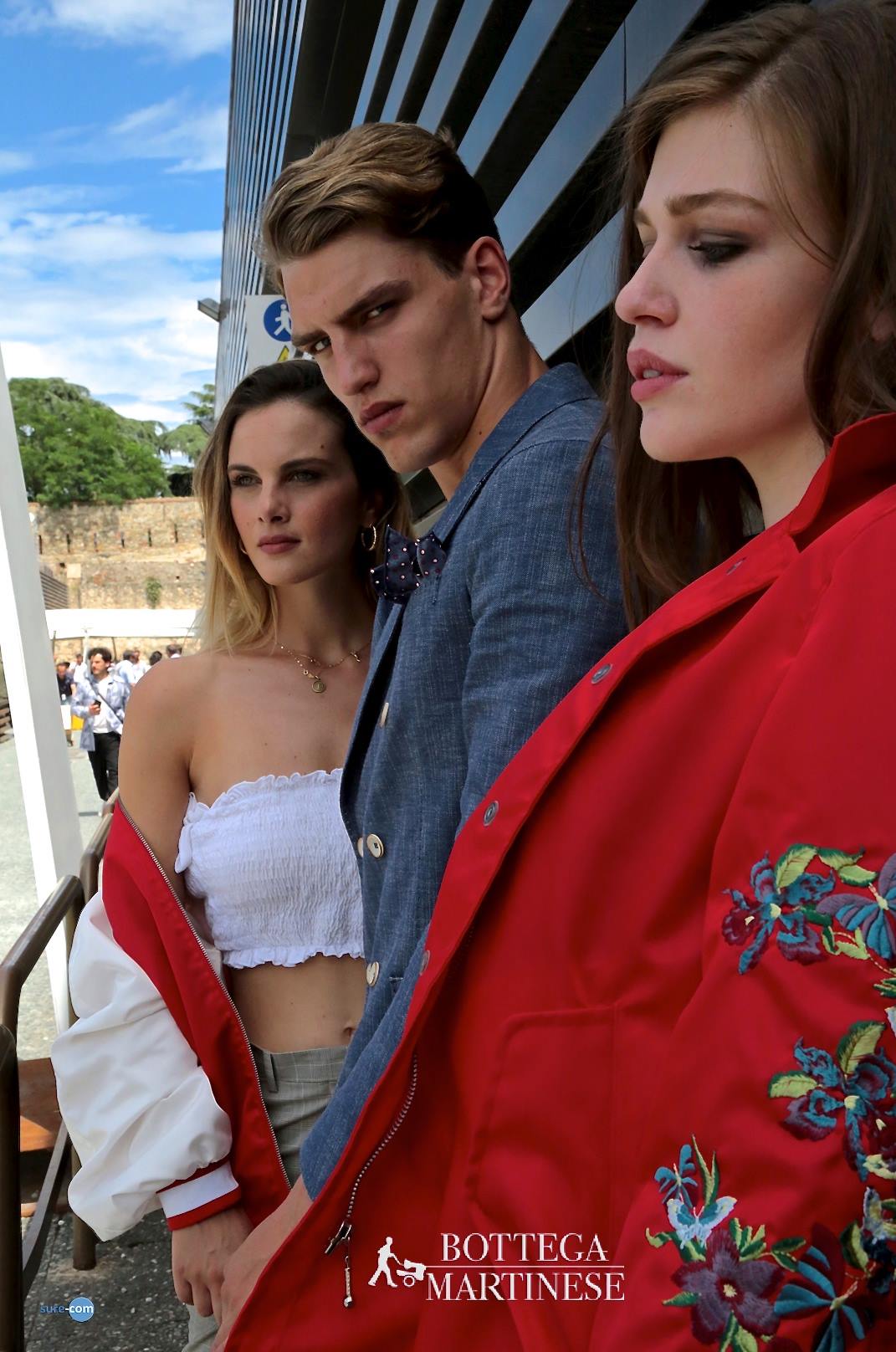
In the years to come the company Bottega Martinese grows rapidly and specializes in outerwear: for men, jackets, coats, raincoats for women jackets, jackets, coats.

The items produced in series with the quality of the artisan tailoring soon conquered the local clientele, the peninsula and many foreign countries fascinated by the Made in Italy.

With Bottega Martinese, the outerwear, man or woman, the highest quality levels, thanks to meticulous workmanship, accurate finishing, the use of refined fabrics and new colors. The lines of the products are clean and essential, but just as refined and elegant.

Read more: http://www.bottegamartinese1974.com/company/

click on pic for slideshow

Sara Dal Monte

          facebook_318-136394     Schermata-2017/01/16-alle-21-05-12

PITTI UOMO 94 FLORENCE <3

Three great Italian fashion houses, three companies that base their roots in Tuscany, Roberto Cavalli, Gucci, Ermanno Scervino, are the three-axis that unleashes Pitti Uomo n. 94 the Florentine menswear show scheduled in Florence from 12 to 15 June, with 1,240 brands at Fortezza da Basso, 561 of which are foreign, which will be inaugurated at Palazzo Vecchio by the new Minister of Cultural Heritage Alberto Bonisoli.

Read the man trends here

At the opening of Pitti on 12 June Gucci celebrates the opening of two new rooms in the Gallery curated by Maria Luisa Frisa, inside the Gucci Garden created by the creative director of the maison Alessandro Michele in the historic Palazzo della Mercanzia, in Piazza della Signoria. In the Gucci Garden boutique will be presented new products in a single edition with the illustrations of an artist in his debut in collaboration with Gucci. Roberto Cavalli, guest star of this edition parades on June 13 marking the return of the brand in his city of origin. The new men’s collection is signed by Paul Surridge, new creative director of all the lines of the group, which since 2015 is 90% owned by the investment fund Clessidra Sgr. Ermanno Scervino celebrates the opening of the new boutique in Via Strozzi and on June 14th participates in the presentation of the Scervino -Fondazione Zeffirelli project, for which the students of Istituto Marangoni interpreted 12 outfits of the Domata Bisbetica. Giorgio Armani also inaugurates a boutique in via de ‘Tornabuoni.

On June 13th Cos presents Soma, a capsule based on comfort and design. For the launch, a special event will animate an evocative place in the city with the participation of the British choreographer Wayne McGregor. Birkenstock also chooses June 13 for its event in the Torrigiani Garden. On the platform the mood of the collection and music signed by Michel Gaubert. The Pitti Immagine Discovery Foundation presents Fanatic Feelings – Fashion Plays Football, a multimedia exhibition curated by Markus Ebner, founder of the magazines Achtung Mode and Sepp Football Fashion and the art critic Francesco Bonami, which highlights the attraction that the world of football has on fashion and male imagery. The exhibition held until 22 July, is visited in the complex of Santa Maria Novella.

The London-based designer Craig Green, a Pitti 94 menswear guest, will present his collection on June 14th. In its proposals emerge the ability to innovate the codes of menswear without losing sight of the dynamics of the market. A style that mixes workwear influences and futuristic volumes, sculptural silhouettes and functional aspects. The Japanese designer Fumito Ganryu, Pitti project, after the experience in the group Comme des Garcons presents on June 13 in Florence his independent label with an event. Pitti’s Guest Nation is Georgia on stage at the Spazio Carra in Fortezza, thanks to the support of Lelp Enterprise Georgia, the agency headed by the Georgian Ministry of Economy. The brands are: Aznauri, Anuka Keburia, Damian Gorge, Situationist, Tatuna Nikolaishvili, Vaska.

Two birthdays at Pitti: Herno celebrates 70 years with the Library in the former Leopolda Station; Lardini celebrates 40 of activities with an event at Fortezza. On 13th June, at Pitti, there will also be Moncler Genius 7 Fragment Hiroshi Fujiwara, the latter present. Federico Curradi returns to Florence on June 14 to present the homonymous collection with an installation-event in the garden of a noble palace. Emilio Pucci and Bonaveri meet to stage their creative skills. At Polveriera, Sease, a brand of Giacomo and Franco Loro Piana, introduces a concept on male passions. Nick Wooster X Paul & Shark is the capsule that tells the Italian brand seen by the American designer. The new line of Iceberg, Ice Play, made its debut with the world of street couture. On the occasion of the 80th anniversary of Candiani Denim, a special co-lab with the Los Angeles brand Atelier & Repairs, from which a 100% sustainable denim based capsule is born.


MAP OF ITALIAN WINE REGIONS

Italian wine is one of the most difficult regions to get to know. Why? Well for one, the Italians use an esoteric wine labeling system, much like the French. But that’s not even the biggest problem in terms of familiarizing yourself with Italian wines. The hardest part is learning all the different grape varieties.

At the moment, there are about 350 official Italian wine varieties. There have been rumors that over 2,000 different Italian grapes exist, but this might be a bit of an exaggeration– something Italians do well.

See an easy to understand map of Italian wine regions and major wine varieties. Learn about the 20 Italian wine regions and which ones to try first when delving into Italian wines.

Photo by Jonathan Colon https://skatesphere.com/.

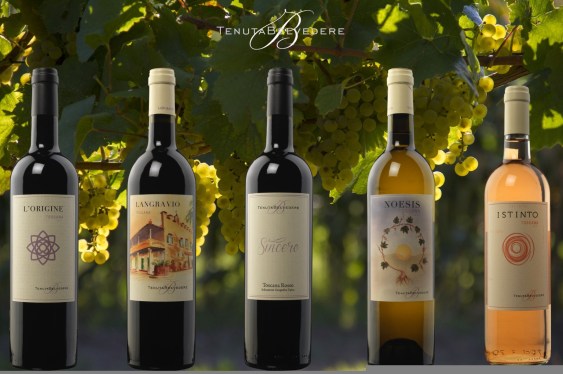
With the arrival of the beautiful season, there is the ideal time to discover the genuine flavors of Chianti’s lands. Tenuta Belvedere welcomes visitors to Wine Tour who want to make this wonderful tasting experience. Tenuta Belvedere is set on the beautiful Florentine hills of Chianti DOCG, a few kilometers from Florence, in the town of Rignano sull’Arno. For its guests, it organizes tastings in the company that represent a unique opportunity to enjoy excellent Tuscan vinification products. The wines of the Tenuta Belvedere wineries are born in accordance with the ancient wine tradition, landscape and peasant tradition. Love for nature is found in every taste of Chianti tasted.

Tenuta Belvedere has its roots in the troubled times of the fights between Guelphs and Ghibellines. For more than a century, a branch of the powerful Mozzi family, wealthy bankers who had the management of the Pontifical Treasury, retained the property…  http://www.tenutabelvedere.it


Sara Dal Monte


          facebook_318-136394     schermata-2017-01-16-alle-21-05-12


D&G LUXURY FASHION HOUSE DEBUTED ITS “ALTA MODA” IN CAPRI

10505301_342186189266580_8031025459099649793_n

SARA DAL MONTE

in Capri

The luxury fashion house debuted its “Alta Moda” haute couture collection to a very lucky group of editors, buyers and big spenders in a secret cove off the Italian island. With nautical-themed lounge chairs complete with plush pillows, this was like no other fall runway show we’ve seen.


Sara Dal Monte

Schermata 2014-07-23 alle 22.40.56

Follow me on FB.