DOLCE&GABBANA SS27, WHEN MADE IN ITALY BECOMES STORYTELLING

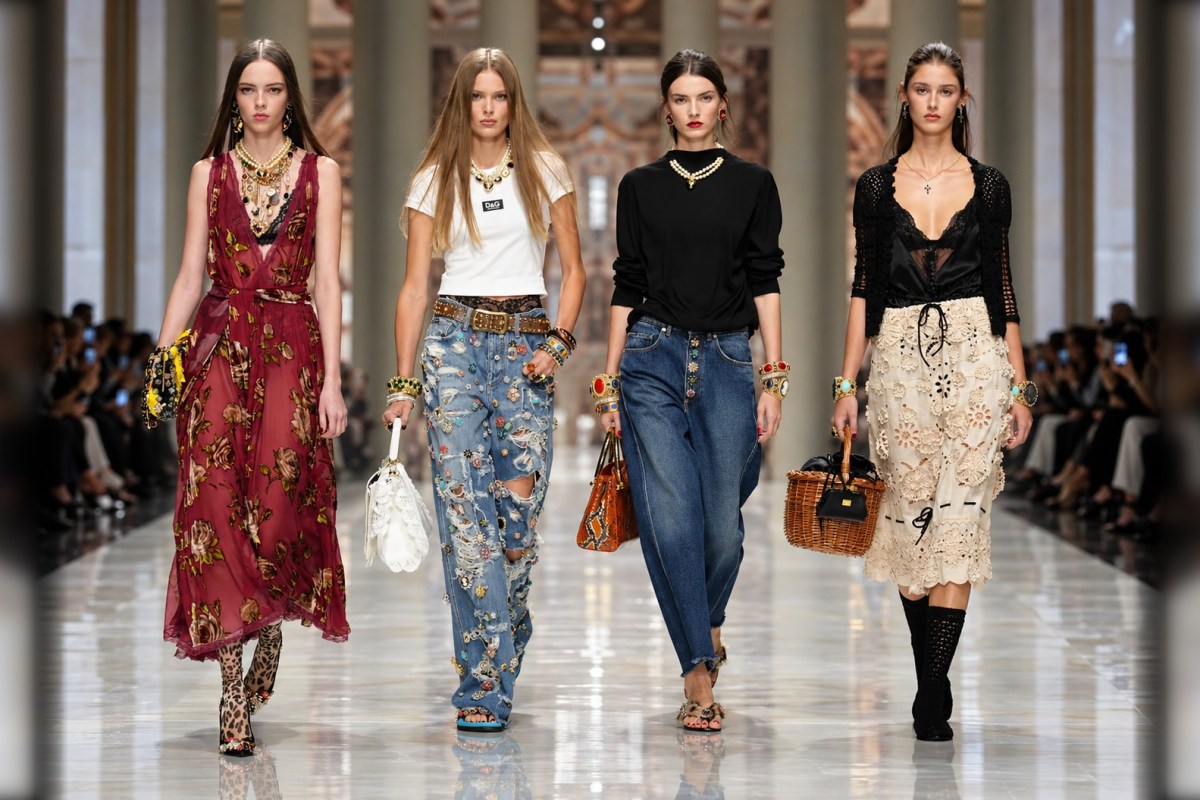
In a Milan Fashion Week marked by changes of creative direction, repositionings and new grammars, Dolce&Gabbana keeps doing something more difficult: remaining recognizable without standing still. The Spring/Summer 2027 collection starts again from a precise aesthetic heritage made of lace, lingerie, black and white, animal prints, statement jewelry, embellished denim, sheer fabrics, embroidery and tailoring. Codes that have long belonged to the work of Domenico Dolce and Stefano Gabbana, but that are constantly reworked, without chasing the new at all costs and without losing that stylistic signature which, over forty years, has become instantly recognizable.

SS27 works a great deal on contrasts. Denim is ripped, embroidered and studded with appliqués until it becomes almost couture; white lace meets black lingerie; gingham, seemingly innocent, is pushed toward an openly declared sensuality; jewels, crosses, stones, embroidery and precious workmanship transform the surfaces and take them far from any apparent simplicity. There is no minimalism, and there could not be. Dolce&Gabbana works through accumulation, contrast and decoration, but behind this richness the construction remains precise: the dress, the jacket, the corset, the embroidery, the jewel and the bag all belong to the same story.

And this is where fashion becomes something bigger. I believe few brands have told the world about Italy with the same force as Dolce&Gabbana. Domenico Dolce and Stefano Gabbana have traveled across the country, bringing collections, Alta Moda and presentations to the cities and places that best represent our beauty. Sicily remains one of the cardinal points of their imagination, but their Italian story is much broader. Inside Dolce&Gabbana there is food, there are markets, flowers, homes, architecture, territories, design, popular religious devotion and craftsmanship. There are lace and embroidery, tailoring and jewelry, handwork and that Italian ability to turn a craft into aesthetic culture.

The images that accompanied this collection before the show also went exactly in that direction: flowers, tomatoes, lace, photographs, jewels, historic interiors. Not simple decorative references, but fragments of an Italy transformed into image, fashion and communication. And this is where the title finds its meaning: for Dolce&Gabbana, Made in Italy is not just a place of origin, nor merely a certification of quality. It becomes storytelling. The storytelling of territories, crafts, traditions, beauty, manufacturing skill and culture.

At a time when many brands seem busy constantly redefining themselves, Dolce&Gabbana instead continues to know exactly where it comes from. This does not mean repeating the past. It means possessing enough creative material to transform it without denying it. For years Domenico Dolce and Stefano Gabbana have been building a narrative of Made in Italy capable of uniting tradition, craft and spectacle. And perhaps this is one of the most important achievements of their work: having made fashion a tool through which to tell the story of Italy.

That is why I continue to consider them among the greatest ambassadors of Italian beauty in the world.

Chapeau to Domenico Dolce and Stefano Gabbana.


GALLERY


Discover more of Sara’s World

Sara Dal Monte

Sara Dal Monte
Digital Journalist | Photographer | Art Director
Los Angeles • Sure-Com America
Instagram
X
Facebook
Facebook 2
Facebook Page

ERMANNO SCERVINO SS27, FEMININITY RETURNS TO CENTER STAGE

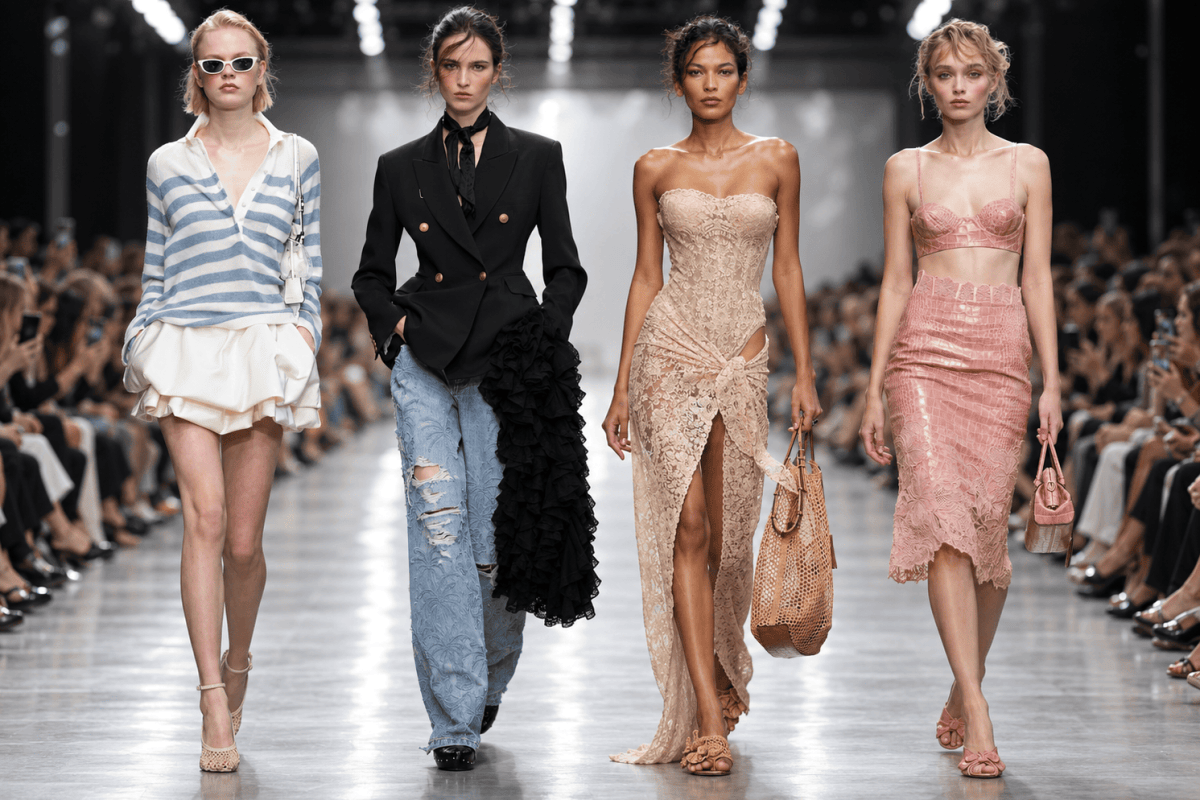
Ermanno Scervino brings to Milan Fashion Week a collection that puts back at the center something only seemingly simple: a garment should enhance the person wearing it, not replace her. This is the starting point of the Spring/Summer 2027 collection presented this morning at 10:30 at Piazza Lina Bo Bardi 1, a show built on femininity, on material and on a tailoring that feels no need to deform the body to prove it is contemporary.

Scervino works on the contrast between structure and lightness with a naturalness that holds the whole collection together. Blazers mark the waist, trousers widen, leather jackets and trench coats provide structure, while lingerie, bustiers, slip dresses, lace and sheer fabrics lighten the design and constantly bring attention back to the body. They are not separate worlds, but two registers that coexist and strengthen each other. Lingerie leaves the private sphere and becomes dress, top, construction; lace is no longer mere ornament but real material, capable of defining a silhouette as much as a well-cut jacket.

Even when the collection reveals a lot of the body, there is never a sense of shouted sensuality. The shorts are short, the bustiers evident, the transparencies declared, but everything stays within a precise control of proportions. Sensuality is not pursued through excess, but through the way the fabric falls, tightens, lets the body be glimpsed, follows movement. This is where Scervino’s work becomes most interesting, because the garment does not take over the woman: it accompanies her and heightens her presence.

Material plays a central role, but it is not exhibited as a technical exercise. Lace, embroidery, crochet, leather, denim, satin and precious workmanship enter the garments without turning the runway into a display of skill. Everything remains at the service of the silhouette. The palette too, from whites and ivories to shades of honey, tan, chocolate, black and powder pink, maintains a visual continuity that makes the collection legible and coherent. Light blues and palm-tree prints introduce a more summery note, but without slipping into the easy resort image.

The point, however, lies elsewhere. A great garment should never ask the person to disappear in order to be noticed. It should do the opposite: increase her presence, give her strength, correct, accompany, enhance. In this show Scervino does so very often, and he does it without needing to build unreal characters. The models remain women, the body remains legible, and femininity is not treated as something to be corrected or demolished.

And this is perhaps the most interesting part of the collection. In a season in which so much fashion keeps seeking the new through exasperation, Scervino chooses to work on beauty without making it banal. He does not give up research, but puts it at the service of the garment and the person. Fashion can be rupture, provocation, experimentation, but it can still have another function too: making a woman feel better in what she wears.


GALLERY


Discover more of Sara’s World

Sara Dal Monte

Sara Dal Monte
Digital Journalist | Photographer | Art Director
Los Angeles • Sure-Com America
Instagram
X
Facebook
Facebook 2
Facebook Page