MILAN FASHION WEEK, THE RUNWAYS GO DARK. WHAT REALLY REMAINS?

Today, September 28, Milan Fashion Week Spring/Summer 2027 officially comes to a close. The major shows are over, and the final day leaves room above all for digital. After seven days and 203 appointments — 61 shows, 88 presentations and 54 events — the question is no longer just what we saw on the runway, but what remains in Milan once the lights go out.

A first figure concerns the city’s power of attraction. Confcommercio Milano estimated almost 141,000 visitors, with a 22% rise in foreign visitors, and an economic impact of €219.5 million: €100.8 million in shopping, €85.4 million in hospitality and dining, and €32.9 million in transport. Significant numbers, even if 8% lower than in September 2025, showing how Fashion Week involves hotels, restaurants, shops, transport and services, well beyond the perimeter of the fashion houses.

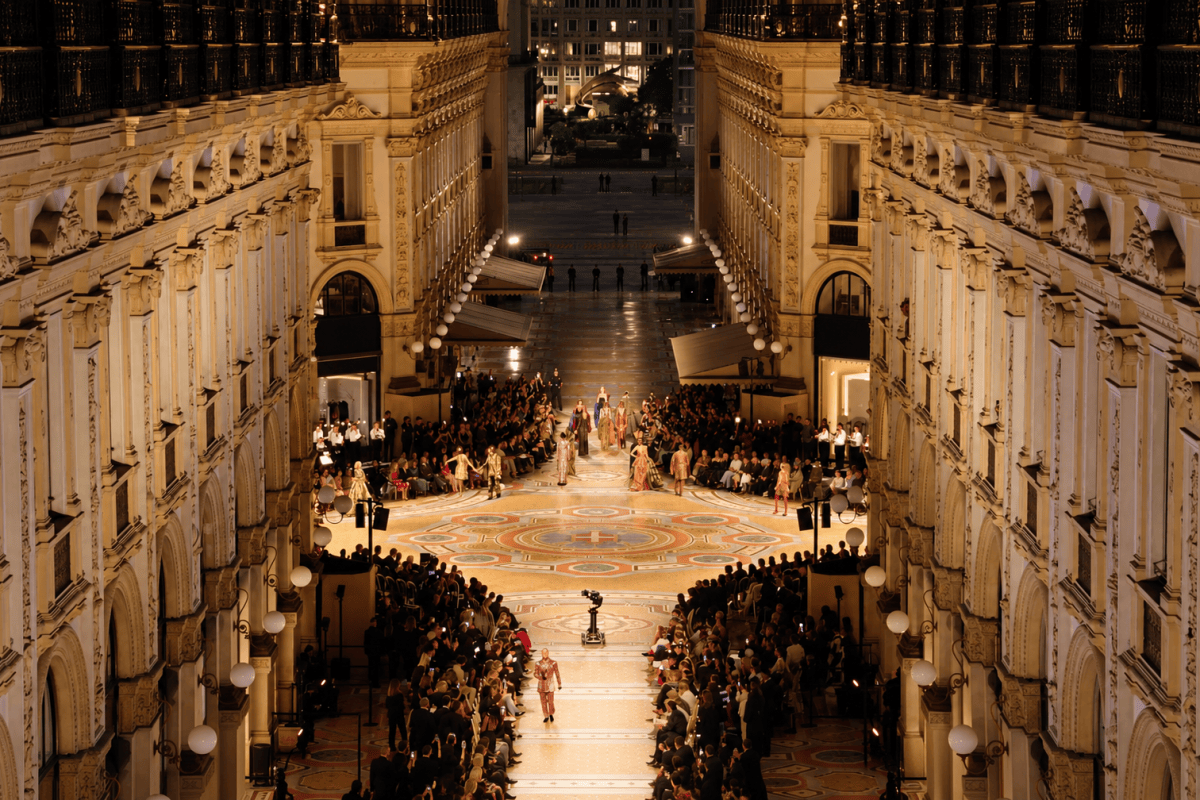
Within this week, Vogue World: Milan was one of the moments of greatest international exposure. The Galleria Vittorio Emanuele II brought together fashion, entertainment, craftsmanship, technology, major maisons and international figures, turning the center of Milan into a global stage for one evening. An event of this scale strengthens the appeal of Fashion Week and the activity surrounding hospitality, dining, transport and shopping. But Vogue World also left something very concrete behind: the fundraising reached $3 million, about €2.65 million, earmarked for the renovation and expansion of the Quarto Oggiaro Library.

Then there are the contacts, the business relationships, the buyers, the international press, millions of images shared around the world and the orders that will continue to be finalized in the showrooms. As we already noted when discussing the positive sentiment expressed by buyers, approval is a first signal. The next step will be to understand how much of it will translate into purchases, and therefore into production.

And this is exactly where institutions should open a reflection. Not only celebrating attendance and visibility, but gathering and analyzing the results: hotel occupancy, dining, shopping, orders, buyers’ countries of origin and the impact on the supply chain. Understanding what worked and where to intervene can turn a week of enormous international exposure into an even more effective tool to support the sector.

Because behind the major fashion houses there is a supply chain made of weaving mills, garment makers, leather goods makers, shoe factories, workshops, artisans, pattern makers, logistics and thousands of small and medium-sized enterprises. This is where Made in Italy generates skills, employment and exports. Fashion Week can become even more of an opportunity to bring international buyers closer to production districts, to support the internationalization of SMEs, training and innovation, and to strengthen the link between runway, market and manufacturing.

Milan has shown once again that it can attract the world. The challenge now is to understand how to turn this attention into value that is ever more widely shared across the city and the entire Italian supply chain.

The runways go dark, but this is exactly when the most interesting work begins: measuring what this week has produced and turning it into growth. Because a Fashion Week is not measured only when it turns the lights on, but also by what it leaves behind when they go out.


Discover more of Sara’s World

Sara Dal Monte

Sara Dal Monte
Digital Journalist | Photographer | Art Director
Los Angeles • Sure-Com America
Instagram
X
Facebook
Facebook 2
Facebook Page

VOGUE WORLD MILAN: THE FUTURE IS “MADE BY HAND”

Vogue World travels from one fashion capital to another. After New York, London, Paris and Los Angeles, it has arrived in Milan, in the Galleria Vittorio Emanuele II. I have already written about the faces and encounters of the evening. Today I want to pause on the words chosen for this edition: Where The Future Is Made By The Hand. The future is made by hand.

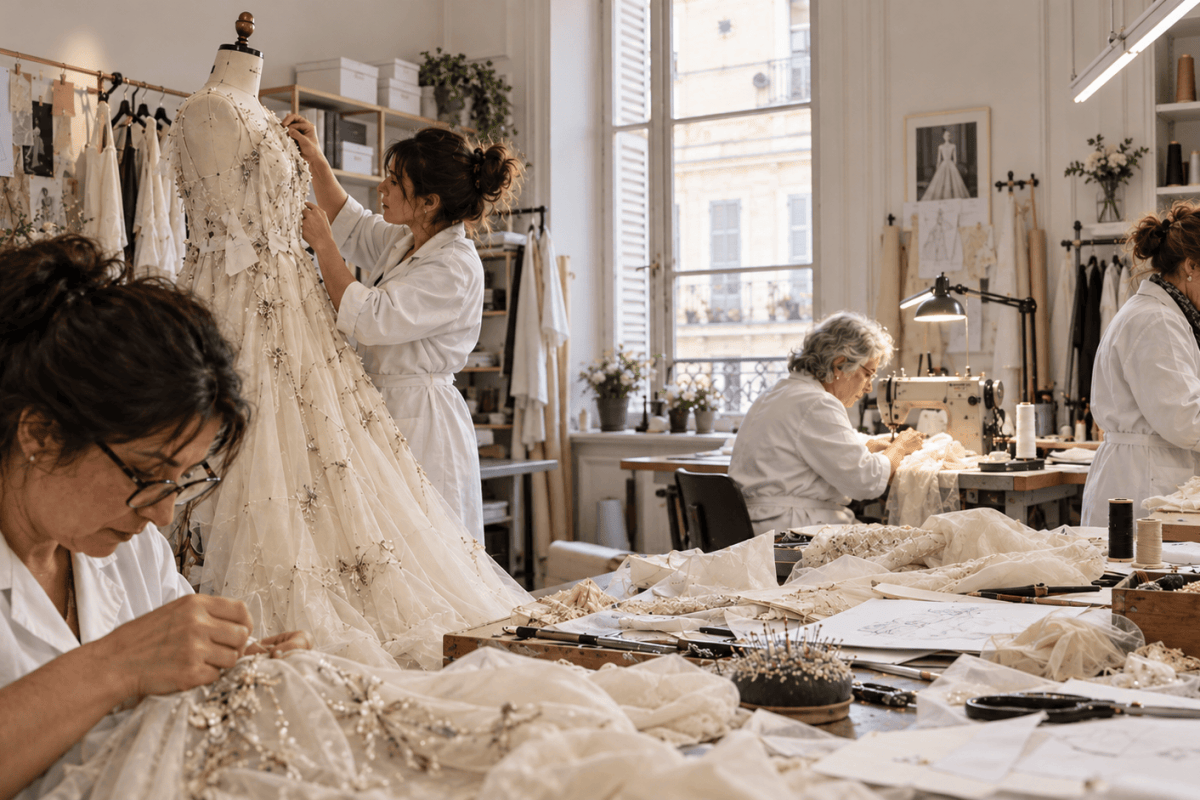
To me it seems a simple and precise sentence. Because a garment begins with an idea, but it takes shape when someone chooses a fabric, draws a pattern, cuts, sews, fits, corrects. Sometimes unpicks the seams and starts again. The fashion we see on the runway is also born in those moments, far from the lights of the catwalk.

And it does not end in the workshop. Around a garment work seamstresses and tailors, pattern makers, embroiderers, textile companies and manufacturers. There are the designers who give it direction, the press that tells its story, the agents, the showrooms and the stores that bring it to the public. It is a network I also know through my work with B.E. Management. At the end of this journey there is a person who chooses to buy a garment: they often do not see all the hands that made it possible, but they are buying their work too.

For Italy, this supply chain has a value that goes beyond the beauty of the product. It keeps skills, businesses and industrial districts alive; it creates jobs and preserves a know-how that cannot be learned in a single season. That is why celebrating handmade craftsmanship in front of an international audience is an important gesture. The next step is to ensure that these crafts have continuity: workshops where people can learn, companies able to pass on experience, young people who can imagine their future there. You cannot ask children to carry on a craft if that craft offers them no prospects.

Last night Milan showed the world one of the most beautiful images of its fashion. The title chosen by Vogue stays with me because of what it asks us to do after the show: to look closely at those who build that future, one garment at a time.


Discover more of Sara’s World

Sara Dal Monte

Sara Dal Monte
Digital Journalist | Photographer | Art Director
Los Angeles • Sure-Com America
Instagram
X
Facebook
Facebook 2
Facebook Page

VOGUE WORLD MILAN 2026: TONIGHT I SAW AN IMAGE I HAD IMAGINED COME TO LIFE

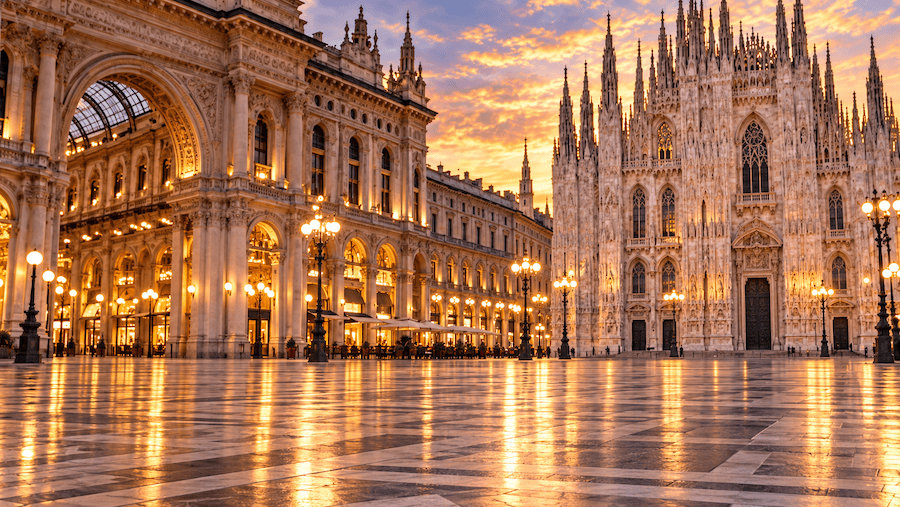
On September 4, while writing about Milan Fashion Week, I imagined a major fashion show taking place inside the Galleria Vittorio Emanuele II. I did so for a very simple reason: I believe it is one of Milan’s most powerful images, perhaps one of the locations that best embodies Italian fashion. The Galleria has beauty, history, architecture and a natural sense of theatre. It is Milan in one of its most recognizable forms.

That is why I created exactly that scene for the cover of the article. Tonight, watching Vogue World transform the Galleria into a spectacular stage for fashion, I immediately thought back to what I had written on September 4.

Of course, Vogue World had been conceived, planned and organized long before then. There is no connection between the two things. But seeing that same vision of Milan I had imagined a few weeks ago come to life — on an entirely different scale and at another level — was quite something.

And after seeing the Galleria tonight, I am even more convinced of one thing: this is one of the places in Milan where fashion should take to the runway.

Then the show began, and what moved me most was not simply seeing top models, actresses, actors, singers, dancers and athletes walk through one of Milan’s most beautiful landmarks. It was seeing alongside them the artisans, workers and people who represent that long and complex supply chain without which fashion simply could not exist. Behind every garment there are hands, skills, fabrics, workshops, pattern makers, seamstresses, technicians and companies.

There is an enormous world that normally remains behind the scenes, working every day so that this industry can continue to create beauty, culture, employment and value. Vogue World Milan had the merit of bringing that world into the spotlight as well, telling the story of Made in Italy through the relationship between human craftsmanship, industry, creativity and innovation.

Fashion is often described as superficial, even frivolous. Part of it certainly can be, but stopping there means failing to understand its language. The way we dress is also a way of communicating something about ourselves, of showing others how we choose to present ourselves and, sometimes, simply of making ourselves feel better. Clothes do not define who we are, but they can contribute to the way we choose to express it.

And then there is beauty — perhaps the word that has stayed with me more than any other tonight: the Galleria Vittorio Emanuele, the music, the dance, the models, the artists and, above all, the human work that makes all of this possible.

Yet perhaps never more than now should we remind ourselves just how precious and fragile all of this is. We are living through days in which words we thought belonged to history books have returned: war, borders, missiles, rearmament. Images reach us every day from every corner of the world, and we even risk becoming accustomed to them. Then, for one evening, beneath the glass vaults of Milan’s Galleria, something completely different passes before our eyes: people who have built, sewn, designed, sung, danced and performed.

People who have devoted time, intelligence and talent to creating something beautiful. It has taken generations to build culture, craftsmanship, knowledge, cities like Milan and industries such as Italian fashion.

Losing all of it, however, could take far less.

Perhaps that is also why the Galleria looked even more beautiful to me tonight.


Discover more of Sara’s World

Sara Dal Monte

Sara Dal Monte
Digital Journalist | Photographer | Art Director
Los Angeles • Sure-Com America
Instagram
X
Facebook
Facebook 2
Facebook Page