MILAN FASHION WEEK, BUYERS APPROVE. NOW ALL EYES TURN TO ORDERS

Milan Fashion Week Spring/Summer 2027 closes with a positive sentiment. Buyers speak of more concrete, recognizable, product-focused collections, while attendance was particularly high. Carla Cereda of Biffi highlights how consistent the proposals were with their respective maisons; Luigi D’Aniello describes a Milan full of energy and people, so much so that it reminded him of Design Week. Signals confirming that attention around Milanese fashion remains strong.

What emerges above all from the statements gathered by the trade press is a return to the reality of the store. Beppe Nugnes puts the garment and the client at the center: creativity and emotion must generate desire once the product reaches the boutique. Michele Franzese looks at the same point from another angle: the image attracts, but it is fabric, fit, workmanship and value for money that convince the customer.

Among the most appreciated collections, Prada stands out. Daniela Kraler sees the skirt as one of the strongest messages of the season; Federico Giglio credits Miuccia Prada and Raf Simons with consistency and new ideas on product, while Nugnes underlines their ability to make a familiar garment desirable again. D’Aniello considers it the most successful proposal in terms of concept, character and direction.

Praise also for Bottega Veneta, where a more concrete element appears: Cereda states that she intends to buy a lot from the maison, while Nugnes highlights the balance between craftsmanship, texture and lightness. It is not yet data on orders, but here appreciation is already accompanied by a commercial intention.

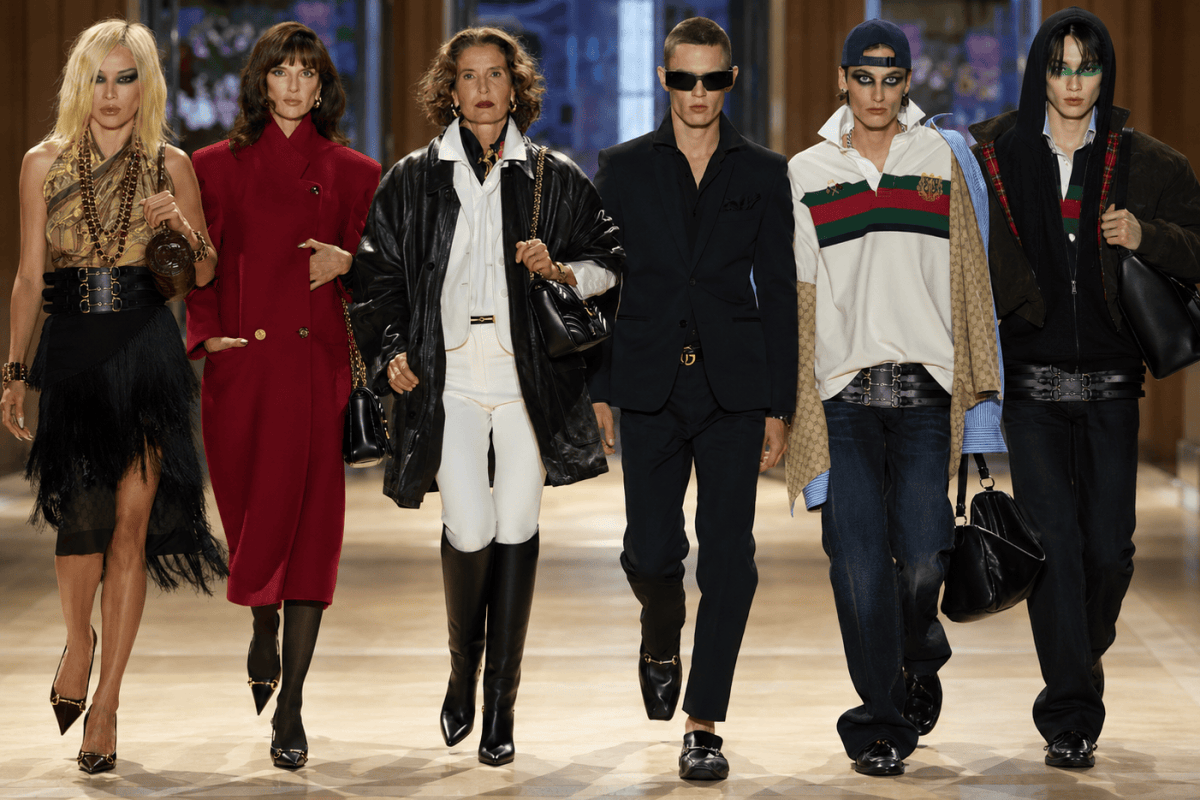
On Gucci, buyers express favorable opinions. Giglio sees a vision that Demna is progressively defining, Nugnes names Gucci as his favorite show, and Cereda includes it among the proposals that struck her most. These are their assessments and should be recorded as such. I have already expressed my own position on the maison’s new course: exaggerated proportions, extreme oversize, layering and reinterpretations of elements that already belong to Gucci’s history. My question therefore remains the same: beyond exasperation and reinterpretation, where is the new?

Fendi by Maria Grazia Chiuri convinces with its nod to the Seventies, its femininity and its balance between image, craftsmanship and product. Armani is appreciated for elegance and consistency, while Moschino and Max Mara win praise for their ability to reaffirm their presence. Among emerging designers, Franzese points to Francesco Murano and Marco Rambaldi, while reminding us that for a retailer creativity and quality must go hand in hand with production capacity, reliability and on-time delivery.

The picture coming out of Milan is therefore positive: audiences, attention, engaged buyers and greater concreteness. But it is precisely from these assessments that the question the market cares about arises: will this appreciation also translate into growth in orders compared with previous seasons?

Because appreciating and buying are not the same thing. In the first case, you recognize a collection’s potential; in the second, you commit budgets, choose quantities and take on commercial risk. At the moment we do not yet have an overall picture of Spring/Summer 2027 orders, especially international ones, while sales campaigns continue in the showrooms.

Fashion is creativity, image and communication, but it remains an industry. Buyers approve of Milan. Now all eyes turn to orders, to understand how much of this consensus will translate into market.



Discover more of Sara’s World

Sara Dal Monte

Sara Dal Monte
Digital Journalist | Photographer | Art Director
Los Angeles • Sure-Com America
Instagram
X
Facebook
Facebook 2
Facebook Page

GUCCI SS27: WHEN EXASPERATION BECOMES LANGUAGE

I swear I watched this show several times, because I wanted to understand where Demna wanted to take Gucci. In the end I found a key, and it is very clear: exasperation. Everything is pushed to the limit – proportions, volumes, the body, the very way an image is built. Knitwear becomes enormous and is worn by very thin boys; jackets either widen until they deform the figure or become tight, dry, almost constricting. In menswear especially, the body seems constantly corrected, shifted, diminished, as if the silhouette had to lose its balance in order to gain an identity.

And this is exactly where my problem with this collection begins. Because to exasperate means to bring something to a maximum level of tension, and after tension there necessarily comes a breaking point. Here, instead, I have the feeling that this tension has become the very language of the house, a grammar made of excess, deformation, citation, provocation, archive and constant contrasts, without it ever becoming fully clear what the point of arrival is.

Gucci comes from a different culture. It comes from precision, from construction, from an almost obsessive attention to detail, from leather, from accessories, from the ability to make a jacket, a bag or a shoe desirable without necessarily turning them into a statement. Demna takes this heritage and forces it, stretches it, shifts it, brings it into his own world. His signature is visible, very much so. But precisely because it is so visible, the question becomes inevitable: how much of Gucci remains, and how much are we simply watching Demna applied to Gucci?

In menswear the doubt is even stronger. I see a very young male figure, built almost on a single type of physique and attitude. Targeting that audience is fine – it would be absurd to deny it – but Gucci does not sell only to twenty-year-olds. It also sells to men of forty, fifty, sixty, to a client who may want to be contemporary without turning into a character. And here I struggle to understand where that man has gone.

Then comes the “family”: the boy, the girlfriend, the mother, the aunt, the older lady. I fully understand the desire to tell the story of a transversal brand, capable of crossing generations, but I keep asking myself what the story really is. Because if the common thread is simply taking different eras, different codes, archive pieces, Nineties sensuality, Seventies elements, Eighties volumes and putting them back together by deforming them, then we are not looking at a new vision: we are looking at a continuous reworking of what we have already seen.

I remain puzzled by the womenswear too. Sensuality is part of Gucci’s history and no one questions it, but there is sexy and sexy. There is a sensuality built on proportion, on cut, on a body that is suggested, and there is another that constantly needs to show itself. Here the second path is often chosen. It is a precise choice, but it does not always become elegance, at least not for me.

And so I return to the question I have been asking myself for some time: what are they trying to do with Gucci? Because this is not a small independent label that can afford to turn every collection into an act of protest or a conceptual exercise. This is Gucci. It is a global brand, with a history, a market, clients, investors and an evident problem of desirability to rebuild.

Destroying everything to see what happens next can also be a creative strategy. In fashion it has happened many times, and sometimes it has worked. But destruction alone is not a project. At some point you also have to build something the public wants to desire, wear, buy and recognize as new.


GALLERY


Discover more of Sara’s World

Sara Dal Monte

Sara Dal Monte
Digital Journalist | Photographer | Art Director
Los Angeles • Sure-Com America
Instagram
X
Facebook
Facebook 2
Facebook Page