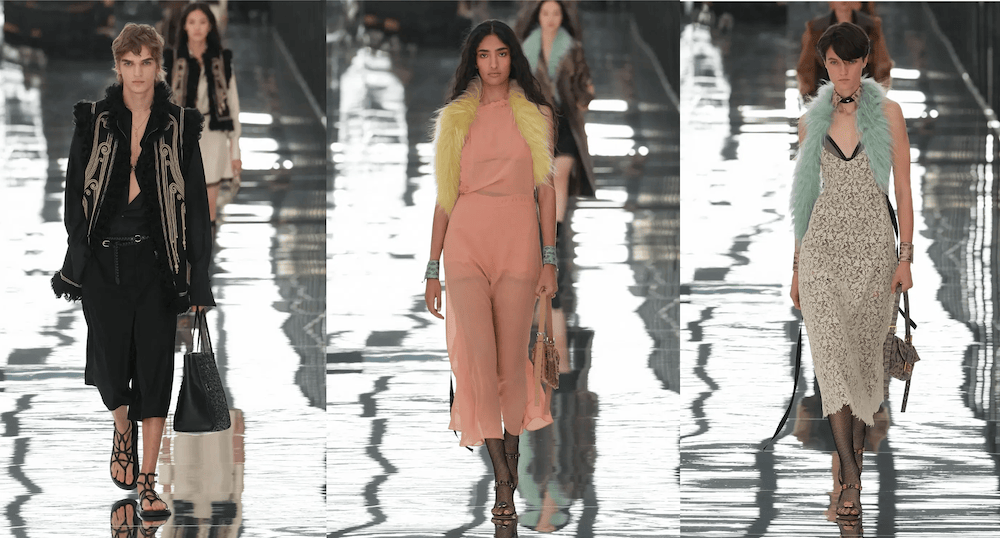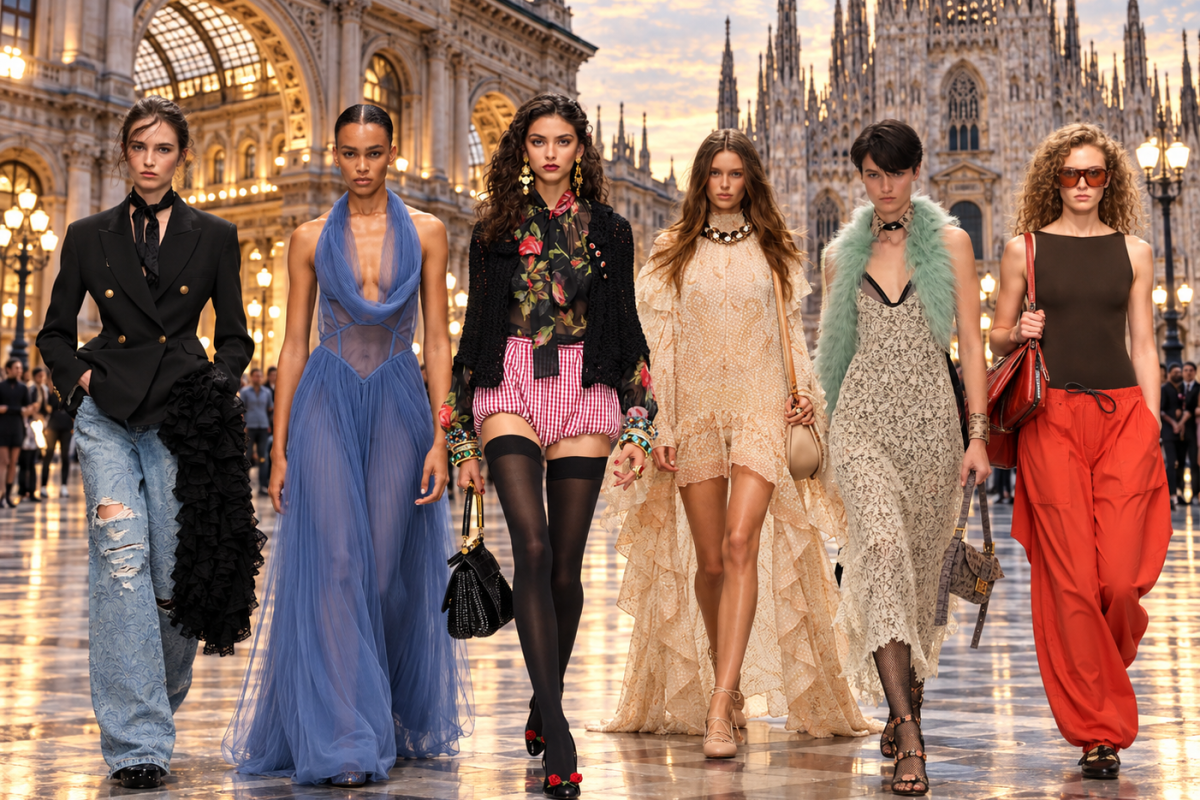
Milan Fashion Week Spring/Summer 2027 closes with a positive sentiment. Buyers speak of more concrete, recognizable, product-focused collections, while attendance was particularly high. Carla Cereda of Biffi highlights how consistent the proposals were with their respective maisons; Luigi D’Aniello describes a Milan full of energy and people, so much so that it reminded him of Design Week. Signals confirming that attention around Milanese fashion remains strong.
What emerges above all from the statements gathered by the trade press is a return to the reality of the store. Beppe Nugnes puts the garment and the client at the center: creativity and emotion must generate desire once the product reaches the boutique. Michele Franzese looks at the same point from another angle: the image attracts, but it is fabric, fit, workmanship and value for money that convince the customer.
Among the most appreciated collections, Prada stands out. Daniela Kraler sees the skirt as one of the strongest messages of the season; Federico Giglio credits Miuccia Prada and Raf Simons with consistency and new ideas on product, while Nugnes underlines their ability to make a familiar garment desirable again. D’Aniello considers it the most successful proposal in terms of concept, character and direction.
Praise also for Bottega Veneta, where a more concrete element appears: Cereda states that she intends to buy a lot from the maison, while Nugnes highlights the balance between craftsmanship, texture and lightness. It is not yet data on orders, but here appreciation is already accompanied by a commercial intention.
On Gucci, buyers express favorable opinions. Giglio sees a vision that Demna is progressively defining, Nugnes names Gucci as his favorite show, and Cereda includes it among the proposals that struck her most. These are their assessments and should be recorded as such. I have already expressed my own position on the maison’s new course: exaggerated proportions, extreme oversize, layering and reinterpretations of elements that already belong to Gucci’s history. My question therefore remains the same: beyond exasperation and reinterpretation, where is the new?
Fendi by Maria Grazia Chiuri convinces with its nod to the Seventies, its femininity and its balance between image, craftsmanship and product. Armani is appreciated for elegance and consistency, while Moschino and Max Mara win praise for their ability to reaffirm their presence. Among emerging designers, Franzese points to Francesco Murano and Marco Rambaldi, while reminding us that for a retailer creativity and quality must go hand in hand with production capacity, reliability and on-time delivery.
The picture coming out of Milan is therefore positive: audiences, attention, engaged buyers and greater concreteness. But it is precisely from these assessments that the question the market cares about arises: will this appreciation also translate into growth in orders compared with previous seasons?
Because appreciating and buying are not the same thing. In the first case, you recognize a collection’s potential; in the second, you commit budgets, choose quantities and take on commercial risk. At the moment we do not yet have an overall picture of Spring/Summer 2027 orders, especially international ones, while sales campaigns continue in the showrooms.
Fashion is creativity, image and communication, but it remains an industry. Buyers approve of Milan. Now all eyes turn to orders, to understand how much of this consensus will translate into market.