THE BLAZY EFFECT: USED CHANEL BAGS NOW SELL FOR MORE THAN NEW ONES

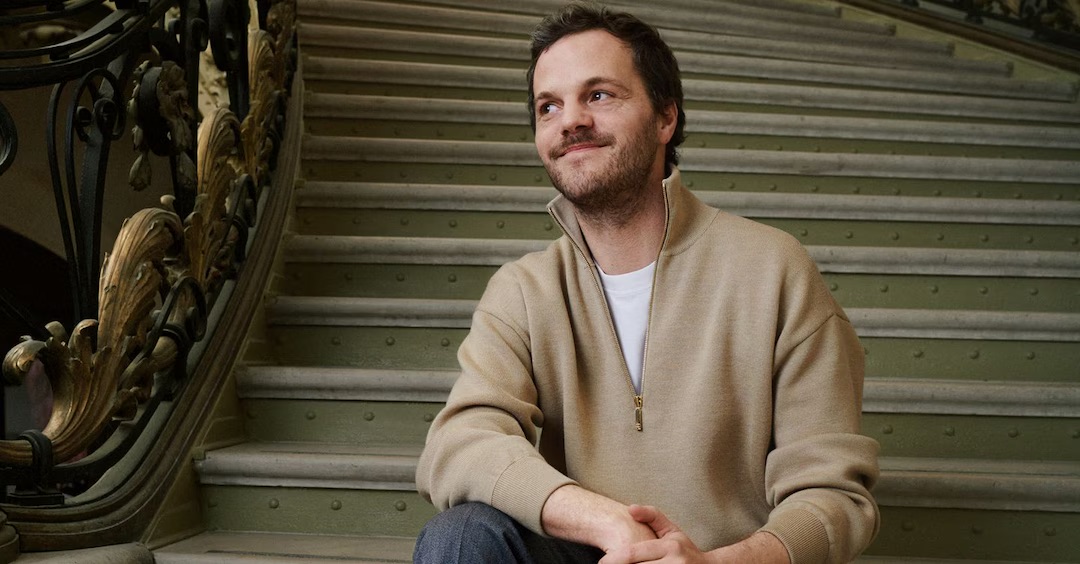
Matthieu Blazy seated on a staircase

Seen from Los Angeles, where nobody blinks at a resale tag, the numbers are hard to ignore. They are already calling it the Blazy effect. According to Fashionphile, a few bags designed by Matthieu Blazy for Chanel, the Souplissimo, the Archetype Tote and the Urban Essentiel, are reselling 13 to 15 percent above retail. These models only reached stores this year.

Think about what that means. When someone pays more for a used bag than for a new one, the boutique didn’t have it, or the buyer refused to wait. The desire is real, and no ad campaign bought it. Resale is the most honest thermometer fashion has.

Blazy renewed Chanel without asking it to become something else, and the results agree: up 16 percent in the first half of the year, according to Bloomberg.

Here is my take from the West Coast. The risk now is making too many. A bag becomes a legend because you can’t simply have it, and Chanel knows that better than anyone. In their place, I would keep the waiting lists for a while longer. Meanwhile, I’ll keep watching who carries what on Rodeo Drive, and what lands on the resale rack six months from now.

FROM PARIS FRONT ROW TO THE RED CARPET: WHAT SPRING-SUMMER 2027 TELLS US ABOUT HOLLYWOOD

From Los Angeles, I watch the European shows with one constant question: what will we actually see on the red carpet? The Spring-Summer 2027 collections, from Milan to Paris, answer with a more relaxed femininity: light fabrics, new proportions, a sensuality that stops shouting.

On October 5, at the Grand Palais, Nicole Kidman lent her voice to the Chanel show, reading passages from Virginia Woolf’s Orlando, while Matthieu Blazy presented the collection in front of Dua Lipa and Pedro Pascal. The next day, at the Louvre, Louis Vuitton gathered Zendaya, Emma Stone and Catherine Deneuve. Zendaya wore jeans and the white lace jacket she had already chosen for the Paris premiere of The Odyssey: proof that fashion and cinema keep watching, and borrowing from, each other.

The Return of the Skirt

At Prada the skirt is back in the spotlight: long, short, pleated or sheer. Miu Miu, Dior and Chanel followed, and Olivia Colman walked for Miu Miu in a black leather suit. I love a statement skirt with a man’s shirt or a tailored jacket. On red carpets, where long gowns end up looking alike, it would be a breath of fresh air.

Lightness and Sensuality

At Dior, Jonathan Anderson works with chiffon, organza and tulle in soft pink and pale blue; Blazy makes Chanel’s tweed softer and stretchier. These are clothes that follow the body without confining it, and after hours in front of photographers, you feel the difference.

Sheer fabrics stay, but the measure changes. Haider Ackermann, at Tom Ford, plays with proportion; Prada and Zimmermann use slits and light fabrics to suggest the body in motion. After so many seasons of naked dresses, I prefer a sensuality built on cut and materials, not on inches of bare skin.

The Great Houses Change Face

Blazy at Chanel, Anderson at Dior, Ackermann at Tom Ford: three different sensibilities taking on historic houses. Anthony Vaccarello, at Saint Laurent, relaunched the house’s tradition with huge golden chandeliers at the Trocadéro, carrying the gold onto the clothes as well. How much will all this weigh on the actresses’ choices? Kidman and Zendaya, from different generations, show that you can experiment and still stay recognizable.

From Paris to Hollywood

In the coming months we will see what really makes it to the red carpets of Los Angeles. I hope for more tailored skirts, fluid fabrics and less provocative sheers. A dress is beautiful on the runway, but it becomes style only when it meets the personality of the woman wearing it. That is what I look for, in Paris as in Hollywood.

CHANEL SS27, MODELS AND DECONSTRUCTED TWEED: THE NEW MOVES FORWARD

2 MIN READ

Tweed is perhaps the most recognizable element of Chanel, but also the one that, after decades of jackets, suits, buttons and constructions that have become iconic, risks looking the most overused. The quality remains, the craftsmanship too, but for a maison like Chanel today it is a matter of turning the page, at least in part, or rather of interpreting that heritage in a more contemporary key.

Matthieu Blazy seems to have taken this road starting precisely from tweed. Deconstructing it means working on one of the maison’s most established symbols: gradually abandoning the rigidity of the famous fitted suits, opening up the weaves, fraying the surfaces, lightening the fits. It is already a sign of change: altering the shape without erasing the Chanel matrix. It is not yet a turning point, but certainly the beginning of a new direction.

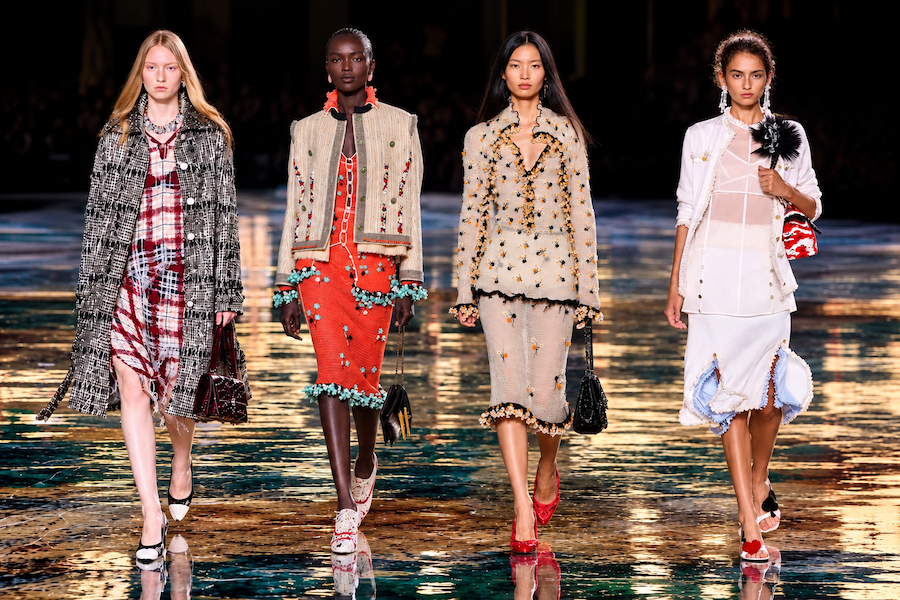
The shapes and fabrics are the ones we know, apart from a few variations, and Chanel is still Chanel at first glance. But in several passages something changes. The tweed is opened, frayed, lightened, almost undone; it loses some of the composure of the more classic constructions and gains movement. The proportions change, the fit changes, and above all the way the garment rests on the body changes.

A coat keeps the material, buttons and recognizability of the maison, but the surface becomes irregular, the threads remain visible, the construction looks less rigid. Underneath, dresses and weaves seem in turn opened up, worn, deliberately imperfect. The result is less composed and decidedly younger.

The choice of models also contributes to changing the perception. Those same materials, worn on very young girls and with a freer fit, lose the weight of a certain traditional idea of Chanel. Not because it is erased: it remains perfectly legible. It is the way of wearing it that changes.

Naturally, not the whole collection proceeds with the same intensity. There are looks very close to forms that have long belonged to the maison and others in which the intervention is more evident. And it is precisely in the latter that the most interesting direction can be glimpsed: not replacing what Chanel has been, but working on material, proportions and construction to bring it into the present.

Blazy seems to have understood that with a maison like Chanel the new does not necessarily have to arrive through a grand gesture. It can also come from a loose thread, a less compact weave, a silhouette that loses rigidity and tightness.

GALLERY

click on the images to enlarge


Discover more of Sara’s World

Sara Dal Monte

Sara Dal Monte
Digital Journalist | Photographer | Art Director
Los Angeles • Sure-Com America
Instagram
X
Facebook
Facebook 2
Facebook Page