CHANEL SS27, MODELS AND DECONSTRUCTED TWEED: THE NEW MOVES FORWARD

2 MIN READ

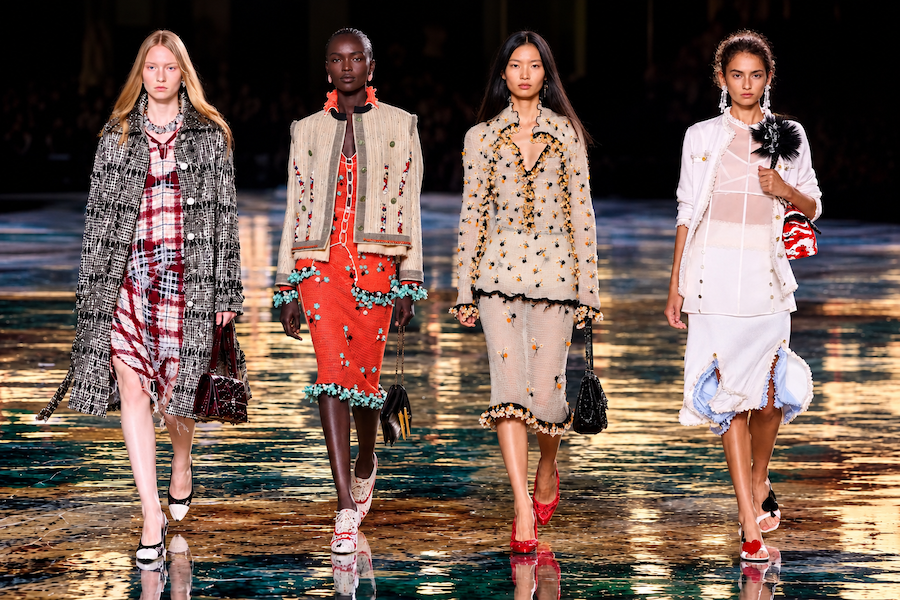
Tweed is perhaps the most recognizable element of Chanel, but also the one that, after decades of jackets, suits, buttons and constructions that have become iconic, risks looking the most overused. The quality remains, the craftsmanship too, but for a maison like Chanel today it is a matter of turning the page, at least in part, or rather of interpreting that heritage in a more contemporary key.

Matthieu Blazy seems to have taken this road starting precisely from tweed. Deconstructing it means working on one of the maison’s most established symbols: gradually abandoning the rigidity of the famous fitted suits, opening up the weaves, fraying the surfaces, lightening the fits. It is already a sign of change: altering the shape without erasing the Chanel matrix. It is not yet a turning point, but certainly the beginning of a new direction.

The shapes and fabrics are the ones we know, apart from a few variations, and Chanel is still Chanel at first glance. But in several passages something changes. The tweed is opened, frayed, lightened, almost undone; it loses some of the composure of the more classic constructions and gains movement. The proportions change, the fit changes, and above all the way the garment rests on the body changes.

A coat keeps the material, buttons and recognizability of the maison, but the surface becomes irregular, the threads remain visible, the construction looks less rigid. Underneath, dresses and weaves seem in turn opened up, worn, deliberately imperfect. The result is less composed and decidedly younger.

The choice of models also contributes to changing the perception. Those same materials, worn on very young girls and with a freer fit, lose the weight of a certain traditional idea of Chanel. Not because it is erased: it remains perfectly legible. It is the way of wearing it that changes.

Naturally, not the whole collection proceeds with the same intensity. There are looks very close to forms that have long belonged to the maison and others in which the intervention is more evident. And it is precisely in the latter that the most interesting direction can be glimpsed: not replacing what Chanel has been, but working on material, proportions and construction to bring it into the present.

Blazy seems to have understood that with a maison like Chanel the new does not necessarily have to arrive through a grand gesture. It can also come from a loose thread, a less compact weave, a silhouette that loses rigidity and tightness.

GALLERY

click on the images to enlarge


Discover more of Sara’s World

Sara Dal Monte

Sara Dal Monte
Digital Journalist | Photographer | Art Director
Los Angeles • Sure-Com America
Instagram
X
Facebook
Facebook 2
Facebook Page

TOM FORD SS27 AT PFW: THE STRENGTH OF ITS LANGUAGE

2 MIN READ

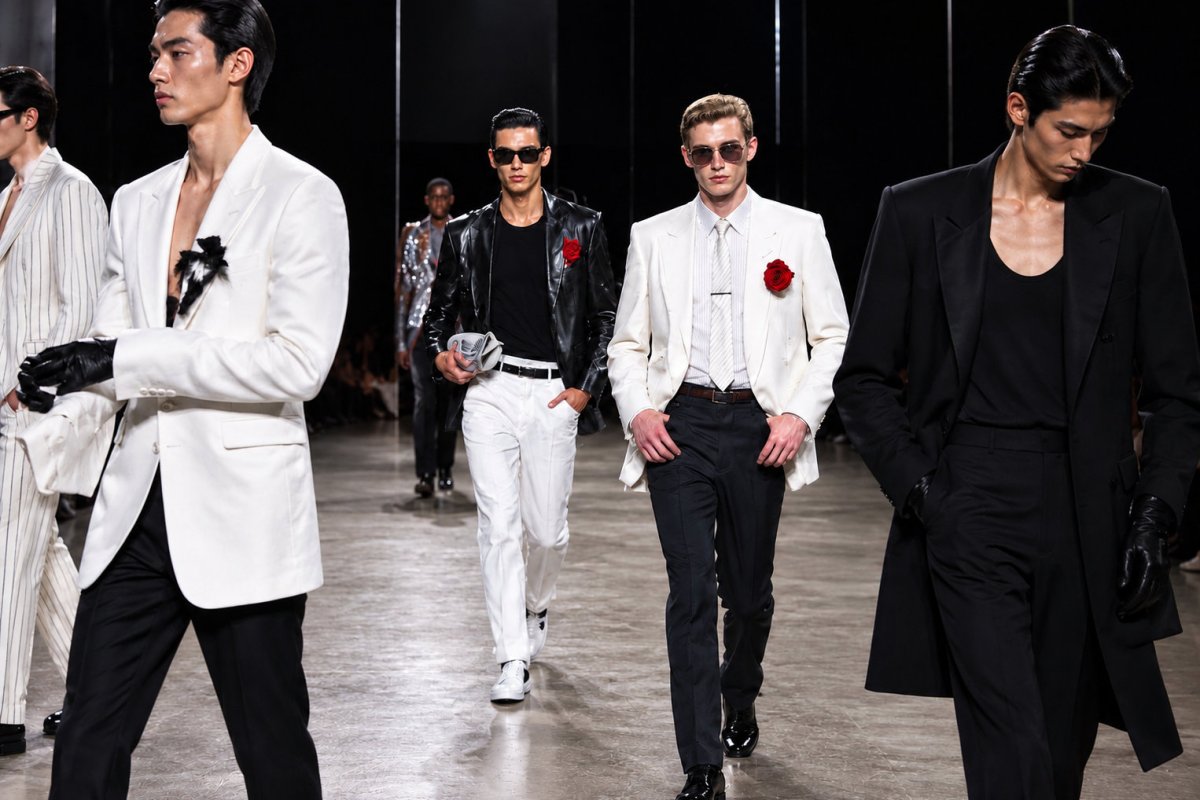
Tom Ford’s Spring Summer 2027 starts from one precise point: recognizability. Haider Ackermann does not try to erase the language of the House, nor to use it as a mere quotation. He takes it, moves through it and carries it into his own sensibility, keeping that tension between elegance and sensuality that has always belonged to Tom Ford.

The collection works above all on line. The body returns to the center, for both men and women, but without gratuitous exaggeration. Jackets are sharp, trousers fall clean, shirts open up and grow lighter, to the point of almost becoming shirt-jackets. On the women’s side come micro-shorts, bodysuits, tops reduced to the essentials and sheer fabrics, without turning provocation into the collection’s only argument.

It is a controlled sensuality, built through proportions.

Black dominates, accompanied by white and red, often used as an accent: a flower, a detail capable of interrupting the rigor of the composition. Then come military green, denim, patent leather and pinstripe. Different materials and registers coexist without compromising the overall coherence.

Menswear too keeps that almost cinematic confidence that belongs to the Tom Ford imagery. White and black suits, leather, dark sunglasses, shirts worn open, tailored trousers alternating with more relaxed constructions. This is not a man stiffened by tailoring, but a man who wears it with ease.

And then there is the woman. Strong, self-aware, extremely feminine even when she borrows elements traditionally belonging to the male wardrobe. The contrast is what makes it interesting: the more the figure takes on masculine codes, the more her femininity seems amplified. In some passages the imagery of Helmut Newton vaguely comes to mind, with those confident, sophisticated and sensual women even inside a rigorous suit.

Ackermann succeeds above all in one difficult thing: making his own hand felt without forcing Tom Ford to become something else.

In a moment of fashion in which many creative directors seem to seek change through rupture, here almost the opposite happens. Change comes from working inside an already strong language, intervening on proportions, materials and attitude without erasing its recognizability.

And this is probably the most evident result of the show: men and women can change shapes, materials and proportions, yet they continue to belong to the same universe.

GALLERY

click on the images to enlarge


Discover more of Sara’s World

Sara Dal Monte

Sara Dal Monte
Digital Journalist | Photographer | Art Director
Los Angeles • Sure-Com America
Instagram
X
Facebook
Facebook 2
Facebook Page

DIOR, JOIE DE VIVRE, LIGHTNESS AND FEMININITY AT PARIS FASHION WEEK SS27

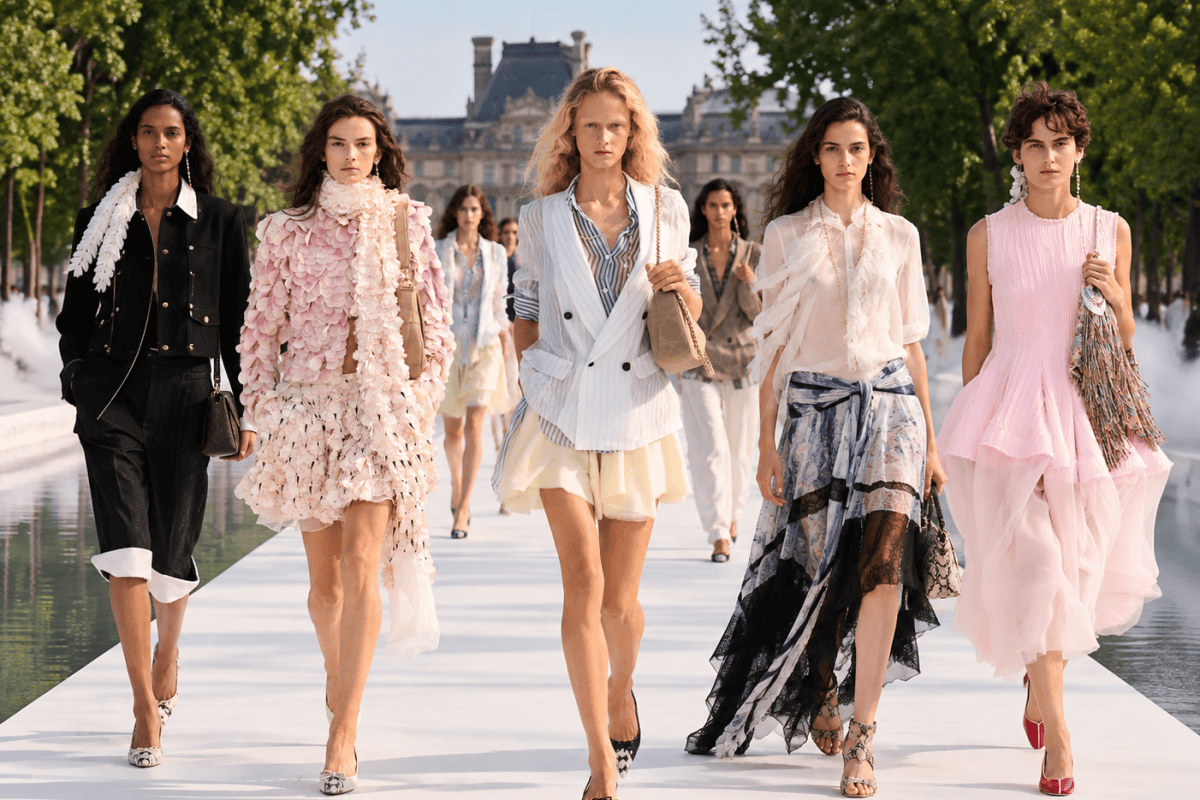
Paris, September 29, 2026. In the Jardin des Tuileries, on a runway suspended over the water and veiled by a light mist, Jonathan Anderson presents Dior’s Spring Summer 2027. Trees, water and natural light accompany a collection that seems to want to free both the body and the clothes from any unnecessary weight.

Fashion becomes airy, imaginative, full of movement. Chiffon, organza, tulle, lace and sheer fabrics meet petals and appliqués that seem to move with every step. Powder pink, pale blue, white and soft yellow sit alongside stripes, Prince of Wales check and sudden metallic flashes. Skirts gain volume without becoming stiff, while menswear-inspired blazers and shirts enter the wardrobe without taking anything away from the femininity of the figure.

And this is perhaps what I like most about Jonathan Anderson‘s work. His woman feels no need to hide behind severe constructions or to masculinize herself in order to assert her presence. She is feminine, light, romantic when she wants to be, but never fragile. The clothes follow the body, accompany it, sometimes reveal it; the layering looks spontaneous, but behind that ease lies precise work on proportions, materials and volumes.

There is a lot of joie de vivre in this collection. You find it in the color, in the movement of a skirt, in a sheer panel, in a shirt left loose under a jacket, in the almost irregular lightness of the appliqués. Dior’s historic codes are also treated with greater freedom: not a copy of the past, but a different way of carrying some of its signs into the present.

Jonathan Anderson thus continues his dialogue with one of the most important legacies in French fashion, without letting himself be imprisoned by it. And this Spring Summer 2027 conveys above all one feeling: the pleasure of dressing, of being a woman and of showing it naturally.


GALLERY

click on the images to enlarge


Discover more of Sara’s World

Sara Dal Monte

Sara Dal Monte
Digital Journalist | Photographer | Art Director
Los Angeles • Sure-Com America
Instagram
X
Facebook
Facebook 2
Facebook Page

AFTER MILAN, PARIS TAKES THE STAGE

Milan has just switched off the lights and Paris is already under way. The Fashion Week dedicated to Spring/Summer 2027 began on September 28 and runs until October 6, with 68 shows and 33 presentations. Nine days in which practically all the big names of French and international fashion will take the stage.

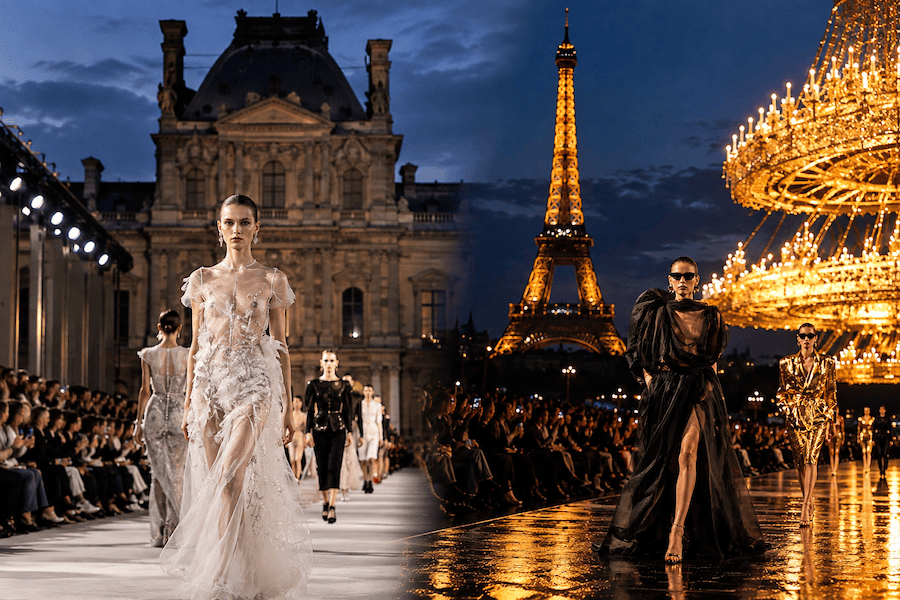
The first day was given over mainly to the new generations; then on September 29 came Dior, Maison Margiela and Saint Laurent, and the tone changed immediately. Dior brought to the Tuileries Jonathan Anderson’s second Spring/Summer, still grappling with an enormous heritage to reinterpret through his own language. In the evening, Anthony Vaccarello turned the Trocadéro into a great golden stage, with the Eiffel Tower in the background, also celebrating his ten years at the helm of Saint Laurent. Two completely different ways of engaging with the history of a Maison.

Paris, after all, has always played a different game. Milan remains closely tied to product, craftsmanship, Made in Italy and brand recognition; here fashion more readily becomes performance, reaching for art, history and sets capable of turning a show into an event. That does not necessarily mean doing better. It means having another way of telling fashion, and that is also why moving from one city to the other continues to make sense.

And we are only at the beginning. The calendar has yet to bring out Balmain, Dries Van Noten, Tom Ford, Schiaparelli, Balenciaga, Loewe, Givenchy, Celine, Hermès, Valentino, Chanel and Louis Vuitton. Big names, and inevitably high expectations.

Now we will see the collections. Because Paris knows how to build a spectacle like few other cities, but once the lights are off and the sets are taken down, what really interests me is understanding what remains of the clothes.


Discover more of Sara’s World

Sara Dal Monte

Sara Dal Monte
Digital Journalist | Photographer | Art Director
Los Angeles • Sure-Com America
Instagram
X
Facebook
Facebook 2
Facebook Page

SAINT LAURENT DRESSES PARIS IN GOLD

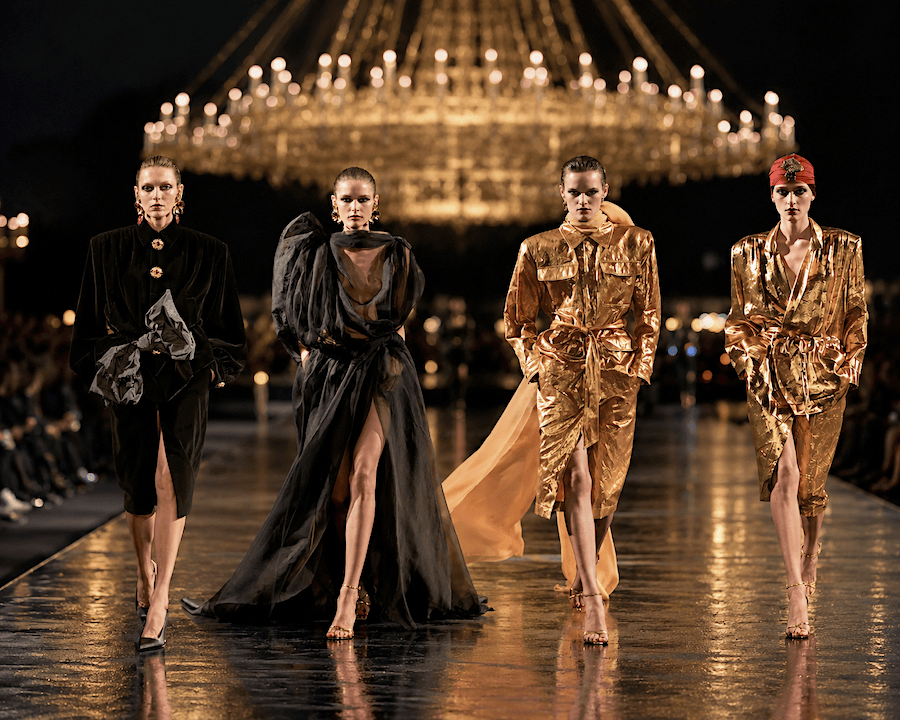
Paris, September 29, 2026. At the Fontaines du Trocadéro, with the Eiffel Tower in the background, Anthony Vaccarello celebrates his ten years at the helm of Saint Laurent, turning one of the most iconic places in the French capital into a monumental open-air set. Great golden chandeliers suspended above the runway, lights and reflections on the mirrored floor turn the Trocadéro into an expanse of gold.

A spectacular set, but not an end in itself. The great chandeliers recall the Salon Impérial of the Hôtel Inter-Continental, where Yves Saint Laurent began presenting his collections in 1976. Fifty years later, Vaccarello reclaims that memory and takes it outdoors, under the Paris sky, in dialogue with the Eiffel Tower. Gold moves from the set to the clothes: saharienne jackets and clean-lined suits, precious embroidery, sheer fabrics and a few touches of color. Then comes black, more rigorous in velvet and more sensual in the great drapes. After the glow comes the night, yet Saint Laurent remains perfectly recognizable.

And this is exactly what I keep appreciating about Vaccarello. In years when too many creative directors seem to feel the need to overturn a Maison in order to leave their mark, he has done something more difficult: being recognizable without erasing Saint Laurent. He has worked on an enormous legacy without becoming its prisoner and without tearing it down to prove he is new. The result is fashion that preserves seduction and rigor, yet clearly bears his signature.

For days there have been rumors about his possible departure from the Maison. At the moment there is no official confirmation. Let’s hope it isn’t true. At the end of the show, Vaccarello symbolically handed the keys of Saint Laurent to his son, a gesture that inevitably stays with you on an evening so charged with meaning.

Vaccarello has given a great deal to Saint Laurent and is one of the creative directors I continue to appreciate the most. This show proves it once again: respect for history, the ability to reinterpret it and, above all, a personal vision that has no need to erase what came before.


GALLERY

click on the images to enlarge


Discover more of Sara’s World

Sara Dal Monte

Sara Dal Monte
Digital Journalist | Photographer | Art Director
Los Angeles • Sure-Com America
Instagram
X
Facebook
Facebook 2
Facebook Page