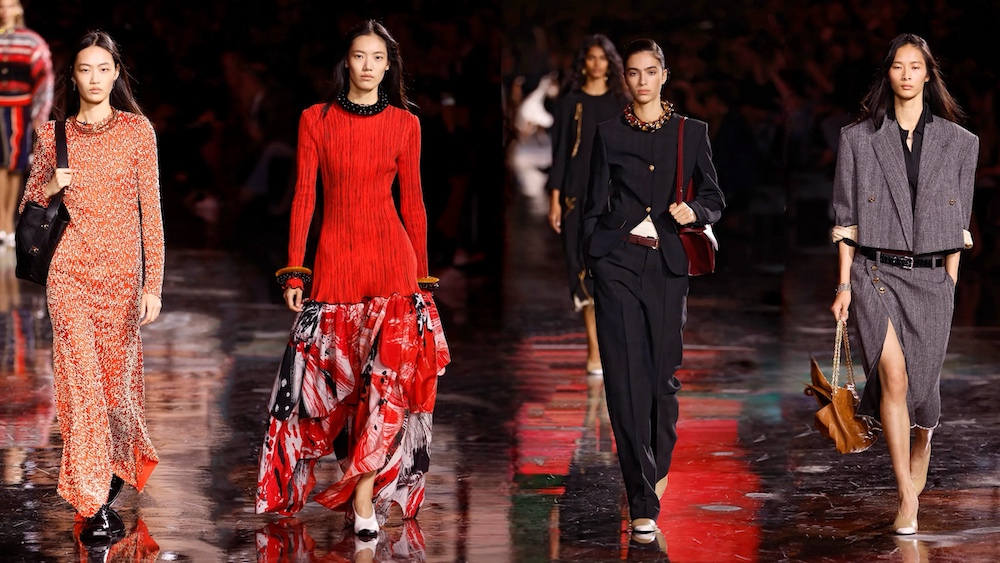
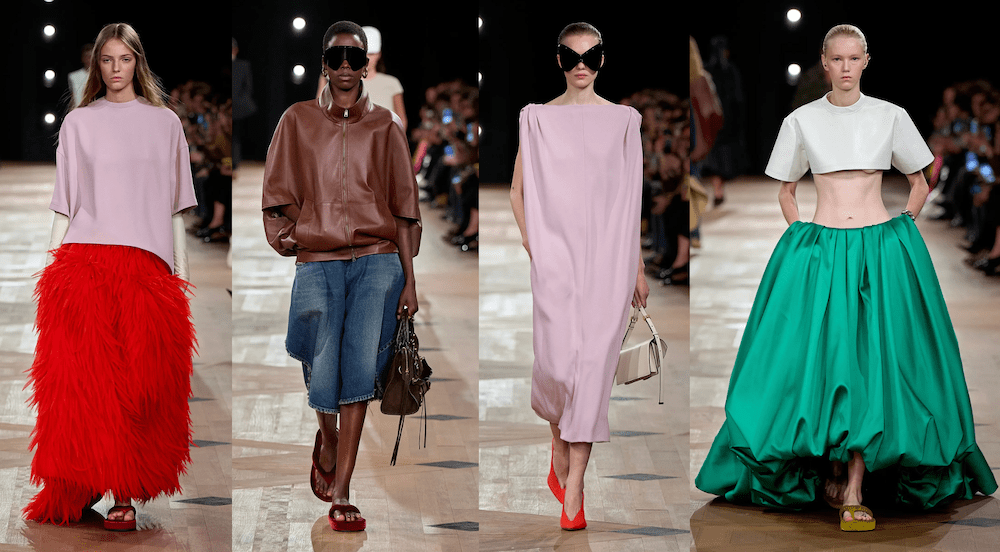
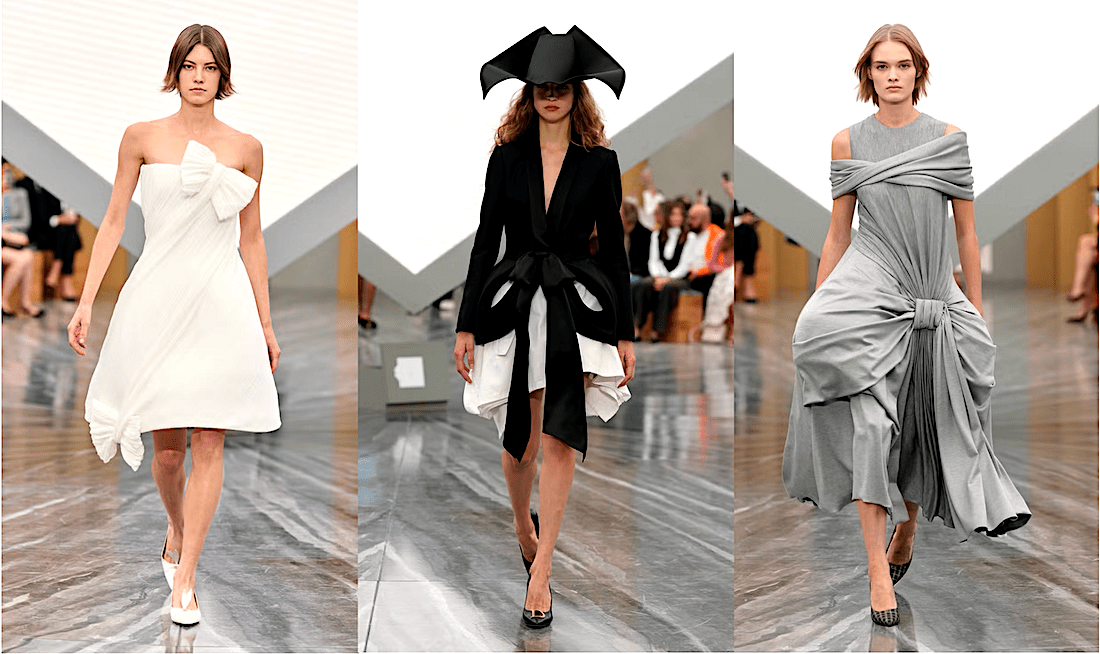
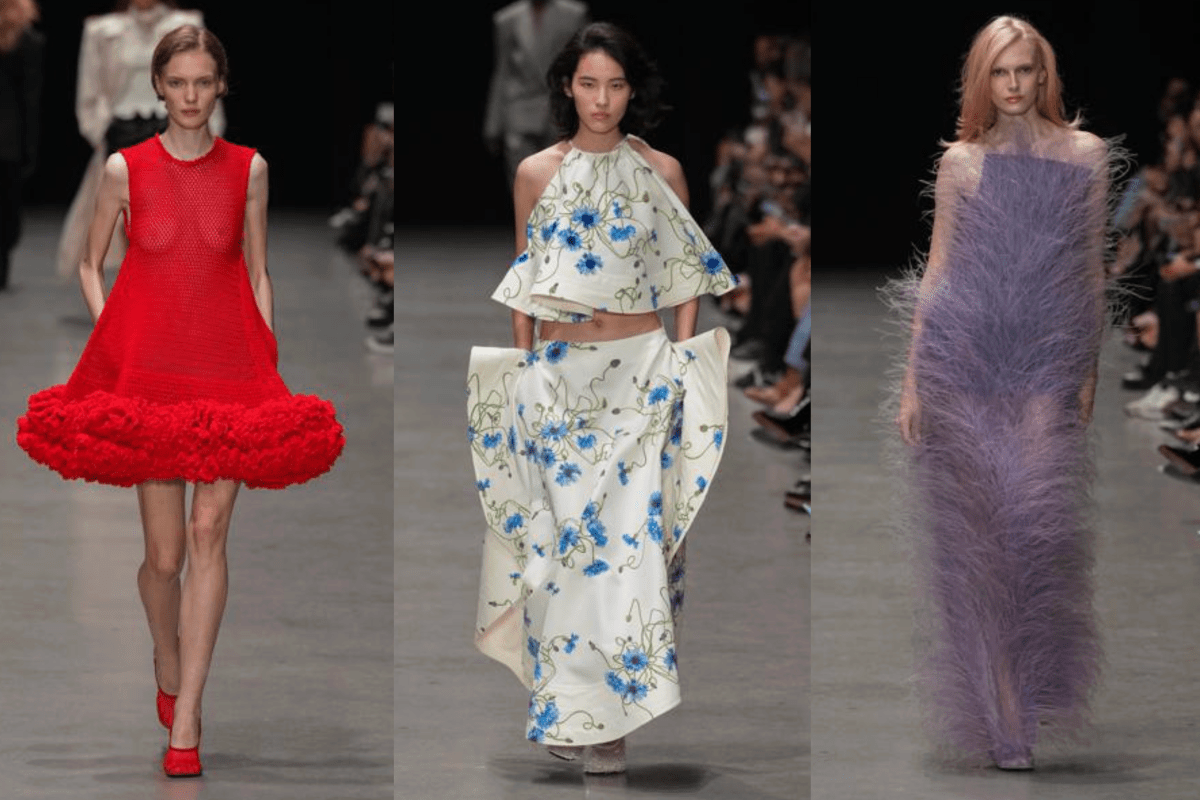
PRADA, THE LAND OF WOMEN IN SKIRTS

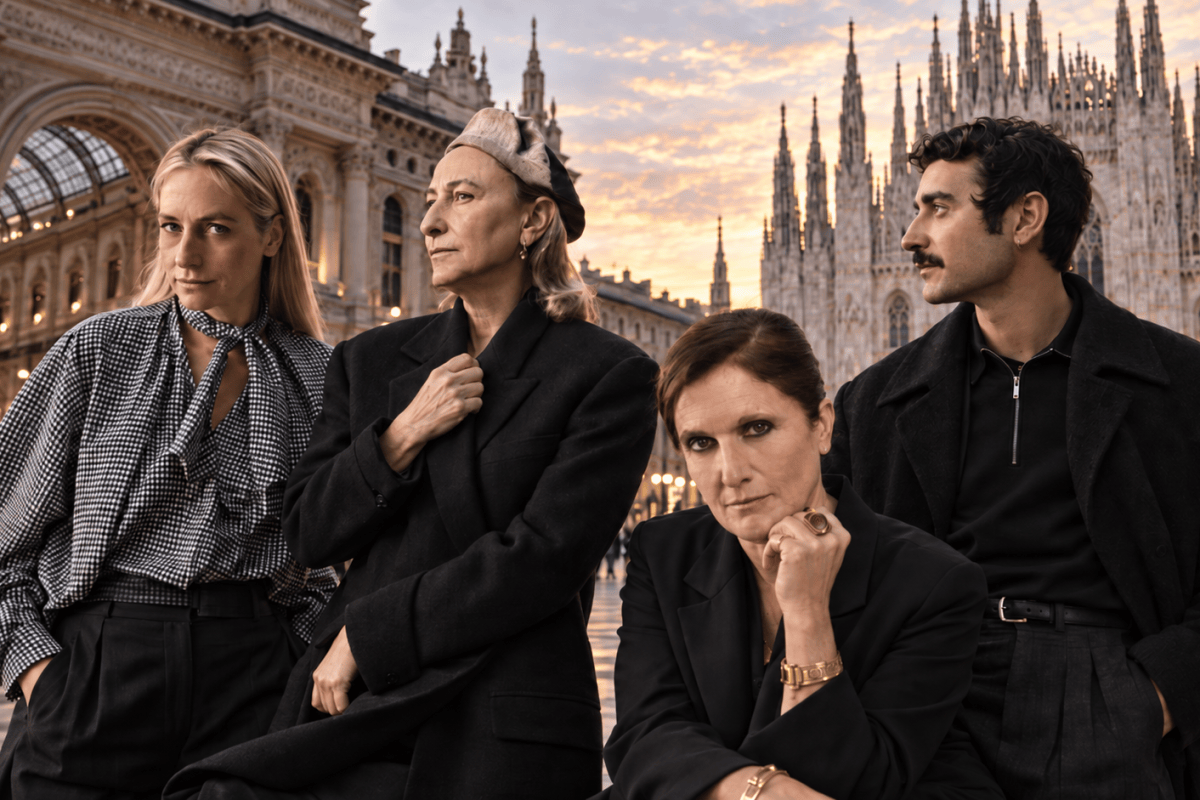
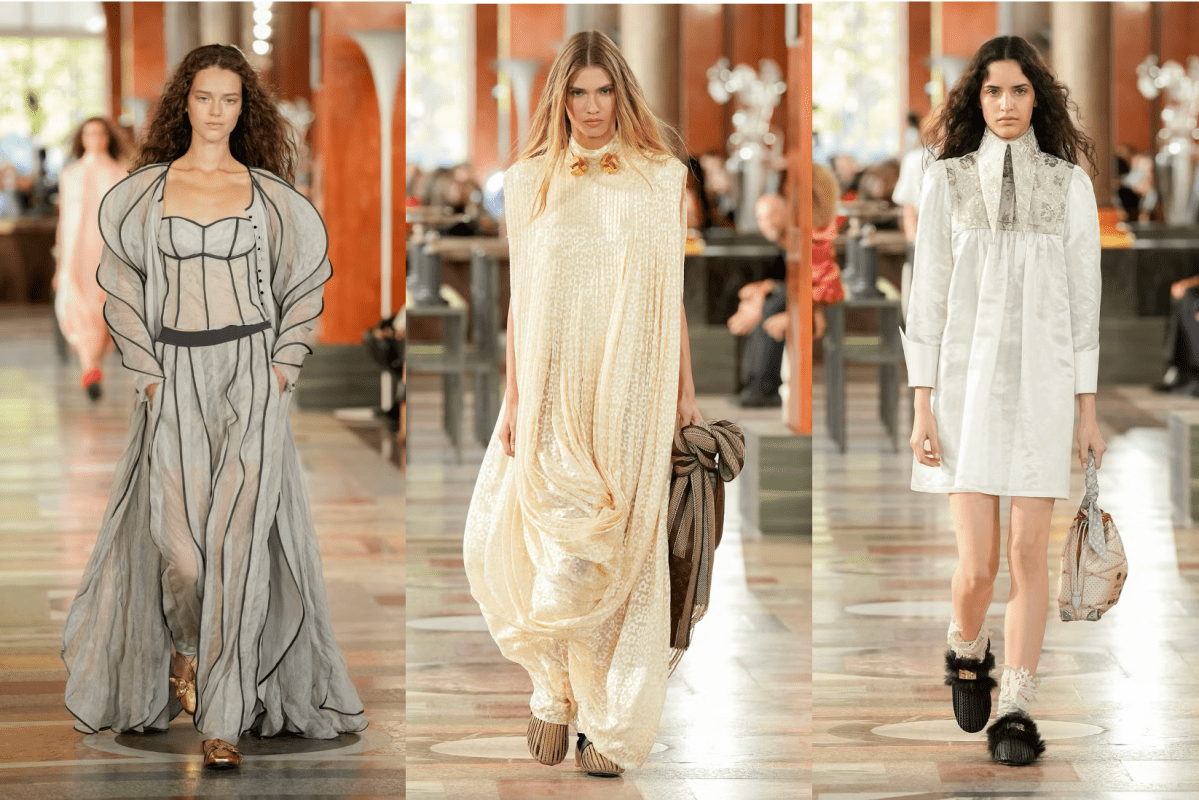
Looking at Prada’s new collection, one image came straight to mind: the land of women in skirts. Different women, different skirts, different ways of being feminine. And maybe that’s what struck me most about Miuccia Prada and Raf Simons’ collection.

For quite some time, I had the impression that in their work together femininity had been cooled down, at times almost played down, leaving plenty of room for research, for concept, and for that intellectual provocation that belongs so deeply to Prada. This time, though, I have to change my mind. Women are back at the center, and they return through a garment that seemed to have almost lost its place: the skirt.

They’re everywhere. Long, short, straight, full, sheer, embroidered, pleated, with deep slits, light or structured. It’s like truly stepping into this imaginary land of women in skirts, where there is no single way of being a woman. That’s where the collection gets interesting, because Prada doesn’t bring back the skirt to take us backward, nor to offer a predictable femininity. It uses the skirt to tell the stories of different women.

I also like the way the boyfriend element enters this universe, that masculine touch that deliberately interrupts the narrative: a looser shirt, a jacket, a proportion almost borrowed from his wardrobe. The result doesn’t cool the woman down. Quite the opposite. The contrast makes the skirt stand out even more, and with it the body, the movement, the sensuality.

Slits, sheer fabrics, and embroidery do the rest, without turning everything into a loud statement. The body appears, disappears, is left to be glimpsed. There is sensuality, but it doesn’t need to prove itself at every turn. And this may be where this collection convinces me more than others I’ve seen in recent years.

Of course, it’s still Prada, with its very own way of putting together things that seemingly shouldn’t go together. Colors, materials, proportions, deliberately odd details. Miuccia Prada has always had this talent: slipping in something that disturbs just when everything risks becoming too beautiful, too perfect, too predictable. Raf Simons brings his own vision into this language, and the result remains instantly recognizable.

But this time, walking through this land of women in skirts, I had a different feeling. I saw less distance and more body, less coldness and more femininity. Without nostalgia, and above all without going back to an outdated idea of women.

Perhaps this was exactly the shift I’d been waiting for from Prada.

The skirt is back. But above all, the woman who wears it is back.


Discover more of Sara’s World

Sara Dal Monte

Sara Dal Monte
Digital Journalist | Photographer | Art Director
Los Angeles • Sure-Com America
Instagram
X
Facebook
Facebook 2
Facebook Page

VOGUE WORLD MILAN 2026: TONIGHT I SAW AN IMAGE I HAD IMAGINED COME TO LIFE

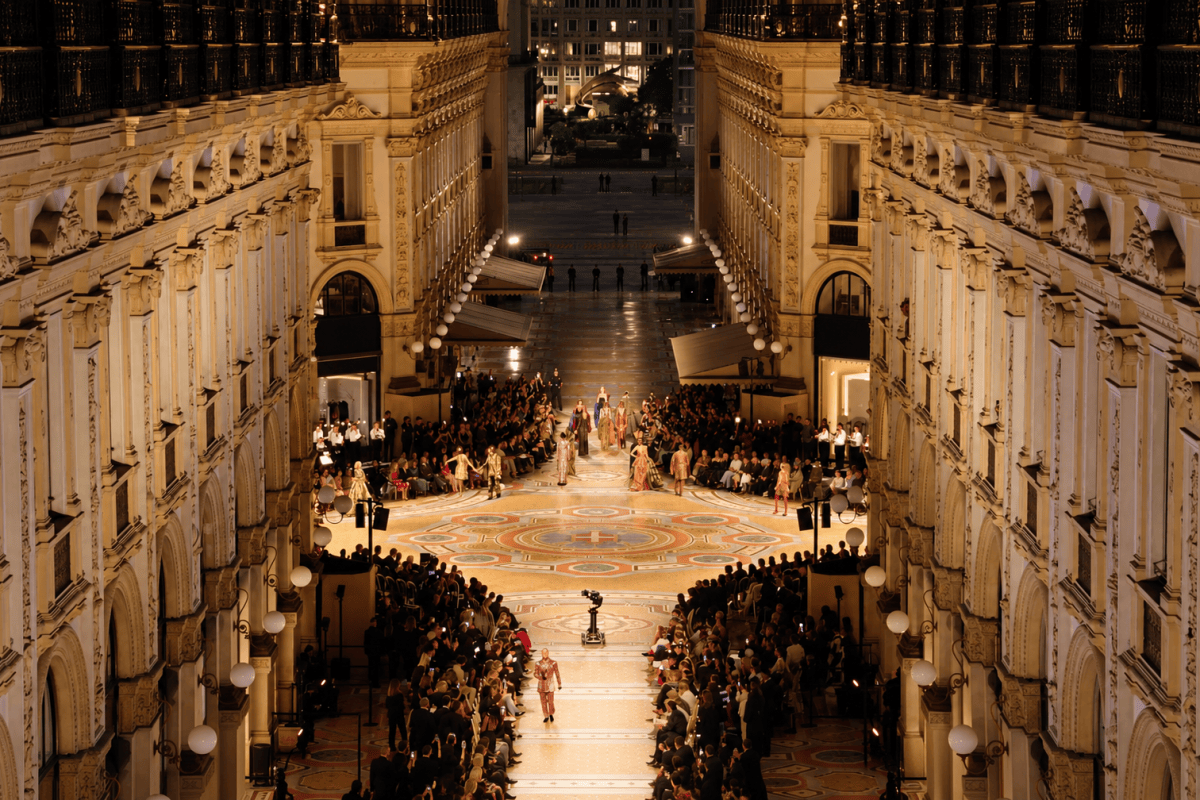
On September 4, while writing about Milan Fashion Week, I imagined a major fashion show taking place inside the Galleria Vittorio Emanuele II. I did so for a very simple reason: I believe it is one of Milan’s most powerful images, perhaps one of the locations that best embodies Italian fashion. The Galleria has beauty, history, architecture and a natural sense of theatre. It is Milan in one of its most recognizable forms.

That is why I created exactly that scene for the cover of the article. Tonight, watching Vogue World transform the Galleria into a spectacular stage for fashion, I immediately thought back to what I had written on September 4.

Of course, Vogue World had been conceived, planned and organized long before then. There is no connection between the two things. But seeing that same vision of Milan I had imagined a few weeks ago come to life — on an entirely different scale and at another level — was quite something.

And after seeing the Galleria tonight, I am even more convinced of one thing: this is one of the places in Milan where fashion should take to the runway.

Then the show began, and what moved me most was not simply seeing top models, actresses, actors, singers, dancers and athletes walk through one of Milan’s most beautiful landmarks. It was seeing alongside them the artisans, workers and people who represent that long and complex supply chain without which fashion simply could not exist. Behind every garment there are hands, skills, fabrics, workshops, pattern makers, seamstresses, technicians and companies.

There is an enormous world that normally remains behind the scenes, working every day so that this industry can continue to create beauty, culture, employment and value. Vogue World Milan had the merit of bringing that world into the spotlight as well, telling the story of Made in Italy through the relationship between human craftsmanship, industry, creativity and innovation.

Fashion is often described as superficial, even frivolous. Part of it certainly can be, but stopping there means failing to understand its language. The way we dress is also a way of communicating something about ourselves, of showing others how we choose to present ourselves and, sometimes, simply of making ourselves feel better. Clothes do not define who we are, but they can contribute to the way we choose to express it.

And then there is beauty — perhaps the word that has stayed with me more than any other tonight: the Galleria Vittorio Emanuele, the music, the dance, the models, the artists and, above all, the human work that makes all of this possible.

Yet perhaps never more than now should we remind ourselves just how precious and fragile all of this is. We are living through days in which words we thought belonged to history books have returned: war, borders, missiles, rearmament. Images reach us every day from every corner of the world, and we even risk becoming accustomed to them. Then, for one evening, beneath the glass vaults of Milan’s Galleria, something completely different passes before our eyes: people who have built, sewn, designed, sung, danced and performed.

People who have devoted time, intelligence and talent to creating something beautiful. It has taken generations to build culture, craftsmanship, knowledge, cities like Milan and industries such as Italian fashion.

Losing all of it, however, could take far less.

Perhaps that is also why the Galleria looked even more beautiful to me tonight.


Discover more of Sara’s World

Sara Dal Monte

Sara Dal Monte
Digital Journalist | Photographer | Art Director
Los Angeles • Sure-Com America
Instagram
X
Facebook
Facebook 2
Facebook Page

MILAN FASHION WEEK 2026: IT’S NOT JUST ABOUT THE SHOWS. IT’S FASHION DICTATING ITS OWN STYLE

From September 22 to 28, Milan is back at the center of international fashion with the Spring/Summer 2027 Fashion Week. There are 203 events on the calendar, between shows, presentations and other happenings. That’s a big number, but this time the schedule seems to be telling us something more than a simple sequence of collections.

Prada opens the week and Giorgio Armani closes it. Glenn Martens is leaving Diesel. Loris Messina and Simone Rizzo, who come from Sunnei, make their debut as creative directors of Moschino. Maria Grazia Chiuri continues Fendi’s new chapter, and Marni keeps going with the transformation Meryll Rogge started.

Then there’s Armani. Dario Vitale has just taken over as creative director of Emporio Armani and of the Giorgio Armani accessories, the first big outside hire in the group’s creative history. The collection we’ll see this week still belongs to the previous phase, but from here another story inevitably begins. I’m curious to see how Vitale will read Emporio Armani, and how far he can push it without losing the recognizability Giorgio Armani built over more than fifty years.

Versace isn’t showing this time. After Dario Vitale’s exit and the maison’s move to the Prada group, new creative director Pieter Mulier is working on his debut, planned for February 2027. That absence says a lot too: another great Italian house is going through a handover.

Behind all these changes there’s a bigger question, maybe the most important one: the generational shift. Italian fashion is entering a phase where many of the people who built the system over the last decades are stepping aside for new faces, new languages, new ways of reading a brand. And it’s not only about creative directors. It’s about companies, families, artisans, workshops, and above all the ability to pass on knowledge that often takes years to build. The real risk isn’t changing generation. It’s losing, along the way, what that generation knew how to do.

While creative directors, strategies and owners change, Milan opens the week with Vogue World, and this year’s theme is a pointed one: The Human Touch in the Age of Technology. The relationship between craft, human skill and technology. Hard to find a theme more timely for Italian fashion. Because maybe that’s the question running through the whole of Milan Fashion Week 2026: how much can we change without losing what makes us recognizable?

In recent years fashion has sped up enormously. We’ve produced more, communicated more, shown everything faster. Social media has turned even the runway show into something that gets watched, photographed, posted and often forgotten within hours. Sometimes the communication has even outrun the product.

And this is where a question that should come naturally to Made in Italy takes center stage again: the value of what we know how to do. A jacket is not just a shape. Behind it are fabrics, proportions, construction, cut, experience, and above all people who learned a craft over years of work. That heritage is what made Italian fashion recognizable all over the world.

Today technology is part of the process, and it can’t be otherwise. It can speed up design, let us see a garment before it’s made, read the market better and make production more efficient. It can be a great opportunity. The trouble starts when we confuse the tool with the value.

Because when everyone has access to the same systems and can produce perfect images in seconds, the difference will probably come back to what we’ve always had in front of us: knowing how to do something well.

The same goes for brands. Changing a creative director is relatively easy. Changing a maison without damaging its identity is much harder. It’s one of the things I’ll be watching most closely this week. Fendi, Moschino, Marni, Versace, Armani: different stories, different transitions, but one underlying question.

The real challenge isn’t just becoming contemporary. It’s changing generation, language and tools without wiping out what makes a brand instantly recognizable.

That, more than the number of events, is what makes this year’s Milan Fashion Week worth following. Behind many of the shows there’s a system looking for a new direction, while the world races toward production that is faster, more digital and more automated.

Milan might remind us of something very simple: the future of fashion won’t be a choice between people and technology. It will be about learning to use technology without losing the human.


Discover more of Sara’s World

Sara Dal Monte

Sara Dal Monte
Digital Journalist | Photographer | Art Director
Los Angeles • Sure-Com America
Instagram
X
Facebook
Facebook 2
Facebook Page

LUXURY IS GROWING AGAIN BECAUSE IT WAS FORCED TO GO BACK TO DOING LUXURY

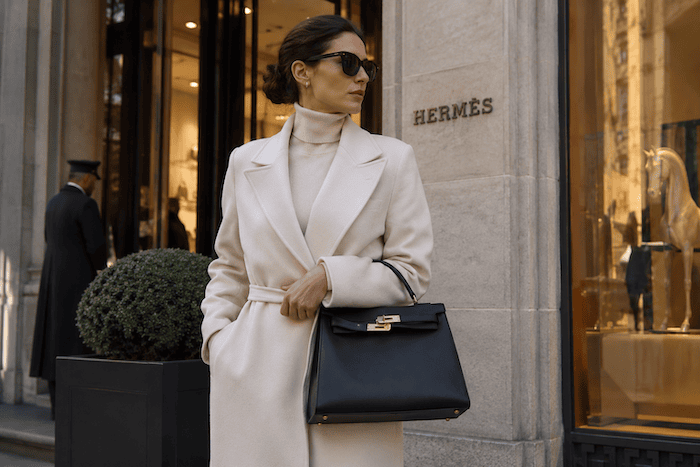
The luxury market is showing some signs of growth again. We are certainly not back to the years immediately after the pandemic, when it seemed everything could rise without limits, but something is moving. LVMH is growing, Hermès keeps showing above-average solidity, and even Kering, after complicated years especially for Gucci, shows some signs of recovery.

The interesting thing, however, is not only the economic data. It is what is happening behind those numbers. Luxury is growing again because, in some way, it has been forced to go back to doing its job. To do luxury.

For some years an important part of the sector probably believed that brand strength, accompanied by continuous price increases, was enough to keep the attraction to the product intact. It didn’t work out that way. Consumers, even those with great spending power, at some point look again at what they buy and ask whether what is in front of them still holds that quality and that culture of the product that built the very meaning of luxury over time.

And perhaps this is exactly where something was lost in recent years. The constant pursuit of provocation and the need to amaze at all costs have often pushed fashion away from one of its fundamental tasks: creating beauty. Of course beauty doesn’t mean conformity. Fashion has always needed to question what exists, but it is one thing to do so because you have something new to say, another to demolish what was there just to attract attention. And the public, sooner or later, perceives this difference.

The same goes for price. For too long people thought that raising it automatically meant raising positioning too, but the value of a maison doesn’t come from a price tag. It is built over time, through what it produces and the consistency with which it keeps its identity. When price becomes the main tool for declaring exclusivity, the mechanism sooner or later breaks.

It is significant that right now many groups are returning to invest with greater care in creative direction and product. The new appointments at the maisons are not just changes of people: they are a sign that the sector needs to rediscover its own creative strength and interpret the present without disowning what made it important. In other words, fashion is once again in need of fashion.

The renewed attention to the so-called aspirational customer also tells us something. In recent years that segment of the public was progressively pushed out of the market by very significant increases; today we realize it was not marginal at all, but represented an important part of the sector’s balance. This doesn’t mean luxury must become popular; it means it must once again make evident, through what it offers, why it occupies a different position.

True exclusivity doesn’t come from making an object simply unreachable, but from that object truly having something that sets it apart.

We probably won’t return to the double-digit growth of the post-Covid years, and perhaps that’s for the best. That was an exceptional condition. The phase opening now could be far more selective and interesting, because it will force brands to win back the market by demonstrating their value again, in practice.

Before constantly inventing something new, luxury must go back to being credible in what it has always claimed to be.


Discover more of Sara’s World

Sara Dal Monte

Sara Dal Monte
Digital Journalist | Photographer | Art Director
Los Angeles • Sure-Com America
Instagram
X
Facebook
Facebook 2
Facebook Page

SEPTEMBER, FASHION RETURNS TO THE RUNWAY. BUT THE MARKET DEMANDS ANSWERS

September has never been just about Fashion Week. It’s the moment when international fashion returns to the spotlight. More importantly, it’s when the gap between storytelling and actual sales gets measured.

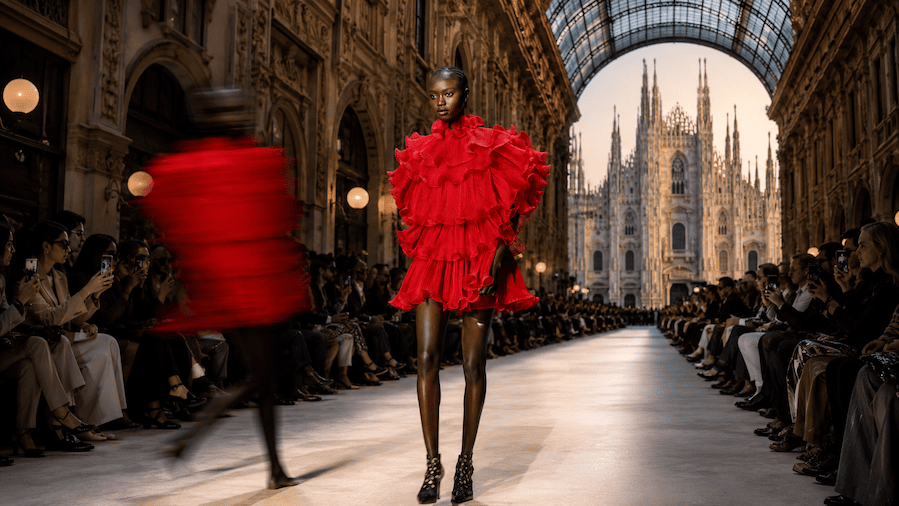
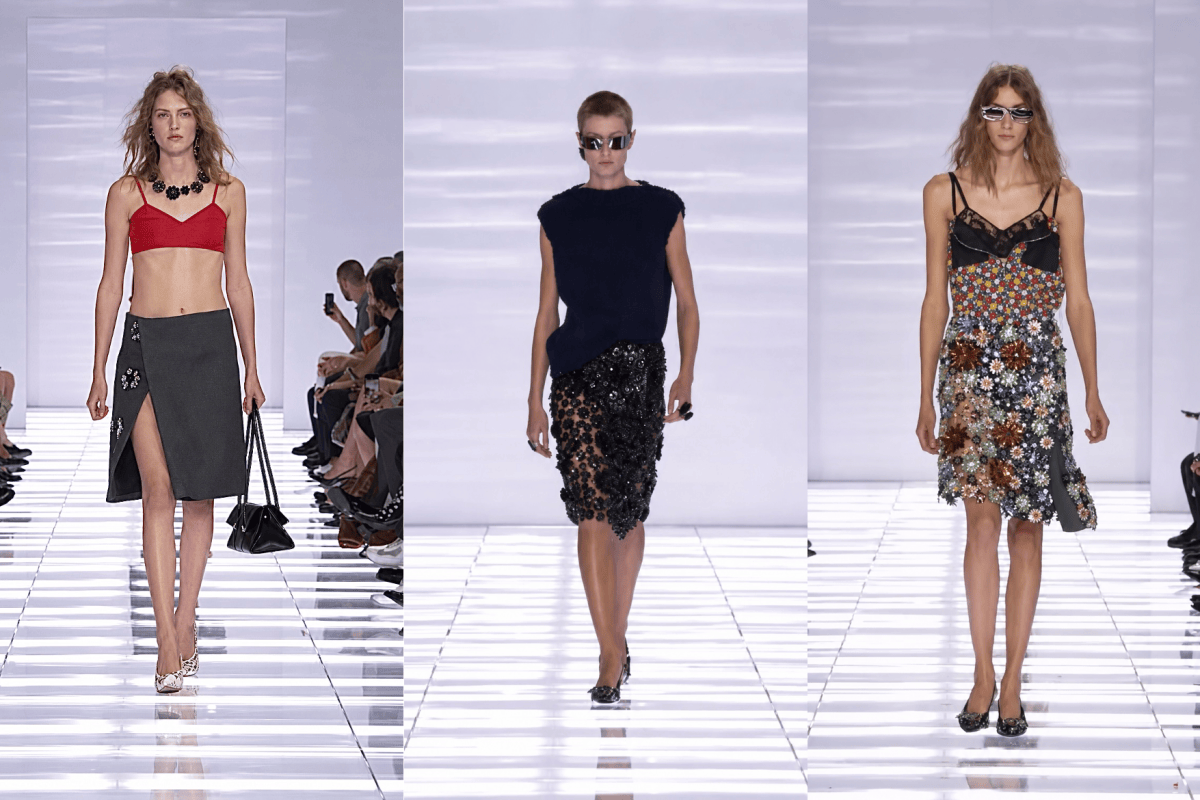
The image I created for the cover is no accident. It’s deliberately descriptive. It illustrates this article, but also a personal wish: to finally see a real runway show in Galleria Vittorio Emanuele II, transformed into a space entirely dedicated to fashion.

New York, London, Milan and Paris will present their Spring/Summer 2027 collections. This reopens the long season of shows, presentations and events that captures the entire industry’s attention for weeks. But this time, the real interest won’t just be about what we’ll wear in six months. It will be about which brands still have a clear direction. And which ones are still trying to find it.

Because fashion, before being communication, remains product, business, distribution, margins and the ability to create desire. The runway can amplify all of this. But it cannot invent it. And that’s exactly where September gets interesting.

In recent years, we’ve seen constant changes in creative directions. Relaunches. Repositionings. High-visibility campaigns. An almost relentless production of images. Everything moves faster. But the market keeps reminding us of a simple rule: being visible doesn’t necessarily mean being desirable. And being desirable doesn’t automatically mean selling.

A collection’s success isn’t measured only by image impact or the volume of content it generates. It’s measured by its ability to restore coherence to the brand. Today’s consumer sees everything. Compares everything. Has access to information that didn’t exist just a few years ago. They figure out quickly when a brand’s story aligns with the product. And when communication is just compensating for a lack of identity.

That’s also why Fashion Weeks are changing function. They remain spectacle, image, relationship-building. But they’ve also become a public test of brand strategy. A new creative direction, a repositioning, an attempted relaunch—all are observed simultaneously by buyers, press, investors, clients and the public.

Milan, in this sense, remains one of the most interesting observatories. Its strength continues to lie in the intersection of creativity and industry. Behind the Italian runway exists a structure made of companies, supply chains, manufacturing, distribution and expertise. That’s why the question can’t just be whether a collection is beautiful. It must be whether it strengthens brand identity, generates a credible product and builds value over time.

Gucci will inevitably be one of the most watched. Demna’s arrival has opened a new chapter. The point won’t just be seeing what aesthetic he brings to the brand. It will be understanding whether this new identity can turn into desirability—and then into results. But Gucci is just the most visible case of a much broader phenomenon.

The constant movement of creative directors in recent years tells the story of a system seeking new balance. The designer remains central. But today that role operates within a much more complex structure. Creativity, product, market and management must work together. Changing a brand’s creative face is no longer enough to automatically change its destiny.

New York, London, Milan and Paris will naturally continue to represent four different fashion cultures. New York retains its ability to merge fashion, business and pop culture. London remains a laboratory where new languages often emerge. Milan continues to express the relationship between style and industry most clearly. Paris maintains the great symbolic and commercial power of international luxury.

But perhaps this year, it will be even more interesting to observe what they have in common.

All must confront the same problem: staying relevant in a market saturated with images and constantly bombarded by new messages. Communication has increased enormously. But precisely for this reason, attention has become more fragile. A show can dominate social media for twenty-four hours and disappear the next day. A collaboration can go viral without actually building value. A new creative director can generate plenty of curiosity. But curiosity is not yet brand loyalty.

Branding, ultimately, is measured afterward. When the show’s effect has faded. When the campaign is no longer new. When what remains is understanding what the consumer actually retained about the brand. That’s where identity, recognition and perceived value matter.

It’s also the principle I try to apply in my work. When I work with a brand, I’m not simply interested in increasing visibility. I focus on elevating the narrative. Enriching it. Imprinting it with personality and identity. Because storytelling, when intelligent, sophisticated and aligned with positioning, becomes one of the most effective forms of branding. It’s not just about getting people to talk about a brand. It’s about deciding how it enters the mind of those who observe it.

And perhaps that’s the most interesting point about September. Not so much what we’ll see on the runways. But what we’ll understand by watching them. Who is truly building a new phase. Who is just changing image. And who can still transform creativity and product into real desire.

Because today, a Fashion Week tells us much more than a season. It reveals the health of brands. And in some ways, the direction the entire fashion system is taking.


Discover more of Sara’s World

Sara Dal Monte

Sara Dal Monte
Digital Journalist | Photographer | Art Director
Los Angeles • Sure-Com America
Instagram
X
Facebook
Facebook 2
Facebook Page

WINTER ESCAPE – MY DECEMBER GETAWAY IN BEVERLY HILLS


(A December diary from Los Angeles)

December in Los Angeles has a unique atmosphere.
While the rest of the world dons heavy coats and struggles with the snow, here the city lights up with lights, endless parties, rooftops that touch the sky, and warm afternoons scented with eucalyptus and ocean. It’s the perfect time to treat myself to a little personal escape: a ritual I repeat every year to recharge, breathe in beauty, and prepare for a new beginning.

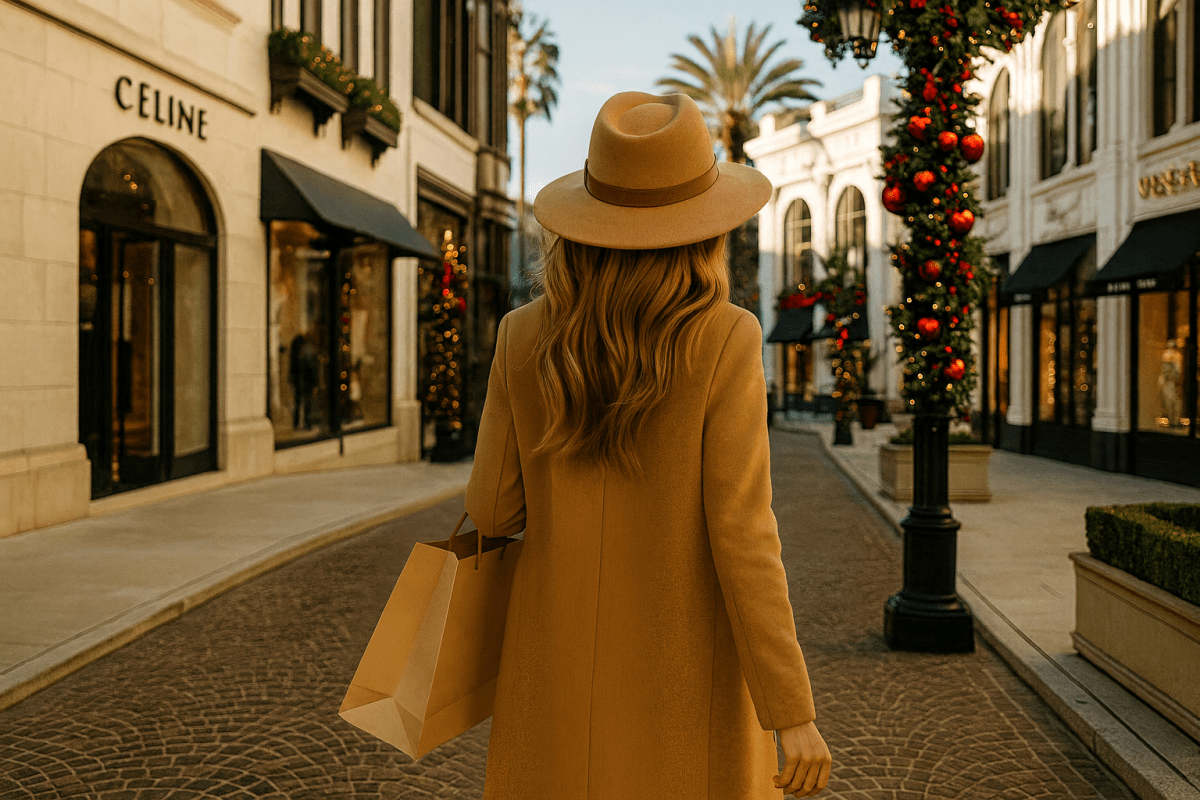
This year I chose Beverly Hills .
Its balance of glamour and tranquility, its boutiques that look like movie sets, its hotels that look like something out of a Sofia Coppola Christmas movie… and that quintessentially Californian way of making you feel on vacation even when you’re just minutes from home.

My refuge was the Peninsula : windows overlooking the city, a suite filled with golden light, and slow breakfasts with avocado toast, matcha latte, and a planner bursting with ideas. Some for new projects, others for future trips, and still others simply for the pleasure of putting them down on paper.

Between an impromptu photoshoot and a shopping break on Rodeo Drive , I rediscovered how necessary it is to take time away from the hustle and bustle and return it to what truly matters: creativity, curiosity, wonder.
These are always the moments when the truest insights emerge, new directions, that subtle feeling of being exactly in the right place.

My getaway ended with dinner at The Ivy , one of my favorite restaurants: warm lights, a private party atmosphere, and gratitude for a year that taught me more than I expected.

And as Los Angeles prepares for its bright holidays, I take away a simple thought: Beauty is not a place — it’s a state of mind .

See you in the next story.
Always on the move, always with our hearts in California.

— Sara


Discover more of Sara’s World


Sara Dal Monte

Sara Dal Monte
Digital Journalist | Photographer | Art Director
Los Angeles • Sure-Com America 


CHANEL METRO AFFAIRS – MY SUBWAY NEW YORK MINUTE

–

–

CHANEL METRO AFFAIRS 

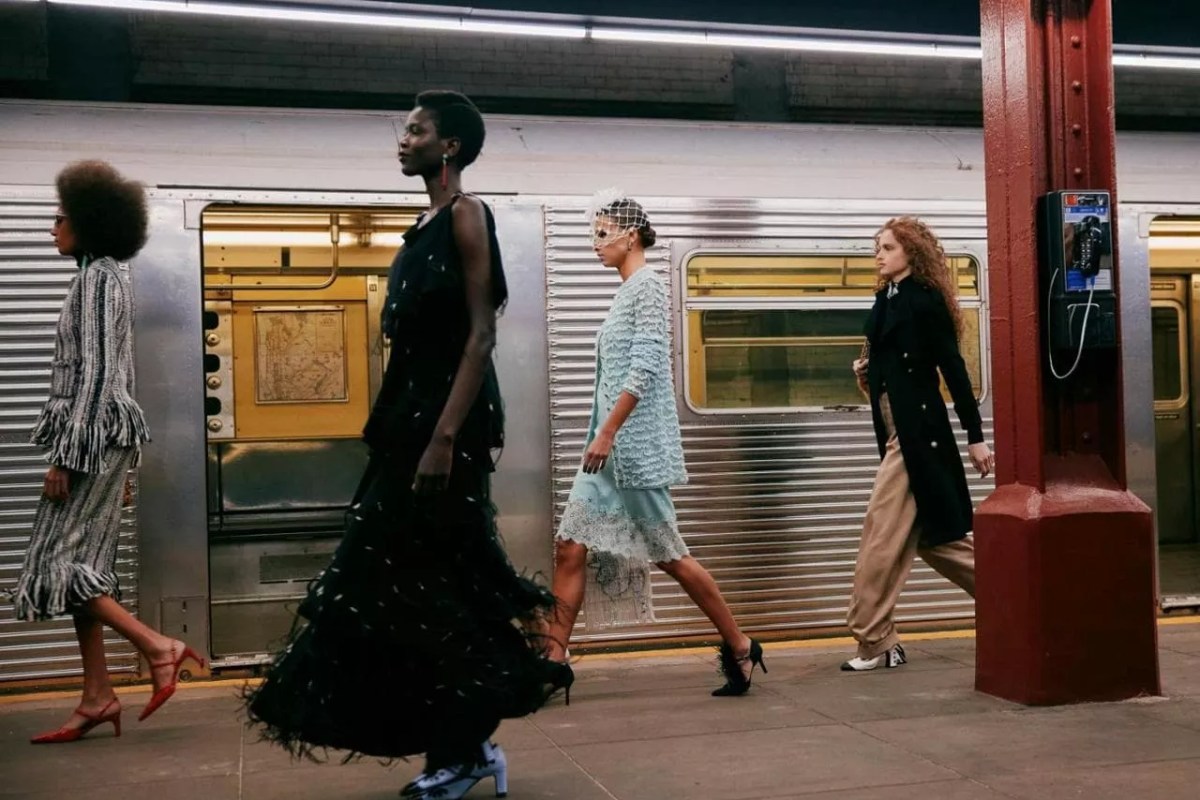
I’ll admit it: flying in from Los Angeles and ending up squeezed between those rusty red columns on the 5th Ave Subway platform, with trains rumbling by every few minutes, wasn’t exactly how I pictured walking into a Chanel show. In L.A., they roll out a red carpet even to get a latte; here, the only red thing in sight was the steel beams scratched by decades of commuters. And somehow, it already felt right.

Matthieu Blazy didn’t just “bring Chanel into the subway.” He did something far more delicate: he dropped haute couture into the most honest, unfiltered place in the city, without cushioning it, without elevating it, without giving it a protective halo. He let it sit there, in the raw pulse of real life, exposed to speed, noise, distraction. And as I waited for the first look to step out of the train car, I felt something thrilling: Chanel wasn’t trying to interpret New York.
It was listening to it.

The first model exited the train like she’d done it her whole life. Bold jewelry, black turban, a shot of red at the waist — a visual punch with the wattage of Times Square, yet refined through that French discipline that gives structure even to chaos. Then the leopard tweed appeared, purring with confidence, and suddenly I realized we weren’t watching clothes at all. We were watching attitude.

One thing about the subway: nothing stays still. As I photographed a model in a beautifully cut pinstripe suit, a train pulled out behind her, dragging that metallic roar that is the city’s true soundtrack. Blazy knew it. He wanted it. He turned the environment itself into part of the creative direction, as if the world, for once, had agreed to collaborate.

And the colors — the reinvented animal prints, the long dresses skimming the platform, silhouettes moving with the same rhythm as commuters bracing for a stop. Chanel, a house that often exists inside immaculate spaces, was here breathing, sweating, reacting. And it was perfect.

What struck me most was this: nothing, absolutely nothing, looked out of place.
Tulle, feathers, sequins… everything fit seamlessly into a setting we had instinctively labeled as “wrong.” But maybe that’s the lesson: fashion isn’t an altar — it’s a passageway. And Blazy, by choosing this subway, reminded us with almost brutal elegance.

I left the station feeling like I’d witnessed a collision rather than a show. A beautiful, intelligent, coherent collision.
Proof that Chanel can own any environment — but more importantly, that it can still surprise those who thought they had it fully figured out.

As I climbed the stairs back to street level, I smiled. Sometimes it takes a train to understand where fashion is headed.

— Sarah Dalmonte, Los Angeles → New York


GALLERY
CLICK TO ENLARGE — VIEW DETAILS


Discover more of Sara’s World


Sara Dal Monte

Sara Dal Monte
Digital Journalist | Photographer | Art Director
Los Angeles • Sure-Com America 


FALL WINTER 2025/26 – FASHION RETURNS TO ITS BODY

From the runways of Europe, a return to matter, warmth, and sensory memory.

One word defines this season: tactile. After years of digital aesthetics and almost virtual silhouettes, fashion returns to the body — to its weight, its desire, its need for touch. The garment is no longer projection, but skin, refuge, and experience.

Across Paris, Milan, London, and New York, the catwalks reveal an autumn wrapped in dense textures, sculptural pleats, ironic bows, and knitwear that becomes architecture. Protection returns as a theme, yet never denies desire.

The Greek drape — soft, intellectual, imperfect — becomes the new language of sensuality: dresses twist, knot, and fall like living statues. Ancient grace meets contemporary rhythm in a hymn to slowness and harmony. The fur trend, whether faux or sheepskin, brings tactility to the forefront. The modern woman no longer wears armor to face the world — she wears warmth, a soft barrier that allows her to remain sensitive without being fragile.

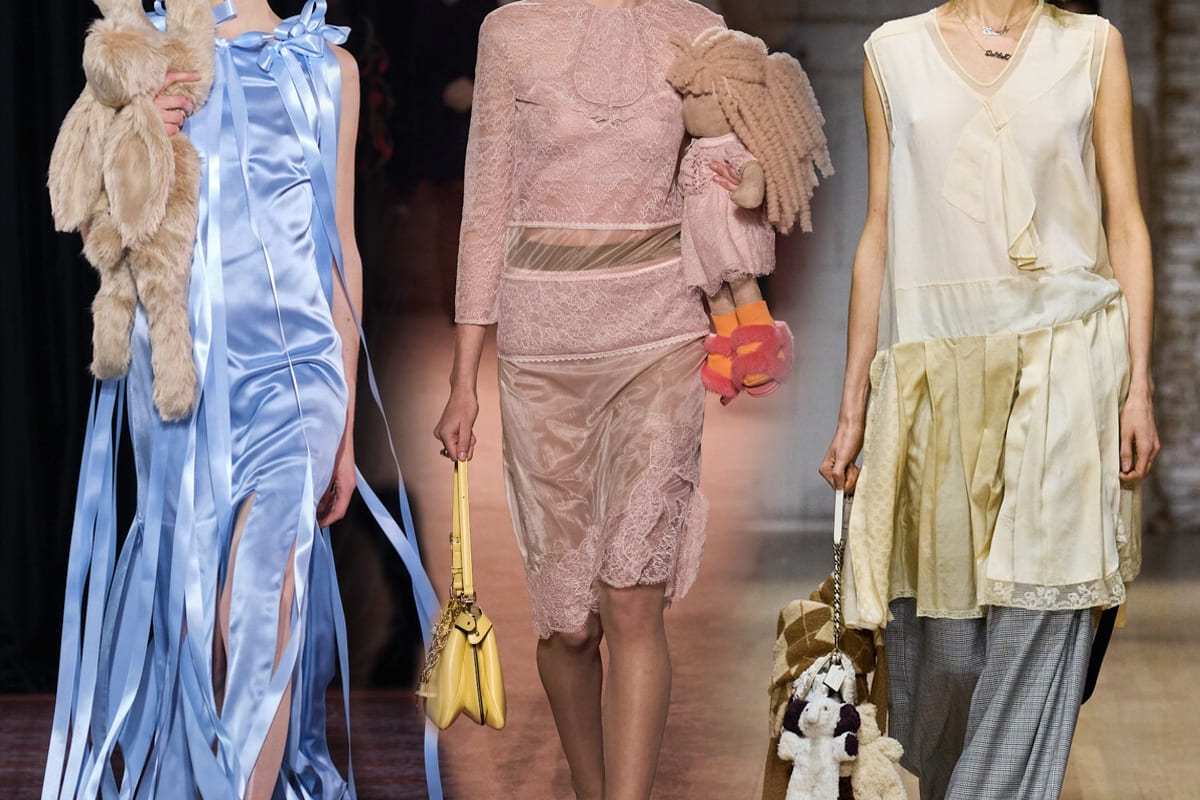
Black dominates once again, not as austerity but as movement — it flows, envelops, and seduces. Asymmetric drapes and liquid lines restore femininity as a spiritual presence. Then irony enters the scene: bows, plush toys, and childlike nostalgia. Fashion remembers innocence and reclaims it with adult awareness. Tenderness becomes avant-garde.

The female dandy returns with stiff collars, jabots, and romantic dual tones — a kind of wearable theater. Meanwhile, pocket-bags merge function and fantasy, turning practicality into design. The slip dress reclaims intimacy: lingerie becomes attire, the skin becomes statement. A quiet sensuality takes the stage.

And the sculptural knitwear closes the circle — garments woven like landscapes, filled with patience and the poetry of hands. This fall/winter doesn’t speak of trends but of presence — a fashion that listens instead of shouting, that seeks warmth over spectacle.

Because the true revolution now is remembering that to dress can still be a human, sensual, poetic act.


GALLERY
CLICK TO ENLARGE — VIEW DETAILS

Discover more of Sara’s World


Sara Dal Monte

Sara Dal Monte
Digital Journalist | Photographer | Art Director
Los Angeles • Sure-Com America 


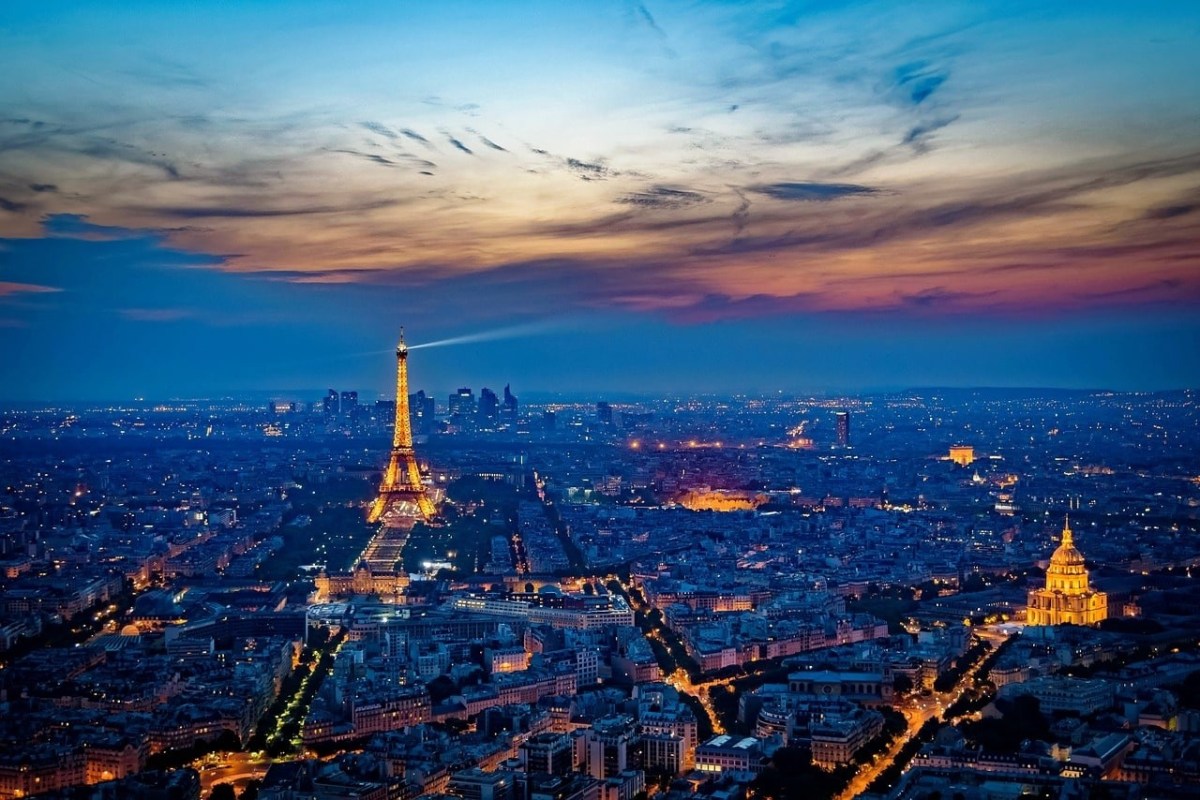
PARIS FASHION WEEK SS26: THE SYSTEM’S NOISE, THE DESIRE’S SILENCE


PARIS FASHION WEEK: MY IMPRESSIONS

Paris wrapped on October 7. Eight days of runways, presentations, showrooms, cocktails, and nonstop rumor mills. The calendar was that of the grand seasons: women’s prêt-à-porter Spring/Summer 2026, from September 29 to October 7, with a dense cluster of debuts and course corrections that—on paper—should have jump-started the creative narrative.

Outside the tents, the real world isn’t on pause. We’re in a hard transition: even the “fashion customer” now weighs a purchase against other priorities. Desire doesn’t vanish—it gets selective. Faced with this, I saw two opposite, often irreconcilable reactions: on one side, the obsessive return to archives as a security blanket; on the other, the gamble of “anything, as long as they talk about us,” which produces noisy, sometimes gratuitous objects. I’m not pointing to the usual aprons or meme-ready oddities: it’s the underlying confusion that stings—the inability to choose one idea and carry it through without hiding in déjà vu.

The paradox is that the machine still works. Paris remains the week that concentrates the most attention and media value across fashion month. The circus still draws, massively.

The spillover is huge as well. Events tied to PFW generate hundreds of millions of euros every year for the city—and surpass a billion if you include fairs and related activities. Hotels, restaurants, transport, production studios, artisans, PR, content creators: an ecosystem that lives off the Paris showcase.

Here’s the crux: a gap has opened between the strength of the system and the audience’s emotional reality. Many maisons walked collections rich in good intentions and short on courage: reworked archives, nested citations, hypertrophic styling as a stand-in for a clear idea. Where there were directional changes—and directors—I sensed respect for the DNA but also a committee-level caution: homage the founder, sanitize the codes, reduce risk. Meanwhile, life asks for clothes that survive the day, not just the feed.

This isn’t a crusade against spectacle. Fashion can be language and theater, and Paris remains the most powerful stage. But “making noise” no longer cuts it: we need vision that translates into use, not disguise; rigorous editing, not accumulation; that quiet quality that makes you want to wear things, not just photograph them.

What do I take home from this PFW? The confirmation that the audience is ahead: buying less, buying better, and asking for meaning. And the hope that creative directors reclaim the healthy risk of making a choice, instead of the sterile risk of excess. The market forgives a misstep; it does not forgive vagueness.

Paris stays queen of the calendar and will remain so as long as it can tell a present that isn’t afraid of the future. Next season I want fewer archive fishing trips and more aesthetic responsibility: not the umpteenth “archive remix,” but a new idea with the courage to become everyday. That’s where fashion starts to matter again.

Context note. Womenswear SS26 took place in Paris from September 29 to October 7, 2025; it was a season thick with creative-direction debuts and strategic repositioning, reaffirming PFW’s centrality across the global month.

Postscript for industry folks. If the media engine keeps growing and the spillover stays massive, there’s room for quality. Fill it with wearable ideas, not noise. Otherwise, the gap between runway and wardrobe widens—and the audience simply stops crossing it.


GALLERY
CLICK TO ENLARGE — VIEW DETAILS

Discover more of Sara’s World


Sara Dal Monte

Sara Dal Monte
Digital Journalist | Photographer | Art Director
Los Angeles • Sure-Com America 


CHANEL SS26 – FRESHNESS YOU CAN WEAR

CHANEL SS26


Paris, Grand Palais. Something felt different this time. Chanel didn’t look like a museum anymore. It looked alive. With Matthieu Blazy stepping in, everything seemed to breathe again — lighter fabrics, easier shapes, and that kind of energy that belongs to people, not mannequins.

Watching the show, I caught myself smiling. I saw dresses and jackets that I’d actually wear, not just dream about. The silhouettes were soft, the movement effortless, and the colors — finally — full of light. Florals, tweeds, and bows reappeared, but they felt new, less nostalgic, more spontaneous.
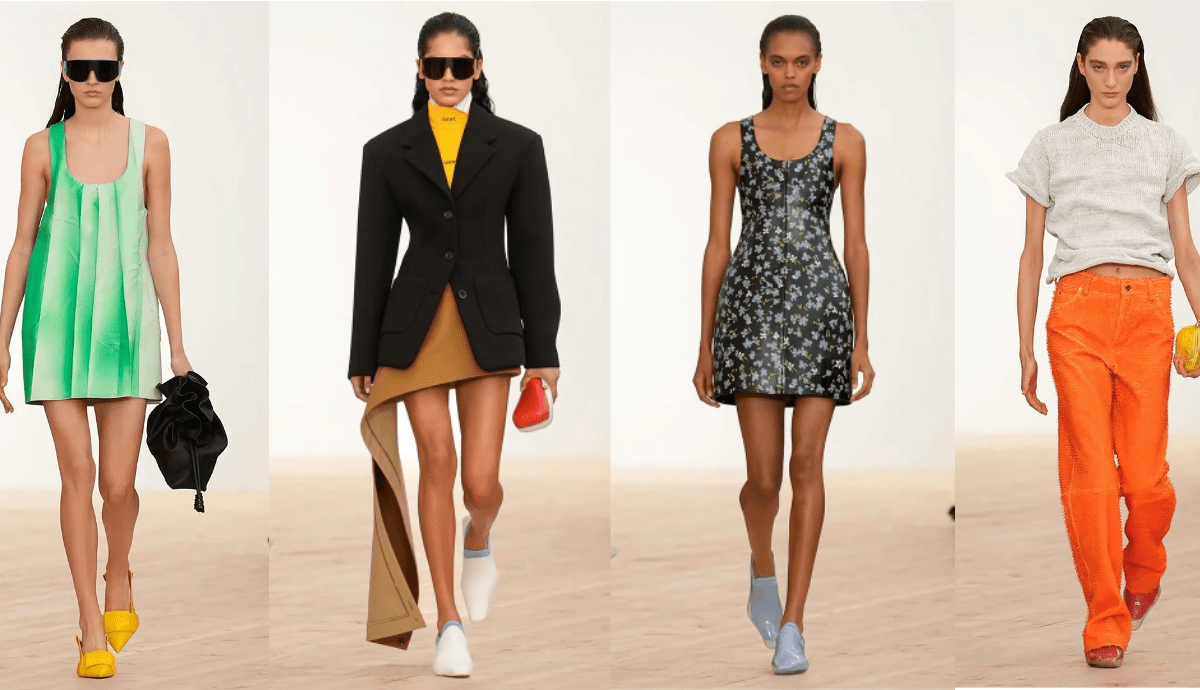
At my age, I don’t want to look “perfect.” I want to feel beautiful without trying too hard, and this Chanel felt exactly like that. I can see myself mixing one of those tweed tops with denim, or wearing a silk blouse under a leather jacket. It’s fashion that leaves you space, that lets you breathe.

What Blazy did here isn’t revolution; it’s translation. He took the classic codes and turned them into a language people can actually speak — everyday, anywhere. The result is still elegant, but softer, freer, more human.

And that’s why I loved it. This Chanel doesn’t shout. It moves, quietly, with grace.

GALLERY
CLICK TO ENLARGE — VIEW DETAILS

Discover more of Sara’s World


Sara Dal Monte

Sara Dal Monte
Digital Journalist | Photographer | Art Director
Los Angeles • Sure-Com America 


VALENTINO SS26 – WHEN THE NARRATIVE OUTSHINES THE COLLECTION


VALENTINO SS26


At Paris Fashion Week, the scene unfolded in an uncertain light, almost war-like. Figures emerged from the darkness only to fade away like distant memories. Alessandro Michele didn’t present a simple collection—he built a story. And that story ended up swallowing the clothes.

Titled Fireflies, the show evoked the image of small lights surviving in the dark. It was a poetic, melancholic metaphor: fragility that shines even as everything else collapses. The flickering lights along the runway highlighted seams, textures, threads, and fabrics that reflected light only in fragments. There was no euphoria, only tension. Everything spoke of endurance and vulnerability.

The silhouettes were soft yet unsettling—draped skirts, glossy velvets, blouses with bows and wide sleeves, silk dresses that fell like sheets of light. There were sequins, but muted; flowers, but broken apart; colors, but veiled. No triumphalism here—Michele chose silence as his aesthetic language.

And in that radical choice, the message seemed to overpower the garment. The narrative prevails over the collection. The runway became a theater of the soul, where clothes were merely instruments to tell a story of spirituality, memory, and survival. Beauty remained, but it felt restrained, as if afraid to reveal itself too much.

At the helm of Valentino, Alessandro Michele continues to speak of dreams, poetry, and elegant chaos. Yet in this Parisian debut, there was a new sense of unease—the urge to turn the brand into a language rather than a showcase. There is genius in that, but also melancholy. The light of his “fireflies” doesn’t illuminate fashion; it reminds us that sometimes fashion is only a pretext to tell the story of life itself.

And as those silhouettes moved through the half-light, one question lingered: when the dream becomes stronger than the dress, what happens to the dress?


GALLERY
CLICK TO ENLARGE — VIEW DETAILS

–
–

–
–
–
–

Discover more of Sara’s World


Sara Dal Monte

Sara Dal Monte
Digital Journalist | Photographer | Art Director

Los Angeles • Sure-Com America 


–
–
–
–


PIERPAOLO PICCIOLI DEBUTS AT BALENCIAGA – A SOFTNESS IN THE TEMPLE OF SHADOWS


BALENCIAGA ss26 IN PARIS

I watched Pierpaolo Piccioli’s first Balenciaga show from Los Angeles, far from the noise of Paris and the flash of the photographers, and maybe that distance helped me see it for what it really is: not a revolution, but a gentle correction. Piccioli promised to bring grace, warmth, and poetry back into the house of Cristóbal Balenciaga — a beautiful and, at the same time, risky intention, because when you touch a monument, every gesture carries twice the weight, and every trace of softness risks disappearing under the pressure of its own legacy.

There were moments that truly caught me: the green balloon skirt, light and sculptural at once; the long red feather skirt moving like a living flame; the white dress covered with petals, almost breathing on its own. These are the kind of pieces that make you say, I’d wear that — or at least, I’d like to try it on — and that’s something Balenciaga hadn’t made me feel in a long time. Still, there’s a visible tension between two worlds: the tenderness of Piccioli and the cold monumentality left behind by Demna. It’s a subtle but constant difference that you can feel in the volumes, in the bold colors, in the way the fabric meets the body without apology. It’s elegant, yes — but still searching for a voice that’s truly its own.

From here, from Los Angeles, the collection felt like an act of mediation rather than a declaration. It’s as if Piccioli were trying to find a human heartbeat inside a digital skeleton — and that, honestly, I deeply respect. Because fashion, even when it wants to be conceptual, must always come back to desire: that intimate spark that makes you look twice, that curiosity that draws you in, that impulse to imagine yourself inside a garment, not just in front of it.

In the end, what I saw on that runway wasn’t perfection but potential — a whisper of warmth in a house built on coolness, a fragile, feminine, slightly uncertain whisper, but perhaps for that very reason, real. And it’s from that quiet voice, vibrating more from intuition than force, that something new might be born — something worth waiting for.


GALLERY
CLICK TO ENLARGE — VIEW DETAILS

Discover more of Sara’s World


Sara Dal Monte

Sara Dal Monte
Digital Journalist | Photographer | Art Director
Los Angeles • Sure-Com America 


LOEWE SPRING/SUMMER 2026 – THE COOL DISTANCE OF ART


LOEWE SPRING/SUMMER 2026 


From Los Angeles, I followed Loewe’s Spring/Summer 2026 collection — the first designed by new creative directors Jack McCollough and Lazaro Hernandez, the founders of Proenza Schouler. It’s a major shift for the Spanish house, one that has always moved between fashion and art, between craftsmanship and provocation.

McCollough and Hernandez bring their American vision — precise, graphic, and disciplined — into a European institution.
The result is an intriguing hybrid: sharp tailoring, clean lines, and shapes that look drawn with a ruler rather than stitched with a needle.
It’s fashion that thinks — but rarely warms.

Watching from L.A., away from the lights and seduction of the live show, I could read the message more clearly. Loewe wants to evolve, to become more contemporary, more global. Yet in doing so, it loses a touch of that sweet oddity that once made it so magnetic.

There are strong ideas here: architectural volumes, rigid fabrics, sculptural accessories. Everything is immaculate, perfectly coherent. And yet — something’s missing. It’s not minimalism, it’s control. Not coldness, but distance. And when fashion becomes too cerebral, it risks losing its poetry.

Maybe it’s just a matter of time — every creative transition needs to breathe. But from where I sit, with a Californian eye and a heart that still beats for boho chic, I find myself missing a bit of freedom, a bit of imperfection — that kind of beauty born from the unexpected.

An impeccable collection, yes. But one still searching for a soul.


GALLERY
CLICK TO ENLARGE — VIEW DETAILS
–


–

–

–

–

–

Discover more of Sara’s World


Sara Dal Monte

Sara Dal Monte
Digital Journalist | Photographer | Art Director
Los Angeles • Sure-Com America 


DIOR AT PARIS FASHION WEEK: TALENT PRESENT, DIRECTION STILL BLURRY


DIOR AT PARIS FASHION WEEK

By Sara Dal Monte

Paris opened with a behind-the-scenes debut for Jonathan Anderson at Dior. You can sense a skilled hand at work: smart technical choices, seams that trace the body without stiffening it, accessories that lock the look with precision. And yet, for all the craft, a clear through-line didn’t emerge. The talent is there; the compass hasn’t settled on Dior’s true north.

There were moments that landed. Structure stayed light, the body kept its ease, and femininity felt constructed rather than decorated. When the lines stayed clean, Dior edged into a present tense that doesn’t need to shout. That’s where a real conversation with now felt possible: not nostalgia, but memory used as vocabulary.

Then the hats arrived. A few interesting, several gratuitous. A showpiece accessory can be a signature, but when it tries to explain the entire collection it does the opposite: it distracts. It softens the responsibility of the cut and looks like it’s asking for applause the clothes should earn on their own. Noise we don’t need, especially when the rest asks for attention.

What’s missing is a deeper alignment with Dior’s DNA. Not museum-level reverence, but an honest engagement with the codes: a measured waist, a disciplined shoulder, that play of fullness and air that made the house an idea before it became a style. Here, the echo is there, but it stays an echo. I want the point where heritage plugs into 2025 and shifts tempo without turning into a caption.

Ironically, the accessories are the most convincing territory. Bags with crisp geometry, hardware used like punctuation, shoes that straighten the stride and turn it into a line. When the image starts from those accents and the clothes follow, the proposal breathes. The issue is consistency: those moments appear, but they don’t add up to a system.

Overall, it reads as work in progress. The artist’s hand is visible, the appetite for restraint is there, but the show still needs that single directive that binds silhouette, proportion, and memory into one recognizable sentence. Dior doesn’t need a well-made costume; it needs an idea that runs through it.

My take: a competent collection, bright in details, not yet resolved as an identity. If this is the start of a path, fine. But the next step has to pick a lane and defend it. Dior deserves a clear voice. I’m waiting for that.


GALLERY
CLICK TO ENLARGE — VIEW DETAILS

Discover more of Sara’s World


Sara Dal Monte

Sara Dal Monte
Digital Journalist | Photographer | Art Director
Los Angeles • Sure-Com America 


PARIS FASHION WEEK: STELLA MCCARTNEY, GOOD INTENTIONS, LITTLE SURPRISE


STELLA MCCARTNEY
By Sara Dal Monte

I watched Stella McCartney’s show hoping for that click that makes you sit up straighter. It never came. I recognize the consistency of her message and language, but the result felt like a long replay of familiar themes, neatly arranged and light on risk. It wants to be responsible and contemporary, but lands as polite rather than necessary.

The construction is smooth, yet rarely gripping. The menswear-tailored suits don’t add a new line, the slip dresses offer a tidy, predictable sensuality, and the sporty inserts feel more like filler than an idea. Too often it read as a wardrobe already on the sales floor—shiny and ready, not especially memorable. A runway needs a reason to stick; here, the reason is hard to find.

I’m not questioning the ethical framework or material research, which I respect. What’s missing is a formal spark: a cut that shifts the eye, a proportion that makes you reconsider the body, a detail capable of turning a garment into an image. When everything is this correct, the feeling slides off. It’s like a perfectly played song that never changes key.

Accessories fare better. Some bags have a convincing industrial clarity, with crisp volumes and thoughtful handles, and a few metallic accents provide the only real “beat” of the show. The shoes, in the leaner styles, give the looks a credible stride. Those were the moments when I felt an idea get close to real life with a bit of character.

The rest hovers in cautious balance. It doesn’t ask much of the eye; it doesn’t ask much of the body. I understand the desire for wearability, but wearability isn’t the absence of risk. It’s risk resolved well. Here, subtraction turns into caution, and caution, over time, slips into flatness.

My takeaway: a clean, respectable collection. I’m not arguing with restraint; I’m arguing with inertia. In a week that demands clear visions, this show leaves me little to take home beyond a few solid accessories. No real opening. And when I leave a runway, I need at least one slit where the light gets in.


GALLERY
CLICK TO ENLARGE — VIEW DETAILS

Discover more of Sara’s World


Sara Dal Monte

Sara Dal Monte
Digital Journalist | Photographer | Art Director
Los Angeles • Sure-Com America 


PARIS FASHION WEEK: OPENING NIGHT AND LOUIS VUITTON’S POINT OF VIEW

Measured elegance, desire close to real life

Paris lifts the curtain with that unmistakable rhythm: polished historic rooms, invitations in motion, eyes taking measure of the night. In this setting, Louis Vuitton’s opener set the tone with a deliberate choice: no gratuitous fireworks, plenty of construction. Nicolas Ghesquière works on cut and posture more than effect, as if each look were a frame already edited into a larger story.

First impression: clarity. The body is drawn without stiffness—waists defined yet mobile, clean shoulders, hips that round and return, hems that serve the stride. Materials do the quiet work: fine fabrics that veil and reveal with discipline, matte surfaces that absorb light and return it only where needed, dark seaming that traces the figure like pencil on paper. The palette stays intentional—sand, taupe, white, black—with a metallic flash at the shoes sharpening the walk.

This isn’t nostalgia; it’s editing. The archive registers like a soft echo, guiding without crowding the scene. Long drapes follow movement, tops hint at armor then relax, skirts wrap the figure without turning into sculpture. Even when volume rises, proportions remain human. That’s the difference between a dress that asks for attention and a dress that earns it.

Accessories seal the argument. The bags read as objects rather than emblems—full shells with compass-drawn profiles, handles that invite a natural gesture, straps that follow instead of dictating a pose. Footwear becomes the metronome: pointed shapes that lengthen without aggression, sandals slicing light like a thin line, polished ankle boots turning the step into a graphic mark. Headpieces and jewelry stay in subtraction, used like punctuation.

There’s also an idea of intimacy brought outside with measure. You sense an interior life through touch—knit draped over shoulders, a belt placed not to cinch but to order. It’s comfort that straightens your back rather than letting it sink. In a week that often confuses quantity with impact, this calm is a stance: less noise, more editing.

The sensuality runs straight, without coyness. I can place these clothes in the real day of someone who works, travels, and changes scene more than once. They don’t beg for applause; they’re meant to be lived in. The surprise here is control: being able to do more and choosing to do what’s right. It’s an elegant way to open Paris and shift attention to what matters instead of the stunt.

The opening takeaway is clear: precision, wearability, and a femininity that doesn’t need to shout. Louis Vuitton opts for the quieter voice, the one that carries farther. If this Paris Fashion Week is going to find a new balance between spectacle and the everyday, starting here makes sense. Desire moves closer to life without losing power—and for a week that still has a lot to say, that’s a worthy beginning.

GALLERY
CLICK TO ENLARGE — VIEW DETAILS

Discover more of Sara’s World


Sara Dal Monte

Sara Dal Monte
Digital Journalist | Photographer | Art Director
Los Angeles • Sure-Com America 


PARIS VS MILAN: WHAT MY COLLEAGUE AT ALESSANDRO SICURO COMMUNICATION GOT RIGHT


PARIS VS MILAN

I just read a piece by my Italian colleague at Alessandro Sicuro Communication, and it hit a nerve: the real gap between Paris Fashion Week and Milan isn’t only about taste, it’s about the machinery behind it. Paris stacks more official moments across the year — women’s, men’s, Haute Couture — and turns each one into global storytelling that converts into business. Milan, even with exceptional product, compresses its power into fewer windows and sometimes assumes quality will speak for itself. In 2025 that isn’t enough; you win when you show the right story to the right audience at the right time.

I’m American, born here, though my parents are Italian and a piece of me belongs to Italy too. Maybe that’s why this conversation matters to me. Italy has the most extraordinary supply chain in fashion: Neapolitan tailoring, Puglia’s workshops, Tuscany’s leather districts, Emilia-Romagna and Lombardy’s manufacturing depth. Those hands power Italian and French labels alike. But without a coordinated narrative, a denser calendar, strong buyer services, and a clear central direction, too much of that value stays invisible.

On this I’m with Alessandro: Italy should do more to do better. It should extend and strengthen the calendar with focused moments that don’t cannibalize the main weeks, invest in professional hospitality for buyers, press, and creators as a true sales lever, and connect creativity with manufacturing through events that show not only how clothes are worn, but how they’re made. Paris monetizes imagination; Italy should also monetize its craft.

This isn’t a coolness contest. It’s about giving Italian artisans — from north to south — the megaphone they deserve. Tell the story more boldly, coordinate the energy, multiply touchpoints through the year, and the distance narrows fast. From where I stand, both as an American and as a daughter of Italian parents, I’m cheering for Italy to lead not only in taste, but in fashion’s business too.


Discover more of Sara’s World


Sara Dal Monte

Sara Dal Monte
Digital Journalist | Photographer | Art Director
Los Angeles • Sure-Com America 


BOTTEGA VENETA: CLEAN LINES, FAMILIAR NOTES

LOUISE TROTTER ERA

Bottega Veneta is one of those houses that instantly puts me in “eyes open, steady breath” mode. The line stays clear, the idea of luxury is quiet, the hand is sure. With Louise Trotter at the helm, the runway doubled down on that attitude: rigor, studied volumes, serious materials. Everything beautifully made. And yet a faint déjà-vu hovered—an afterimage that doesn’t ruin the picture, but makes it feel less essential.

I loved the broad, buttery leather coats that move without a sound, the jackets with measured shoulders and a hinted waist, the tailored sets softened by fluid shirting and glossy collars. The balance works: inky black against milky beige, heritage gray that nods to the house’s intreccio, butter-toned knits tossed over shoulders like a casual gesture. The fuzzy, high-pile pieces, though, feel more show than statement—we’ve seen them everywhere this season, and here they don’t add a new language.

When Bottega whispers, it wins: the suit with a full, not bulky trouser; the leather shirt that stays supple; the woven bags worn like polished shells with zero fuss. When the volume rises with feathers and super-textured surfaces, the tune stays refined but loses that note that makes you swivel in your seat. It’s like watching a beautiful film whose ending you guess ten minutes early.

Still, there are pieces I’d happily take home: the tobacco coat that falls like a screen, the cream blazer fastened with a single button, those straight skirts cut just below the knee with small angular seams that slim without stiffness. Accessories speak clearly too—arm-sized carryalls, living intrecciato leather, calibrated colors that don’t need filters.

Bottom line: a solid, coherent, elegant outing. It doesn’t break anything—and maybe that’s the point. It delivers exactly what it promises—good taste, construction, a composed read on now—while leaving me wishing for one extra twist, the spark that separates a beautiful collection from a defining one. Bottega remains reliable and desirable; now let’s see if the next chapter truly surprises.

–

–


GALLERY
CLICK TO ENLARGE — VIEW DETAILS
–
–
–
–

Discover more of Sara’s World


Sara Dal Monte

Sara Dal Monte
Digital Journalist | Photographer | Art Director
Los Angeles • Sure-Com America 


saradalmontestyle.com
info@saradalmonte.com

–

–

–

–

–


DOLCE & GABBANA, A PAJAMA PARTY IN MILAN: HOW FAR DOES IT MAKE SENSE TO BUILD AN ENTIRE COLLECTION AROUND IT?

DOLCE & GABBANA ss26

From this side of the ocean, the Milan runway read like a manifesto for pajama dressing. Dolce & Gabbana leaned in completely: bedroom stripes, soft drawstring pants, light robes, boudoir lace, even fuzzy slides that feel borrowed from the hallway at home. When the fabric is true silk and the cut is disciplined, the idea can be seductive; when it becomes the only story, the eye starts to crave another chapter.

There were passages that worked. The blue-and-white stripes embroidered with small red flowers had a fresh elegance, especially when they slipped under relaxed jackets. A bordeaux-and-rose pairing, tempered by a wine-toned blazer, pulled the narrative out of the bedroom and onto the street. A black-and-white moment with striped shorts, a lean leather topper and tall socks gave the show a more urban pulse.

When layering tipped into excess, the bedroom took over again. Lace left very visible under oversized pinstripe blazers, striped shirting colliding with leopard, long robes drifting over boxer shorts: striking on a runway, heavy in real life. Accessories tried to shift the balance — dark sunglasses, tassel bags, small jewelry — but plush slippers snapped the mood back to “at home” in an instant.

The point is measure. A well-cut silk pajama set can hold the night beautifully when pared back with slim sandals and discreet jewelry. Fluid trousers with a clean little top can manage the day, especially if a light masculine jacket sharpens the line. What doesn’t convince is turning a season into a single idea. The theme is clear; stretched this far, it loses force.

Who will love it? Those who live in images, resorts and airport lounges will find plenty to frame. For anyone building a wardrobe for actual days, the move is to choose the right pieces and carry them out into the world. Less “night,” more street.

GALLERY
CLICK TO ENLARGE — VIEW DETAILS

Discover more of Sara’s World


Sara Dal Monte

Sara Dal Monte
Digital Journalist | Photographer | Art Director
Los Angeles • Sure-Com America 


VERSACE AFTER THE NEW OWNERSHIP: VITALE’S DEBUT

VERSACE SS26

Growing up in Los Angeles, I learned to spot Versace from a block away: hot color, gold that glints even in the shade, baroque prints that never ask permission. At home, a few pieces floated through our closets — printed shirts, scarf knots on a handle, a dress my mother treated like a happy photograph. I was always split about it. Sometimes it felt like too much. Other times it was miraculously feminine and precise. Now the landscape in Milan has shifted: new ownership, and Vitale stepping in for his first show.

What I saw felt like a controlled dive into the archive: chains, Greek keys, scarf prints, little flashes of armor; not erased, just turned down a notch. The baroque isn’t gone — it’s edited. Cuts track the body with a softer hand, proportions are cleaner, surfaces less busy. It’s like someone put a soft filter over Versace’s memory, kept the symbols, and removed the noise.

Color was handled with intention: yes to the icons — black, gold, red — but with pauses, space for the eye to breathe. Accessories do the sparkling; the clothes carry the story with that straight-shot sensuality Milan still does best when it wants to. There were moments when I saw the Versace I love most, the one that doesn’t need to shout to be powerful.

I don’t know if this new phase will seduce people who only come for shock value. From here, I read a choice: respect the icon but ask for restraint. It’s a tough balance, but it feels like the right move if the goal is to reignite desire without tipping into caricature. With Vitale, Versace is talking to a woman who wants strength and light, and demands control. When the light is measured this well, it doesn’t blind you. It follows you.

GALLERY
CLICK TO ENLARGE — VIEW DETAILS

Discover more of Sara’s World


Sara Dal Monte

Sara Dal Monte

Digital Journalist | Photographer | Art Director
Los Angeles • Sure-Com America