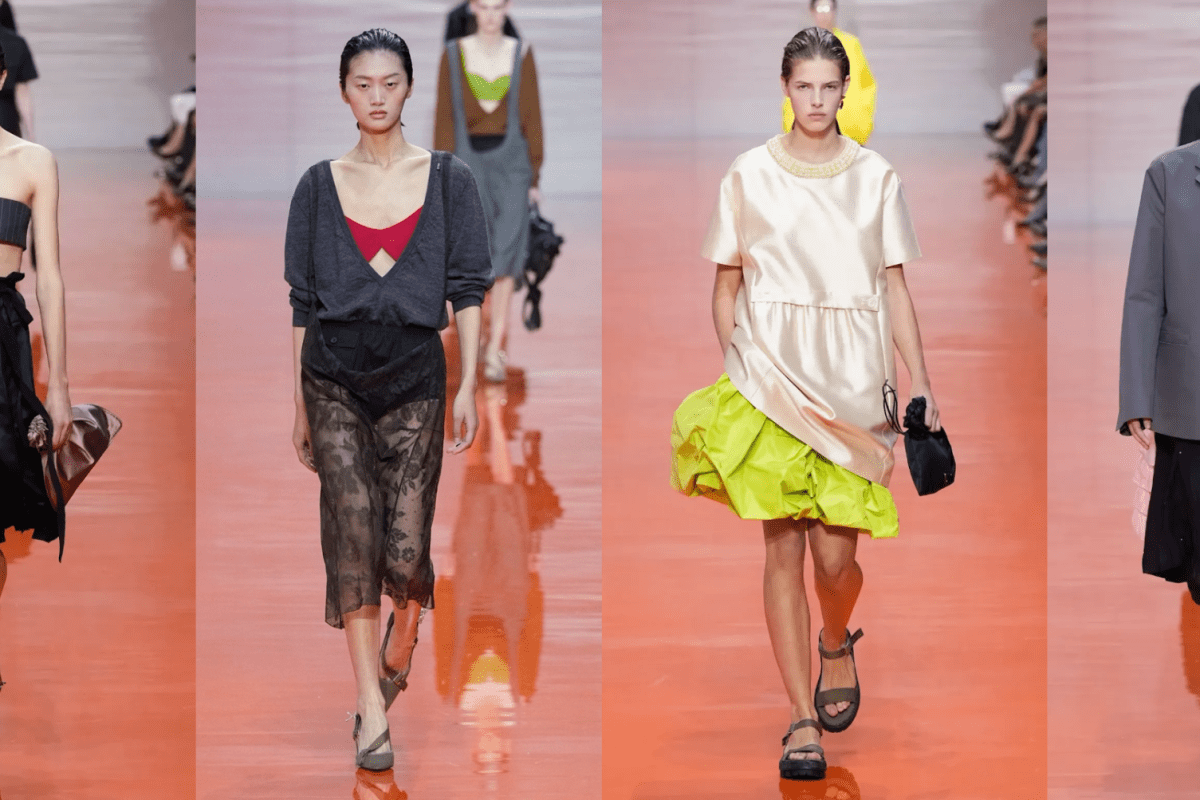
September 26, 2025. The city was buzzing in that unmistakable Milanese way—horns, chatter, flashes—when Prada took over the Deposito at Fondazione Prada. Inside, the noise stopped. The walls were bare, the light almost surgical, and the floor, painted in a searing orange gloss, seemed to ripple under the models’ steps. It didn’t feel like a set. It felt like walking into a question.
Miuccia Prada and Raf Simons built the collection on friction. Skirts stitched from mismatched panels brushed against sharp, military shirts. Bralettes were shown without hesitation, fragile and unapologetic at the same time. Opera gloves tangled with utility jumpsuits. One look stood out: a slate-gray jacket, severe and strict, worn over satin trousers in powder pink—a conversation between toughness and tenderness.
Colors made no attempt to calm. Beige dissolved into steel, then burst into sudden shocks of metallics and acidic brights. Shapes bent, proportions shifted; the expected lines of classic tailoring were twisted until they broke. Nothing sat quietly. The tension was the point—clothes balancing on the edge of strength and vulnerability.
The room was full: actors, influencers, a pop band whose fans screamed outside. Yet there was an unusual hush as the collection unfolded. Not every outfit was beautiful in the easy sense. Some unsettled the audience, others landed immediately. But Prada wasn’t trying to comfort. It was pushing, poking, asking us to sit with discomfort.
By the finale, it felt less like a fashion show and more like a manifesto. These weren’t garments meant to decorate; they were sentences in a larger conversation about what elegance is and what it could still become. In Milan, where tradition weighs heavy, that kind of provocation might just be the bravest act of all.
CLICK TO ENLARGE — VIEW DETAILS




 SARA DAL MONTE